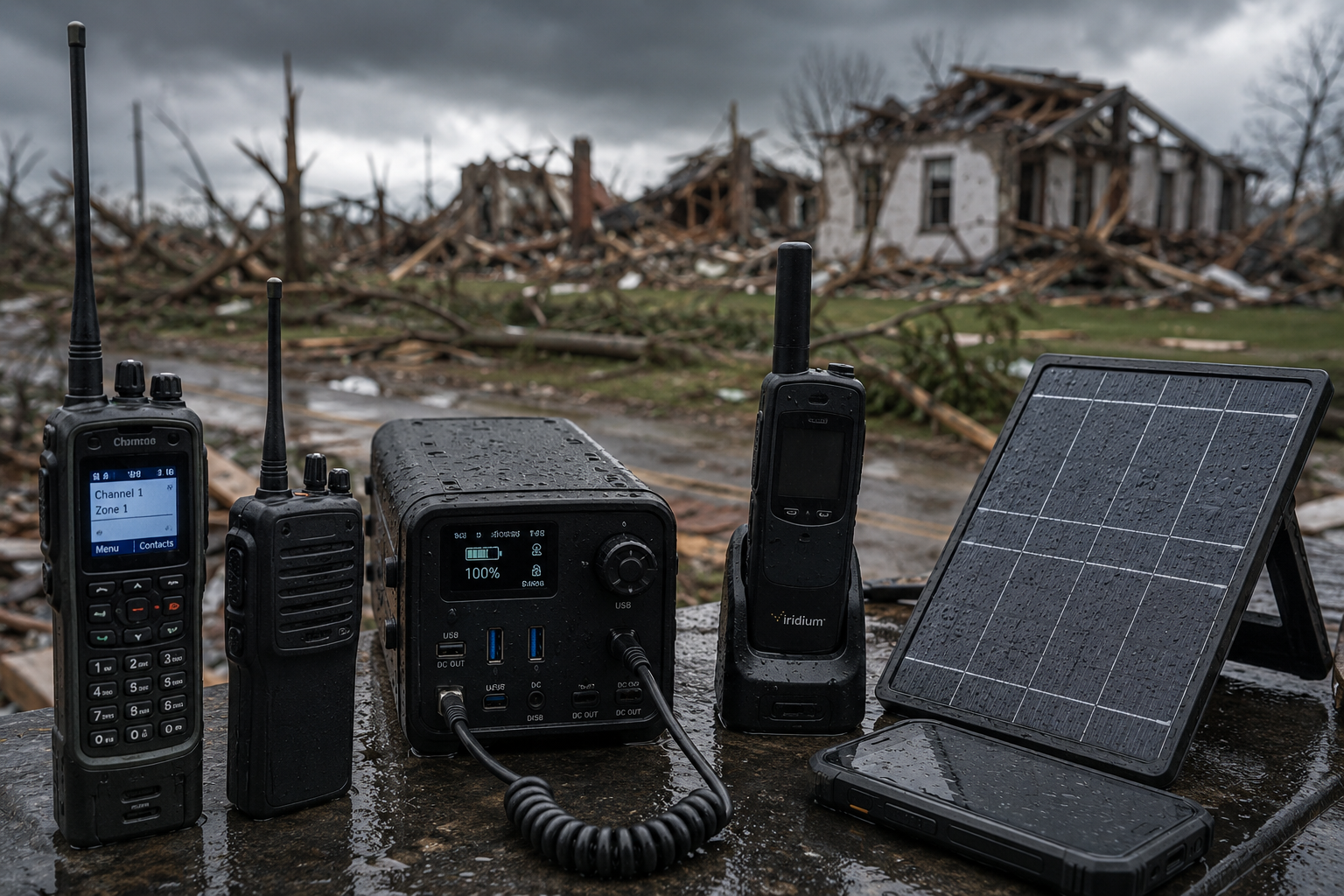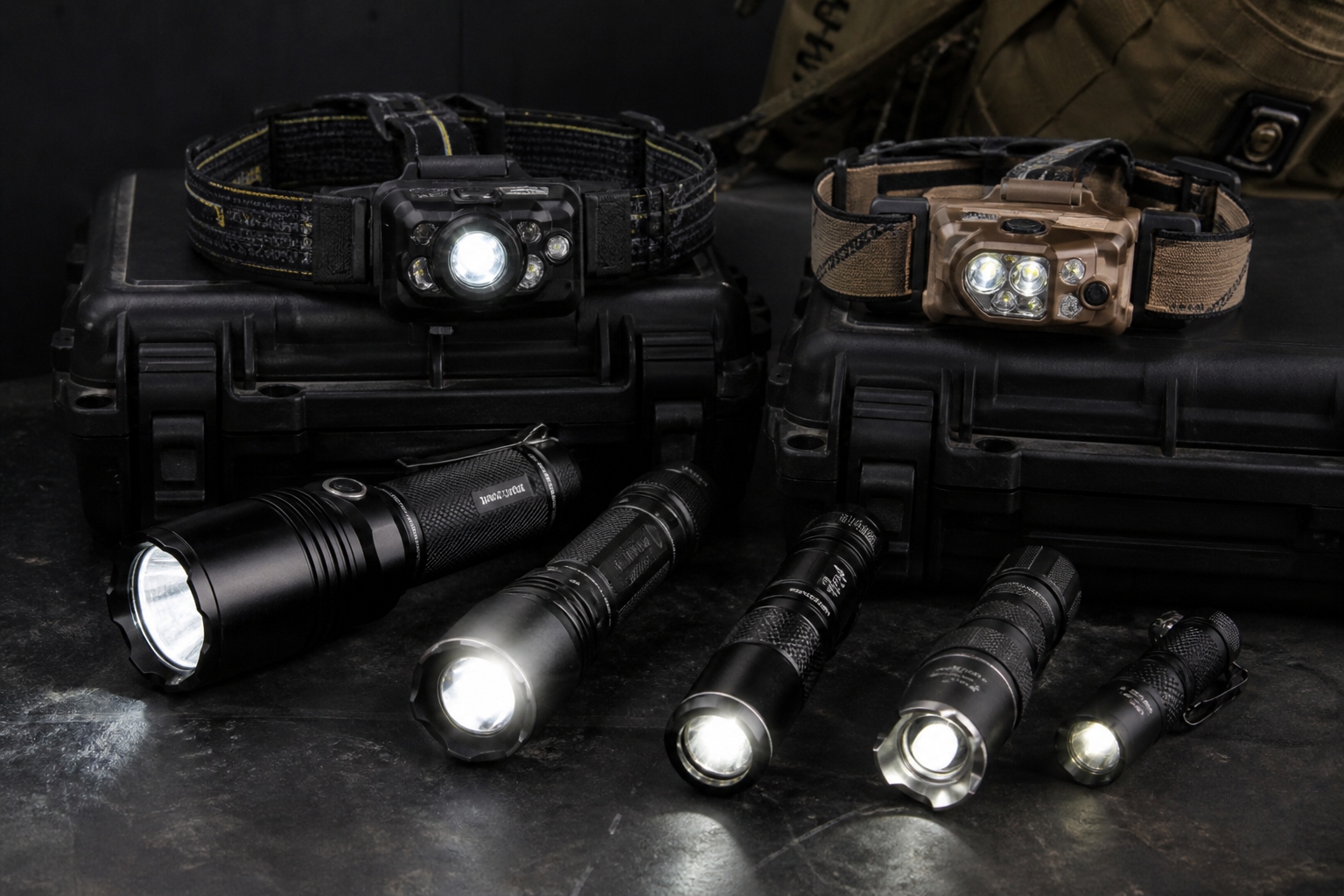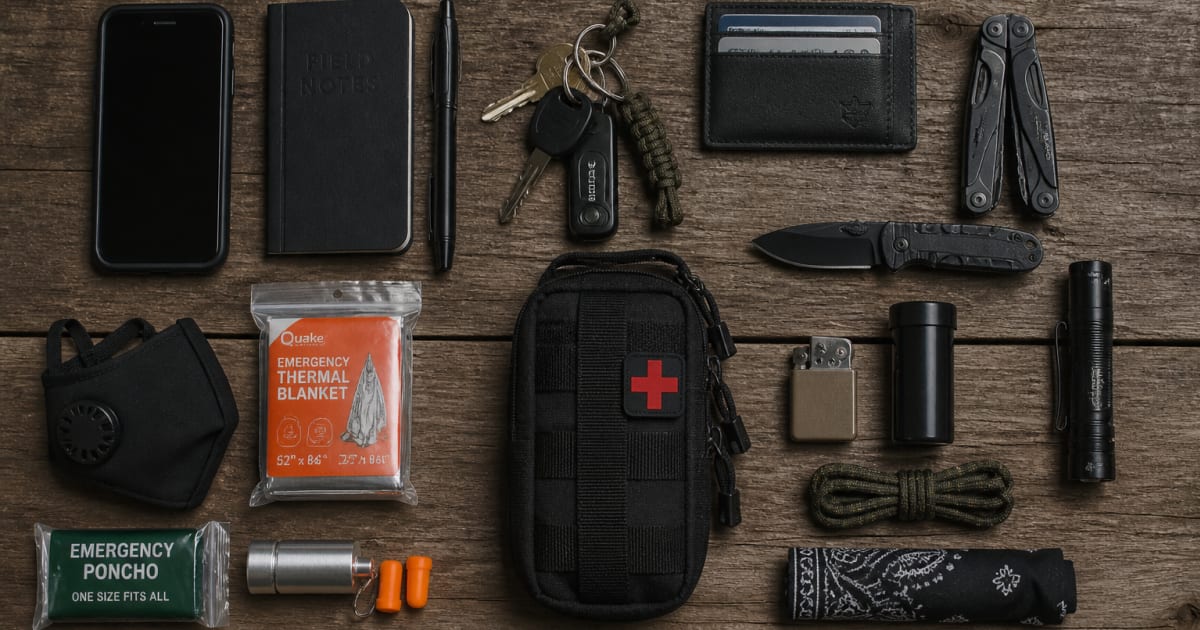
Your bug-out bag is packed. Your home emergency kit is stocked. Your generator is fueled and ready.
None of that helps when an emergency catches you away from home.
Everyday carry — EDC — is the practice of carrying a compact, carefully selected set of tools and supplies on your person every single day. Not in your car. Not in a bag in your closet. On you. The philosophy is simple: the gear you have with you when something goes wrong is the only gear that matters in that moment.
EDC preparedness bridges the gap between your home supplies and the real world where emergencies actually happen — during your commute, at work, at a restaurant, or anywhere else your daily life takes you. A well-built EDC kit weighs less than a pound, fits in a jacket pocket or small pouch, and covers the scenarios most likely to affect you on any given day.
This guide covers exactly what belongs in a preparedness-focused EDC kit, the best products available, and how to build a system that works for your specific lifestyle and carry preferences.
What Makes EDC Different From a Bug-Out Bag
Understanding the distinction between EDC and larger emergency kits prevents the most common mistake in personal preparedness — building a bug-out bag and assuming you are covered for everything.
A bug-out bag is designed for a specific scenario — extended evacuation from your home. It is heavy, deliberately stocked, and lives in one location. It is completely inaccessible when you are not at home.
An EDC kit is designed for daily life. It travels with you everywhere. It handles the scenarios that happen most frequently — minor medical emergencies, unexpected power failures, getting stranded in your vehicle, natural disaster warnings that occur while you are at work, and the dozens of smaller situations where having the right tool immediately available changes the outcome.
The two systems complement each other — your EDC handles immediate personal scenarios while your home kit and bug-out bag handle extended household emergencies. Neither replaces the other.
Read our Bug-Out Bag Essentials: What to Pack in Your 72-Hour Emergency Kit guide to build the larger system that your EDC supports.
The Core Categories of a Preparedness EDC Kit
A functional EDC kit covers five core categories. Every item you carry should serve at least one — ideally two or more — of these functions.
Illumination — Power outages, parking structures, stairwells, and outdoor situations after dark all benefit from a reliable light source carried on your person rather than searched for.
Cutting — A quality folding knife or multi-tool handles an extraordinary range of daily and emergency tasks — cutting seatbelts in a vehicle accident, opening packaging, preparing food, and dozens of practical applications.
First aid — A compact trauma-capable pouch covering bleeding control, wound closure, and basic medication handles the medical emergencies most likely to occur in daily life.
Communication and power — A dead phone during an emergency eliminates your ability to call for help, navigate, or contact family. A compact power bank keeps your most critical device operational.
Fire and light — A reliable lighter or waterproof matches cover both emergency signaling and the practical need to start a fire during cold weather scenarios.
Building Your EDC Kit — The Best Products by Category
🔦 Illumination — Streamlight MicroStream USB
Best for: Everyday pocket carry, power outages, navigation in dark spaces
The Streamlight MicroStream USB is the benchmark compact EDC flashlight — small enough to clip inside any pocket, bright enough to be genuinely useful at 250 lumens, and rechargeable via USB-C from any power bank or wall outlet. Its pocket clip keeps it accessible in seconds rather than buried at the bottom of a bag.
Key features:
- 250 lumens — bright enough for serious use, not just symbolic
- USB-C rechargeable — no battery replacement needed
- Pocket clip for immediate access
- 2.64 inches long — fits any pocket
- Runtime of 1.25 hours on high, 37 hours on low
👉 Check Price on Amazon — Streamlight MicroStream USB Flashlight
🔪 Multi-Tool — Leatherman Wave Plus
Best for: The single most versatile EDC tool available for preparedness use
A quality multi-tool eliminates the need to carry a separate knife, screwdriver set, pliers, wire cutter, and file. The Leatherman Wave Plus combines 18 tools in a package that fits in a belt pouch or jacket pocket. In emergency scenarios — vehicle accidents, debris clearing, gear repair, and first aid application — having pliers, a blade, and scissors in one accessible tool is genuinely valuable.
Key features:
- 18 tools including pliers, knife, scissors, saw, and screwdrivers
- All tools accessible from outside — no opening required for most functions
- 420HC stainless steel construction
- 25-year Leatherman warranty
- Belt pouch included
👉 Check Price on Amazon — Leatherman Wave Plus Multi-Tool
🩹 Compact Trauma First Aid Pouch — MyMedic Solo First Aid Kit
Best for: Pocket or belt carry, immediate trauma response capability
Standard adhesive bandage collections are not trauma kits. A preparedness-focused EDC first aid pouch includes bleeding control capability — the medical emergency most likely to require immediate intervention in daily life scenarios.
The MyMedic Solo delivers genuine trauma capability in a pouch small enough for a jacket pocket or bag compartment. Tourniquet, hemostatic gauze, pressure bandage, wound closure strips, and basic wound care supplies cover both minor injuries and life-threatening bleeding emergencies.
Key contents:
- Mini tourniquet for severe limb bleeding
- Hemostatic gauze for deep wound bleeding control
- Pressure bandage
- Wound closure strips
- Nitrile gloves
- CPR face shield
- Trauma shears
See our Best First Aid Kit for Emergency Preparedness (2026) guide for home and vehicle first aid kit recommendations that pair with your EDC pouch.
👉 Check Price on Amazon — MyMedic Solo First Aid Kit
🔋 Power Bank — Anker 325 10,000mAh
Best for: All-day phone charging, emergency device power, compact daily carry
A dead phone during an emergency is a serious liability. The Anker 325 delivers 10,000mAh of capacity — enough for 2 to 3 full smartphone charges — in a package slightly larger than a deck of cards. USB-A and USB-C outputs charge phones, earbuds, and compact devices simultaneously.
Key features:
- 10,000mAh — 2 to 3 full phone charges
- USB-A and USB-C dual output
- USB-C input for recharging
- Compact form factor — fits any pocket or bag
- Anker reliability — one of the most trusted power bank manufacturers
👉 Check Price on Amazon — Anker 325 10000mAh Portable Charger
🔥 Fire Starting — Zippo Windproof Lighter
Best for: Reliable ignition in any weather condition
A Zippo windproof lighter works in rain, wind, and cold where disposable lighters fail. Refillable with standard lighter fluid, it carries indefinitely without concern about expiration or leakage. For preparedness EDC, a reliable lighter covers emergency signaling, warmth, and the practical needs of an extended outdoor scenario.
Key features:
- Windproof flame — works in conditions that defeat disposable lighters
- Refillable — lifetime usability with standard lighter fluid
- Iconic durability — Zippo has a lifetime guarantee
- Slim profile fits any pocket
👉 Check Price on Amazon — Zippo Windproof Pocket Lighter
🎒 EDC Organizer Pouch — Maxpedition Micro Pocket Organizer
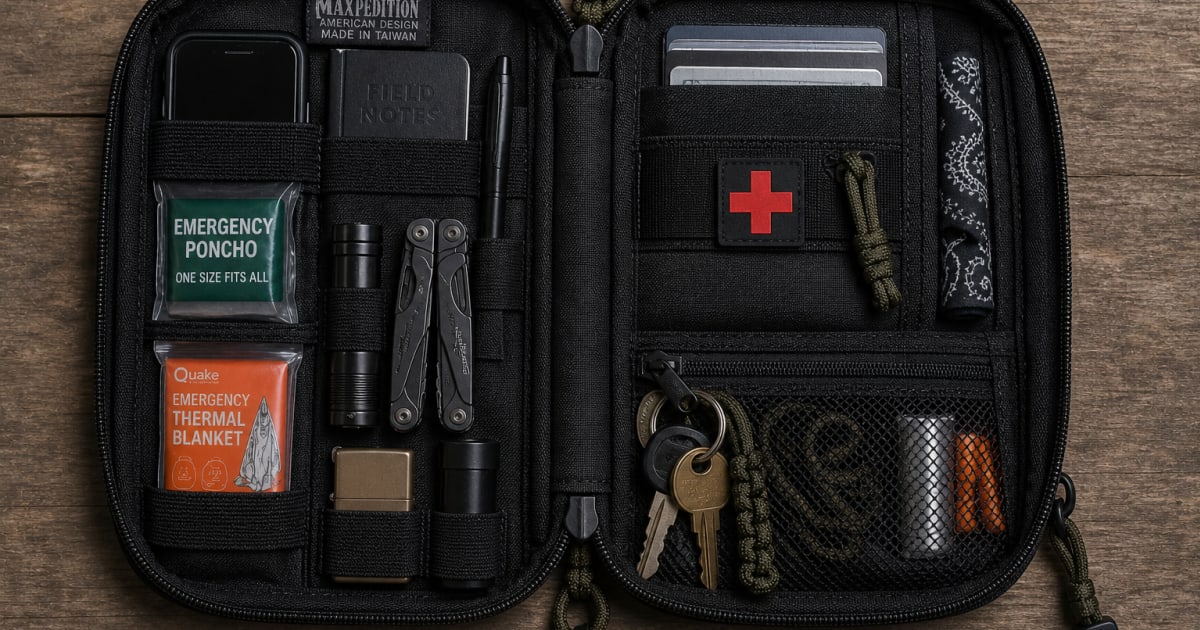
Best for: Keeping all EDC items organized and immediately accessible
Loose items scattered across multiple pockets defeat the purpose of EDC preparedness. A dedicated organizer pouch consolidates your kit into a single accessible unit that transfers between jackets, bags, and vehicles without reorganizing. The Maxpedition Micro fits in any jacket pocket while holding your full EDC kit organized and ready.
Key features:
- Multiple internal compartments for organized storage
- Fits in jacket pocket or clips to bag interior
- Durable 1000D nylon construction
- MOLLE compatible for attachment to larger bags
- Compact — 4.5 x 3 inches
👉 Check Price on Amazon — Maxpedition Micro Pocket Organizer
EDC Kit Comparison — By Lifestyle and Carry Style
Different daily routines require different EDC configurations. Here is how to adapt the core kit to your specific situation.
Office Worker / Commuter Priorities: Power bank, compact flashlight, first aid pouch, multi-tool Carry method: Bag or briefcase inner pocket plus jacket pocket for flashlight and lighter Key consideration: Office buildings lose elevator and HVAC access during outages — your EDC covers navigation and basic first aid until you can reach your vehicle kit
Outdoor Worker / Trades Priorities: Multi-tool, trauma first aid, flashlight, fire starting Carry method: Belt pouch for multi-tool and first aid, pocket for flashlight Key consideration: Physical work environments produce higher injury risk — trauma capability is the top priority
Parent / Family Manager Priorities: First aid, power bank, multi-tool, illumination Carry method: Purse or diaper bag dedicated pouch Key consideration: Children's first aid needs — add children's pain reliever, fever reducer, and allergy medication to your pouch
Vehicle-Heavy Lifestyle Priorities: Power bank, flashlight, multi-tool, fire starting Carry method: Center console organizer plus jacket pocket carry for most-used items Key consideration: Supplement your EDC with a complete vehicle emergency kit. See our Best Car Emergency Kit (2026) guide for vehicle-specific recommendations.
What Not to Carry — Common EDC Mistakes
Carrying too much — An EDC kit that weighs three pounds will be left at home within a week. Every item must earn its weight through genuine daily utility or emergency value. When in doubt, leave it out.
Buying cheap gear — EDC tools get used daily. A $4 flashlight that fails after three months is not a bargain — it is a liability. Invest in quality for the items you carry every day.
Never practicing with your kit — Knowing you have a tourniquet and never having applied one under stress provides false confidence. Take a basic Stop the Bleed course. Practice deploying your kit items before you need them under pressure.
Ignoring local laws — Knife blade length restrictions, multi-tool regulations, and other carry laws vary by state and municipality. Know the rules for everywhere you regularly travel.
Final Thoughts
Emergency preparedness built only around home supplies has a fundamental gap — you are not always home when emergencies happen. A commute, a work shift, a dinner out, a school pickup — the moments that make up most of your waking life happen away from your carefully stocked home kit.
An EDC kit closes that gap. It is not a survival system for extended wilderness scenarios. It is a practical, daily-carry collection of tools that handle the emergencies most statistically likely to affect you — wherever you happen to be when they occur.
Build it light enough to carry every day. Stock it with tools you know how to use. Keep it on you.
The preparedness that matters is the preparedness you have with you.
Explore our complete Emergency Kits & Bundles and Shop All Survival Gear to build your full preparedness system today.
⚠️ Emergencies don't wait until you're home. Build your everyday carry kit and stay prepared wherever life takes you.