Emergencies don't feel real — until they happen to you. A wildfire cuts off the highway, a hurricane knocks out power for weeks, or an earthquake leaves you without water. By then, it's already too late to make a plan.
The reality is stark — According to FEMA, only 39% of Americans have a household emergency plan, meaning about 6 out of 10 families go into a disaster completely unprepared. This guide explains exactly why a plan matters, what it needs to include, and how to build one your family can actually execute under pressure.

What Is a Family Emergency Plan?
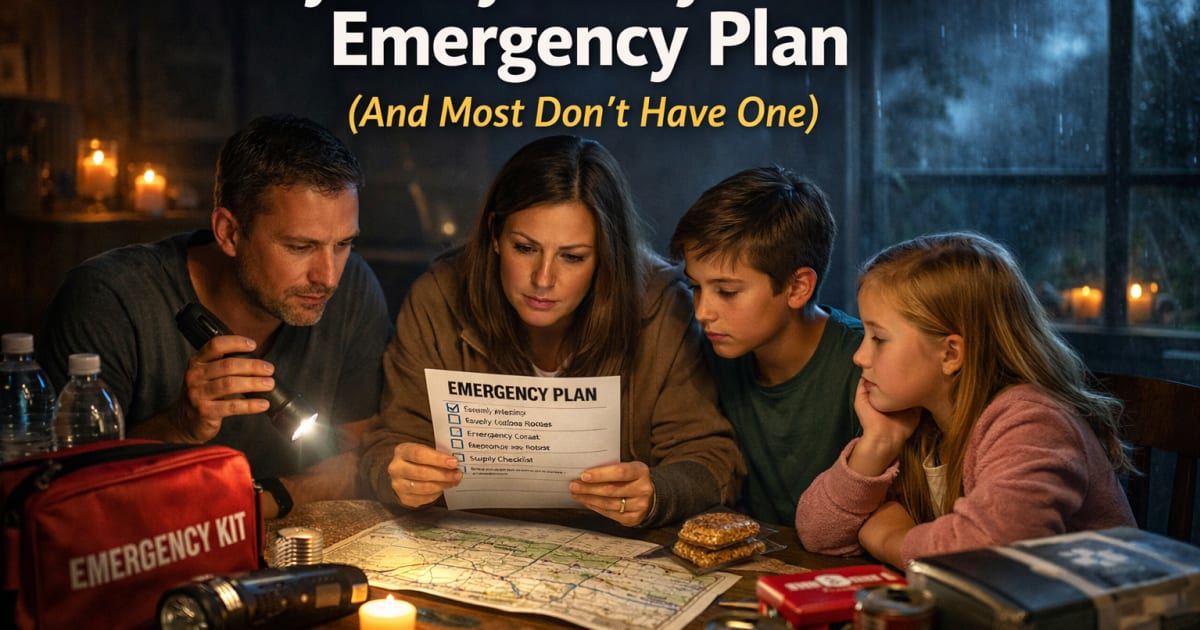
A family preparedness plan is a documented set of actions your household will take in the event of a disaster or emergency. It answers the critical questions your family needs answered before panic sets in:
• Where do we go if we have to evacuate? • How do we communicate if phones are down? • Who picks up the kids if parents are at work? • Where is our emergency kit? • What do we do if we get separated?
Without answers to these questions your family is improvising in the worst possible moment. With a plan everyone knows exactly what to do from the first second.
Why Most Families Don't Have a Plan — And Why That's Dangerous
The number one reason households skip emergency planning is the same reason they skip buying life insurance — it feels unnecessary until the moment it is desperately needed.
The CDC reports that families without emergency plans take significantly longer to evacuate, are more likely to return to dangerous situations to retrieve forgotten items, and experience higher rates of injury during disaster events.
Three specific dangers of having no plan:

- Decision Paralysis Under Stress
During a real emergency the human brain shifts into fight-or-flight mode. Rational decision-making becomes extremely difficult. A pre-made plan removes the need to make decisions under pressure — you simply execute what you already decided in a calm moment.
- Communication Breakdown
Cell networks routinely fail during major disasters due to tower damage or overwhelming call volume. Without pre-arranged meeting points and out-of-state contact numbers your family may have no way to locate each other.
- Wasted Critical Time
The first 15 minutes of an emergency are often the most important. Families without a plan spend those minutes figuring out what to do. Families with a plan spend those minutes doing it.
The 5 Core Elements of a Family Emergency Plan

- Communication Plan
Establish these before any emergency occurs:
Out-of-state contact — Choose one person outside your region who all family members will call or text to relay their location and status. Local calls often fail while long-distance calls go through.
Family text chain — Create a dedicated group text for emergencies. Text uses less network bandwidth than calls and often gets through when calls cannot.
Meeting points — Choose two locations. One near your home for sudden emergencies like house fires. One further away for neighborhood-wide evacuations.
Write all contact numbers on a laminated card. Do not rely on phones alone — if your battery dies or your phone is lost you need numbers you can remember or access physically.
- Evacuation Routes
Map at least two routes out of your neighborhood in every direction. Many households only know one way out — which becomes useless if that road is flooded, on fire, or gridlocked.
Drive your evacuation routes with your family before you need them. Know where the closest shelter locations are. Check your county or city emergency management website for official evacuation zones and shelter locations.
Identify a destination — a family member's home, a hotel outside the affected zone, or a designated shelter — so you are driving toward something specific rather than away from danger with no direction.

- Emergency Supply Kit
An emergency plan without supplies is just a piece of paper. Your family needs physical resources to execute the plan.
At minimum every household should have:
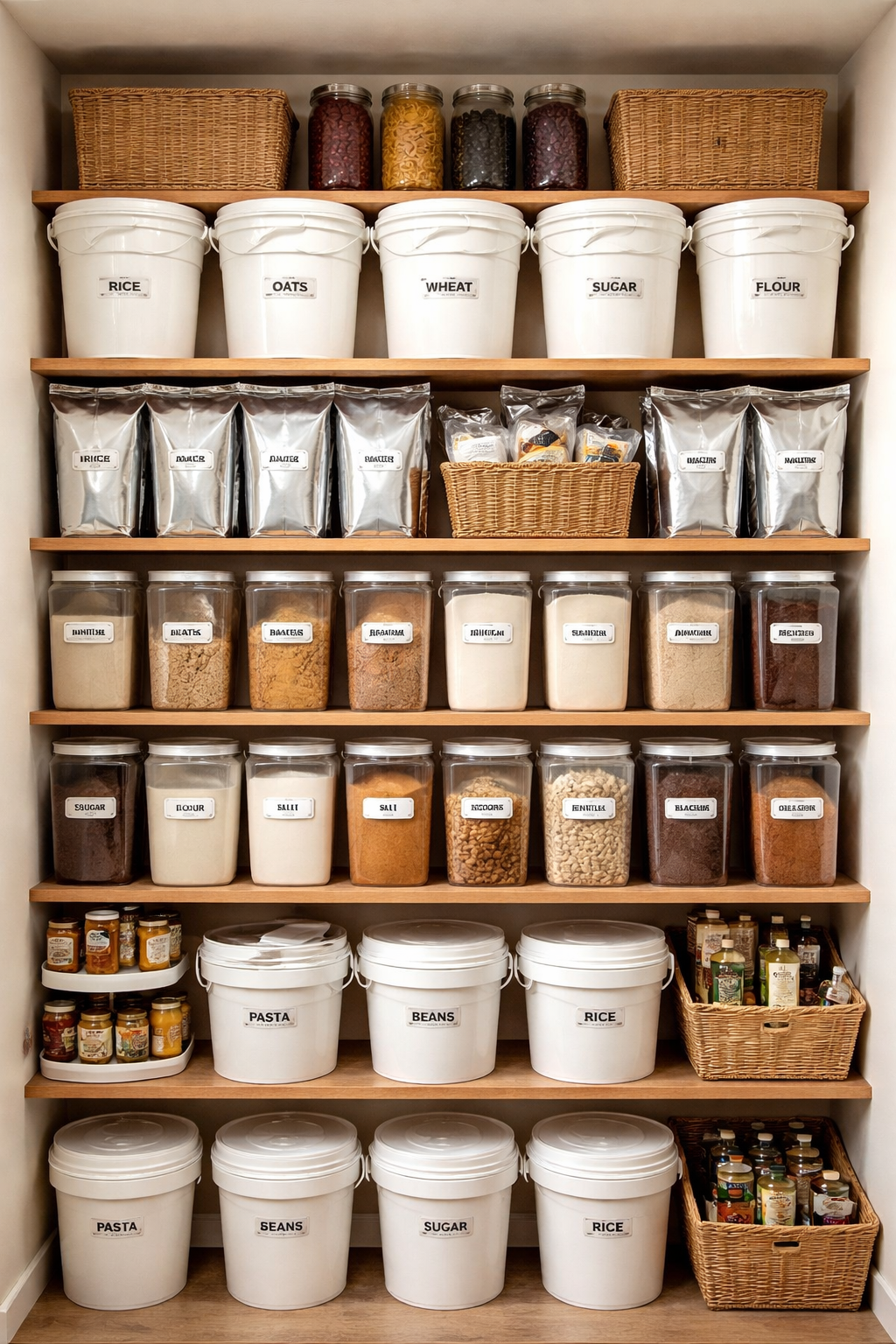
• 72-hour food supply — See our best emergency food kits guide (See our best emergency food kits guide) • Water — One gallon per person per day for at least 3 days • Water filtration — See our best water filtration systems guide (See our best water filtration systems guide) • First aid kit — A comprehensive kit covering wounds, medications, and trauma • Bug out bag — A pre-packed evacuation bag ready to grab in under 2 minutes • Emergency radio — Hand-crank or solar powered to receive alerts without grid power • Flashlights and batteries — Or solar and hand-crank alternatives • Copies of important documents — ID, insurance, medical records in a waterproof bag
Shop Emergency Radios on Amazon

Browse our Emergency Kits & Bundles (Emergency Kits & Bundles) for complete ready-to-go family systems.
- Special Needs Considerations
Every family has unique needs that a generic plan does not account for. Address these specifically:
Infants and young children — Extra formula, diapers, medications, comfort items, and car seats factored into evacuation logistics.
Elderly family members — Mobility considerations, prescription medications, and medical equipment power needs.
Pets — Most emergency shelters do not accept pets. Identify pet-friendly hotels along your evacuation route. Pack food, water, crate, and vaccination records for each pet.
Medical equipment — If any family member depends on powered medical equipment contact your local utility provider and identify backup power options. A solar generator (A solar generator) can provide critical backup power for medical devices.
Medications — Maintain at least a 2-week supply of all essential prescriptions. Talk to your doctor about emergency prescription supplies.
- Practice and Review
A plan that exists only on paper is only half a plan. Your family needs to practice it.
Run a quarterly emergency drill — it does not need to be elaborate. Walk through the evacuation route, confirm everyone knows the meeting points and out-of-state contact number, check that your emergency kit is stocked and supplies are not expired.
Review and update your plan annually or whenever your family situation changes — new address, new family members, new medications, children changing schools.
How to Build Your Family Emergency Plan in One Hour
Most families put off disaster planning because it feels overwhelming. But it doesn't have to be. Here is a simple one-hour process:

Minutes 0–15: Gather your household and discuss the five core elements above. Write down answers to each question as you go.
Minutes 15–30: Choose your out-of-state contact, establish your two meeting points, and save all emergency numbers in a shared note and on a laminated card.
Minutes 30–45: Walk through your home and identify where your emergency supplies are — or make a shopping list of what you are missing.
Minutes 45–60: Map your two evacuation routes on your phone and drive them mentally. Identify your destination.
That is it. One hour of calm planning replaces hours of panic during an actual emergency.
Free Resources to Help You Plan
These official resources are free and highly reliable:
• FEMA Emergency Preparedness Guide (FEMA Emergency Preparedness Guide) • Red Cross Emergency App (Red Cross Emergency App) • Ready.gov Family Plan Template (Ready.gov Family Plan Template) • Your county emergency management website — search "[your county] emergency management"
The Cost of Not Being Prepared
The financial and human cost of being unprepared in a real emergency is significant.
Families without emergency supplies spend significantly more in the immediate aftermath of disasters — on emergency hotel stays, replacement food and water, last-minute supplies at inflated prices, and emergency services.
More importantly, the stress of being unprepared during an emergency compounds an already difficult situation. Families with a plan and supplies report significantly lower stress levels during disaster events.
The cost of basic emergency preparedness — roughly $400 to $800 for a family of four — is a fraction of the cost of being unprepared once.
Start Today
The single most important thing you can do after reading this guide is take one concrete action today.
Not tomorrow. Not after the next paycheck. Today.
Choose one of these starting points:
• Download the Ready.gov family emergency plan template and fill it in tonight • Order a case of emergency water storage containers • Buy a basic first aid kit if you do not have one • Have a 15-minute family conversation about your evacuation plan
You do not need to do everything at once. You just need to start.
For the complete step-by-step beginner guide see — How to Start Prepping for Beginners in 2026
Build Your Complete Emergency Kit
Use these resources to build your family's emergency supplies:
Emergency Kits & Bundles — Complete ready-to-go family systems
Bug Out Bags & Emergency Kits — Pre-packed evacuation bags
Best Emergency Food Kits for Survival 2026
Best Water Filtration Systems for Survival 2026
Best Solar Generators and Power Stations for Emergencies 2026