Whether you're facing a natural disaster, power outage, or emergency evacuation, knowing the basics of survival can mean the difference between panic and confidence.
Most beginners don't know where to start. The internet is full of extreme advice designed for hardcore survivalists — not everyday families trying to protect themselves during a real emergency. This guide cuts through the noise.
These 15 essential survival tips are designed specifically for beginners in 2026. Each one is practical, actionable, and backed by gear you can get today. Whether you're building your first bug out bag, stocking your first emergency food supply, or simply trying to understand what your family actually needs — start here.
Master these 15 fundamentals and you'll be better prepared than 90% of American households.
Every beginner survival plan should cover water, food, shelter, first aid, lighting, communication, and a basic emergency plan. Focusing on these essentials first makes it easier to stay calm and prepared in any situation.
1. Master the Rule of Threes
Before anything else, understand the Rule of Threes — the foundation of all survival decision-making:
- 3 minutes without air
- 3 hours without shelter in harsh conditions
- 3 days without water
- 3 weeks without food
Use it to prioritize. When you're overwhelmed, ask: what's my most immediate threat right now?
2. Always Carry a 72-Hour Bug Out Bag
Your bug out bag is your most important preparation. It should be packed, accessible, and ready to grab in seconds.
Minimum contents:
- Water + purification method
- 3-day food supply
- Emergency shelter (tarp or bivvy)
- First aid kit
- Fire starter
- Flashlight or headlamp
- Emergency whistle
- Compass
Our top picks:
- 72-Hour Emergency Survival Kit (Complete) — fully packed, grab-and-go
- Beginner Prepper Starter Kit — best starting point for new preppers
Water: Start with the Most Important Need
3. Water Is Your #1 Priority
For our full water filtration breakdown, see our Best Water Filtration Systems for Survival (2026) guide.
You can survive 3 weeks without food but only 3 days without water. Never rely on a single source — always carry at least a backup water treatment method.
Without clean water, survival becomes extremely difficult within days — which is why having a reliable system matters. See our best water filtration systems to find options that work in real emergencies.
What to carry:
- Personal water filter — filters up to 1,000 gallons from any source
- Purification tablets — lightweight backup that fits in any pocket
- Collapsible containers — store flat, expand when needed
Our top picks:
- LifeStraw Personal Water Filter — removes 99.9% of bacteria and parasites
- Water Purification Tablets — essential backup, weighs almost nothing
- Collapsible Water Containers — BPA-free, fold flat when empty
Shelter and Warmth: Stay Protected
4. Build Emergency Shelter Fast
Exposure kills faster than hunger or thirst. In a crisis situation, shelter is your second priority after water. You don't need a tent — a tarp and paracord can save your life.
What to carry:
- Emergency mylar blanket — reflects 90% of body heat, weighs 2oz
- Emergency bivvy sack — full-body reusable warmth
- Heavy-duty tarp — lean-to, A-frame, or ground cover
- 550 paracord — rig any shelter configuration
Our top picks:
- Emergency Bivvy Sack — best reusable emergency shelter
- Heavy-Duty Mylar Emergency Blankets 5-Pack — one for every family member
- Heavy-Duty Survival Tarp 10x12ft — shelter, ground cover, rain collection
5. Always Carry Multiple Fire Starters
Fire provides warmth, purifies water, cooks food, signals rescuers, and boosts morale. Never rely on a single ignition method — conditions that defeat one method rarely defeat all of them.
What to carry:
- Ferro rod — thousands of strikes, works wet and cold
- Waterproof matches — reliable backup
- Windproof lighter — easiest under stress
- Tinder kit — guaranteed ignition material
Our top picks:
- Ferro Rod & Striker Set — 5,500°F sparks in any weather
- Emergency Fire Starter Kit — ferro rod, tinder, matches, and lighter in one waterproof case
- Waterproof Survival Matches 4-Box Set — storm-proof, burn 15 seconds each
First Aid and Medical Supplies: Be Ready for Injuries
6. Build a Proper First Aid Kit
Injuries happen fast in emergencies. A basic kit covers cuts and burns — but a serious preparedness kit covers life-threatening trauma.
What to include:
- Tourniquet — stops life-threatening limb bleeding
- Hemostatic gauze — for wounds where tourniquets cannot reach
- Comprehensive first aid kit — bandages, antiseptic, medications
- CPR face shield — removes barriers to immediate action
Our top picks:
- IFAK Trauma Kit — military-grade, covers life-threatening injuries
- CAT Tourniquet — gold standard, one-handed application in seconds
- Comprehensive First Aid Kit 520-Piece — complete home and car kit
7. Navigate Without GPS
When cell towers fail and batteries die, you need analog navigation. A compass and a map never run out of power.
What to carry:
- Baseplate compass — accurate land navigation without batteries
- Waterproof topographic maps — your region's terrain in detail
- Hand crank NOAA weather radio — stay informed when cell service is down
Our top picks:
- Suunto A-10 Field Compass — trusted by military navigators worldwide
- Waterproof Topographic Map Set — laminated, tear-resistant
- Midland ER310 Hand Crank Emergency Radio — solar + hand crank, NOAA alerts, phone charging
Food: Build a Reliable Emergency Supply
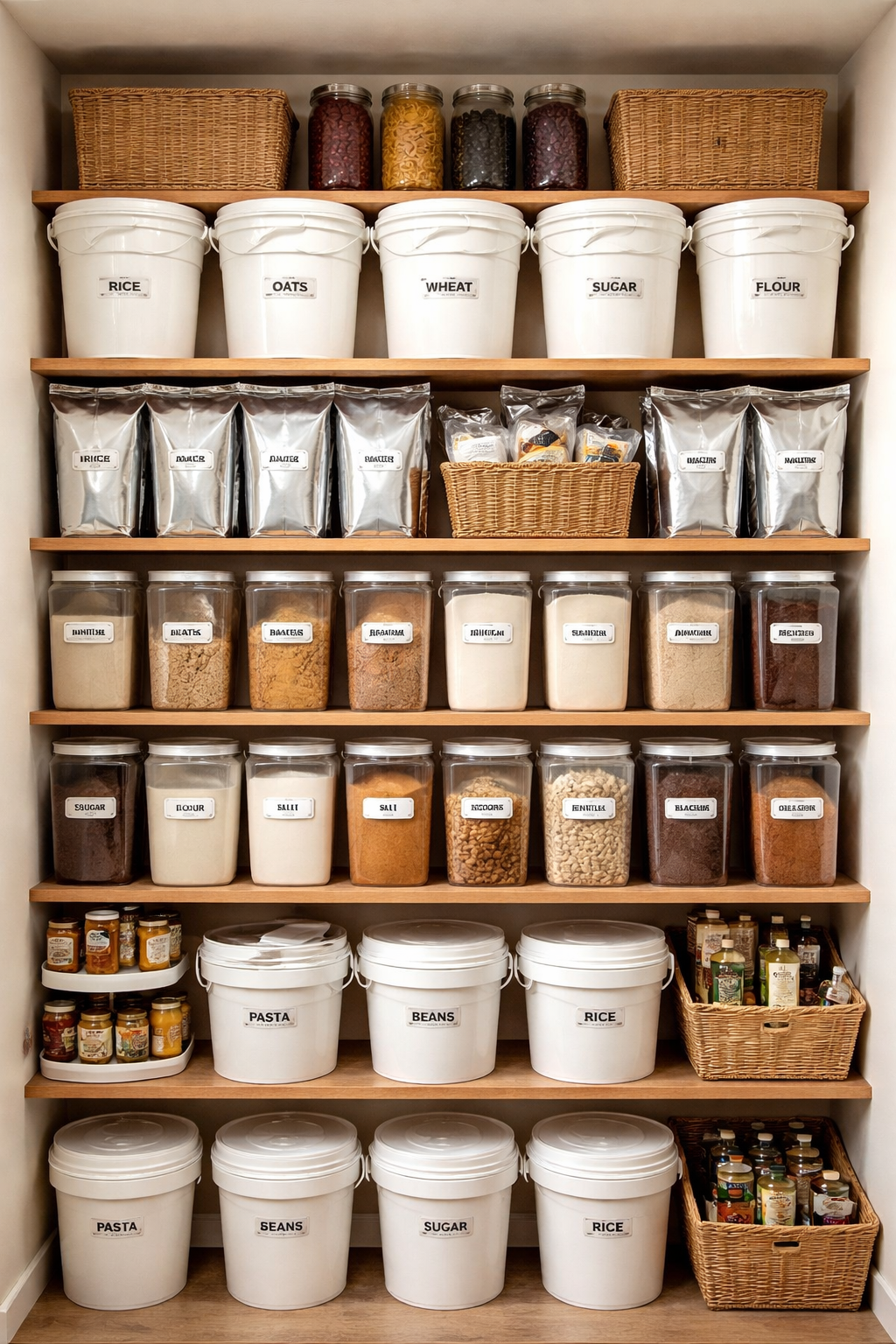
8. Stock Emergency Food Supplies
For our full food storage guide, see our Best Emergency Food Kits for Survival (2026) guide.
You can survive 3 weeks without food — but hunger affects decision-making and morale long before that. Stock food that requires no preparation and has a long shelf life.
What to stock:
- Emergency food bars — 3,600 calories, no prep needed
- Freeze-dried meals — 25-year shelf life, just add water
- MREs — complete meals with flameless heaters
Our top picks:
- 3600 Calorie Emergency Food Bars — Coast Guard approved, works in any conditions
- 72-Hour Emergency Food Kit — 3 days of balanced meals for one person
- Military-Style MRE Meal Packs — complete meals, no water or cooking required
9. Maintain Emergency Hygiene
Sanitation failure causes disease outbreaks faster than almost any other factor in a disaster. Do not overlook hygiene in your emergency kit.
What to stock:
- Waterless wet wipes — full-body cleaning without running water
- Hand sanitizer — kills 99.99% of germs
- Portable camping toilet — essential for shelter-in-place emergencies
- Biodegradable soap — safe for field use near water sources
Our top picks:
- Waterless Wet Wipes 300-Count — extra-large, hypoallergenic
- Emergency Hygiene Kit — pre-packed with everything you need
- Portable Camping Toilet — essential for extended home emergencies
Communication: Stay Informed
10. Have a Communication Plan
When phones fail, you need backup communication. Establish a family meeting point and carry devices that work without cell service.
What to carry:
- Hand crank NOAA weather radio — receive emergency alerts without power
- Walkie talkies — keep your group connected within range
- Emergency whistle — 120dB signal audible over a mile, no batteries needed
Our top picks:
- Midland GXT1000VP4 Walkie Talkies — 50-mile range, NOAA weather alerts
- Fox 40 Emergency Survival Whistle — pealess, works wet, 120dB
- Garmin inReach Mini 2 — two-way satellite messaging when all else fails
Power: Stay Charged in Any Situation
11. Prepare for Power Outages
For a complete breakdown of what happens hour by hour, read our What Happens If the Power Grid Goes Down? guide.
Power outages are the most common emergency most families face — and most are completely unprepared. Have multiple power sources ready before the grid goes down.
What to have:
- Solar + hand crank emergency radio — alerts and power without the grid
- Portable power station — charge phones, run small appliances
- Solar panels — recharge your power station indefinitely
- Battery-powered lanterns — safe, bright indoor lighting
Our top picks:
- Jackery Explorer 300 Portable Power Station — 293Wh, powers phones, laptops, small appliances
- Goal Zero Nomad 20 Solar Panel — pairs with any power station
- LE LED Camping Lantern 4-Pack — 1000 lumens, waterproof, 40+ hour runtime
12. Secure Your Home and Perimeter
In extended emergencies, security becomes a real concern. You don't need to go overboard — but basic measures protect your family.
What to have:
- Door barricade bar — prevent forced entry without any installation
- Security alarm — loud deterrent for windows and doors
- Motion sensor lights — solar-powered perimeter lighting
Our top picks:
- Master Lock Door Security Bar — adjustable, works on any door
- GE Personal Security Window/Door Alarm 4-Pack — 120dB alarm, no wiring needed
- BAXIA Solar Motion Sensor Lights — weatherproof, no wiring required
13. Master Basic Survival Skills
Gear is only half the equation. The other half is knowing what to do with it. Practice before an emergency.
Skills every beginner should practice:
- Start a fire with a ferro rod and natural tinder
- Purify water using multiple methods
- Signal for rescue using a mirror, whistle, or fire
- Apply a tourniquet correctly under 60 seconds
- Navigate using a compass and topographic map
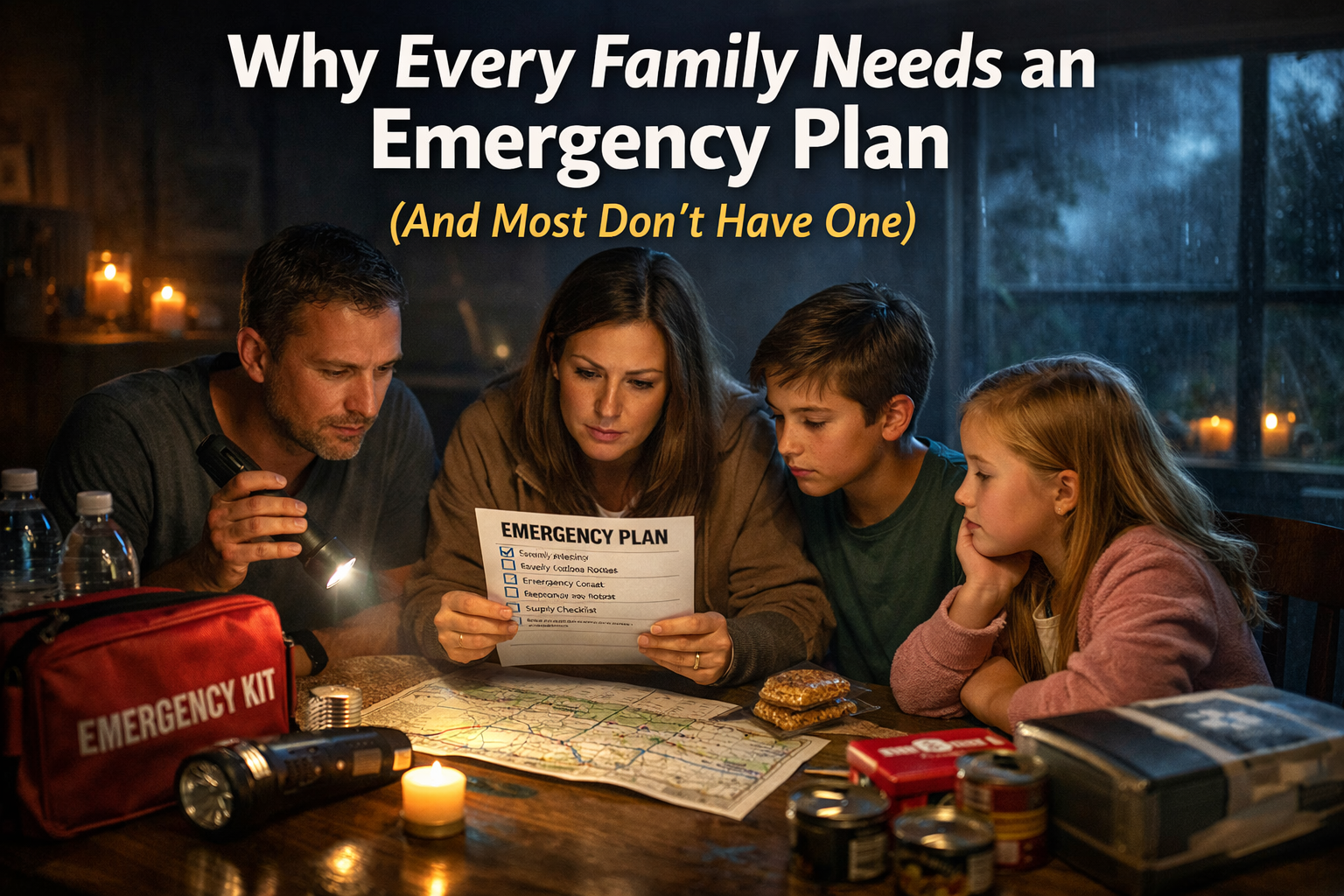
14. Create a Family Emergency Plan
Preparedness is a family effort. Everyone needs to know the plan before an emergency happens.
Your plan should include:
- Primary and backup meeting locations
- Out-of-state contact person (easier to reach than local lines during disasters)
- Evacuation routes from home and workplace
- Emergency contact list printed on paper (not just saved on a phone)
- Copy of important documents in a waterproof bag
15. Practice and Rotate Your Supplies
Preparedness isn't a one-time purchase. It's an ongoing habit.
What to do:
- Test your gear annually — fire starters, radios, flashlights
- Rotate food and water supplies before expiration
- Run a "practice drill" — grab your bug out bag and time yourself
- Update your plan when your family situation changes
Final Thoughts
Survival preparedness doesn't have to be complicated or expensive. Start with the basics: water, food, shelter, fire, first aid, communication, and power. Build from there.
The most important step is the first one. Pick one tip from this guide, act on it today, and build momentum from there. Every item you add to your kit and every skill you practice increases your family's safety margin.
Ready to get started? Browse our Emergency Kits & Bundles — fully assembled starter kits that cover the most critical survival bases in one purchase.