Prepping isn't complicated or extreme — it's practical. It simply means being ready before an emergency happens, so when disaster strikes, your family has what it needs to stay safe.
This complete guide to emergency readiness for beginners covers everything you need to know about how to start prepping in 2026 — step by step, without wasting money or getting overwhelmed. Whether you are brand new to emergency preparedness or looking to build a more complete system, this guide gives you a clear action plan from day one.

What Is Prepping?
If you are wondering how to start prepping the answer is simpler than you think. Preparation for beginners means taking practical steps before an emergency to ensure your family can survive and function without outside help for at least 72 hours — and ideally much longer.
It is not about doomsday scenarios or extreme survivalism. According to FEMA, most emergencies are far more ordinary — power outages, hurricanes, winter storms, job loss, and supply chain disruptions. These are the situations prepping actually prepares you for.
The Red Cross recommends every household maintain at minimum a 72-hour emergency supply kit. Most American families do not have one. That gap between where most people are and where they should be is exactly what this guide helps you close.
Why 2026 Is the Right Time to Start Prepping
In 2026, emergency preparedness is no longer optional for responsible families. Power grid failures are increasing. Natural disasters are becoming more frequent and more severe. Supply chain disruptions have shown that store shelves can empty within hours. Geopolitical uncertainty is at levels not seen in decades.
The families who weather these disruptions best are not the ones who react — they are the ones who prepared before anything happened.
The good news is you do not need to spend thousands of dollars or build a bunker. A solid basic prep kit for a family of four costs $200 to $400 and can be built over a few weeks by adding a few items at a time.
Step 1 — Start With the Right Mindset
The most important first step in getting ready for beginners is understanding what you are actually preparing for — before buying anything.
Most beginners make the mistake of thinking about extreme worst-case scenarios and getting overwhelmed. Instead start by asking one simple question — what is most likely to affect my family in the next 12 months?
For most American families, a realistic threat list looks like this:
• Extended power outage — 3 to 14 days • Severe weather event — hurricane, tornado, blizzard, flooding • Medical emergency without immediate access to help • Supply chain disruption — empty shelves, fuel shortage • Job loss or financial disruption
You are not prepping for the end of the world. You are getting ready for the next storm season. That shift in mindset makes everything simpler and more achievable.
Step 2 — Build Your Emergency Water Supply
Water is the single most critical survival resource. The human body can survive weeks without food but only 3 days without water.

FEMA recommends storing one gallon of water per person per day for at least 3 days. For a family of four that means 12 gallons minimum — ideally 28 gallons for a one week supply.
How to build your water supply:
• Buy dedicated water storage containers — blue 5-gallon jugs are the standard • Fill them with tap water and add water preserver drops to extend shelf life • Store in a cool dark location away from direct sunlight • Rotate your supply every 12 months
Beyond stored water you need a filtration method for sourcing clean water on the go. A personal water filter like the LifeStraw can filter up to 1,000 gallons from any water source — rivers, lakes, even puddles.
Shop Water Filtration on Amazon
For our full water filtration guide see — Best Water Filtration Systems for Survival 2026
Step 3 — Build Your Emergency Food Supply
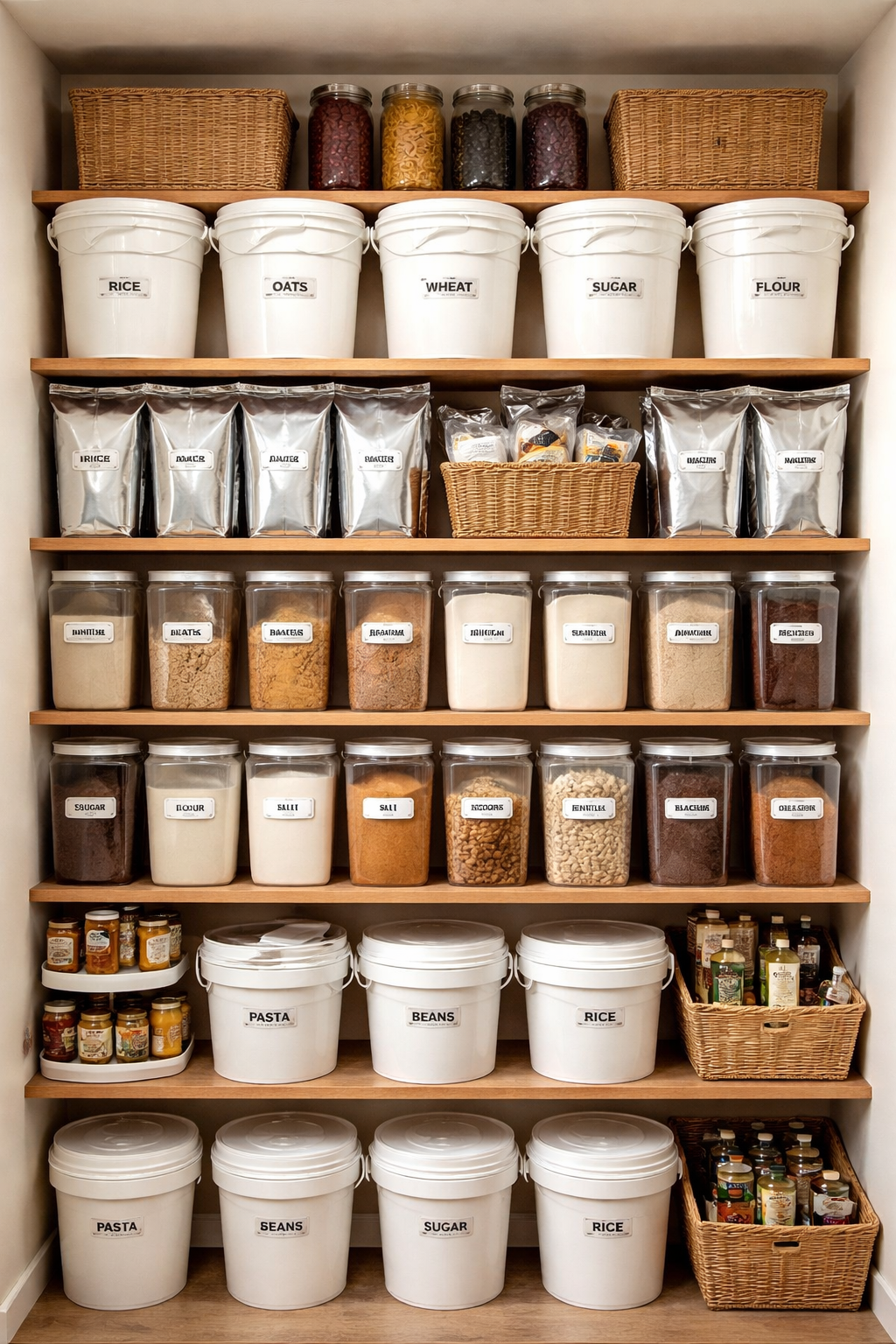
After water comes food. Your emergency food supply does not need to be complicated or expensive. Start with what you already eat and build from there.

The beginner food storage strategy:
• Buy extra of what your family already eats — canned goods, pasta, rice, beans • Focus on shelf-stable foods that require minimal preparation • Aim for 2,400 calories per person per day • Store at least a 3-day supply — work toward 2 weeks
For your bug out bag you need lightweight calorie-dense options that require no cooking — emergency food bars and freeze-dried meals are ideal.
For our full food guide see — Best Emergency Food Kits for Survival 2026
Step 4 — Build Your Bug Out Bag
A bug out bag — also called a go bag or 72-hour kit — is a pre-packed backpack containing everything your family needs to survive for 72 hours if you have to evacuate your home immediately.

Every adult in your household should have their own bug out bag. Children over 10 should carry a smaller version with their personal items.
Your bug out bag should include:
• Water and filtration • 72-hour food supply • First aid kit • Emergency shelter — mylar blanket or bivvy sack • Flashlight and extra batteries • Hand crank emergency radio • Copies of important documents • Cash in small bills • Multi-tool and knife • Fire starter
For the complete bug out bag checklist see — Best Bug Out Bag Essentials Checklist 2026
For bag recommendations see — Best Tactical Backpacks and Bug Out Bags 2026
Step 5 — Build Your Home Emergency Kit
Your bug out bag is for evacuation. Your home emergency kit is for sheltering in place — staying home during an extended power outage, severe weather, or supply disruption.

Your home emergency kit should include everything in your bug out bag plus:
• 2-week food and water supply • Backup power — solar generator or power station • First aid kit — larger and more comprehensive than your bug out bag kit • Medications — 2-week supply of all prescriptions • Manual can opener • Extra fuel for vehicles • Battery powered or hand crank radio • Sanitation supplies — toilet paper, hand sanitizer, waste bags • Cash — ATMs and card readers fail during power outages
For backup power options see — Best Solar Generators and Power Stations for Emergencies 2026
Shop Emergency Power on Amazon
Step 6 — Make Your Family Emergency Plan
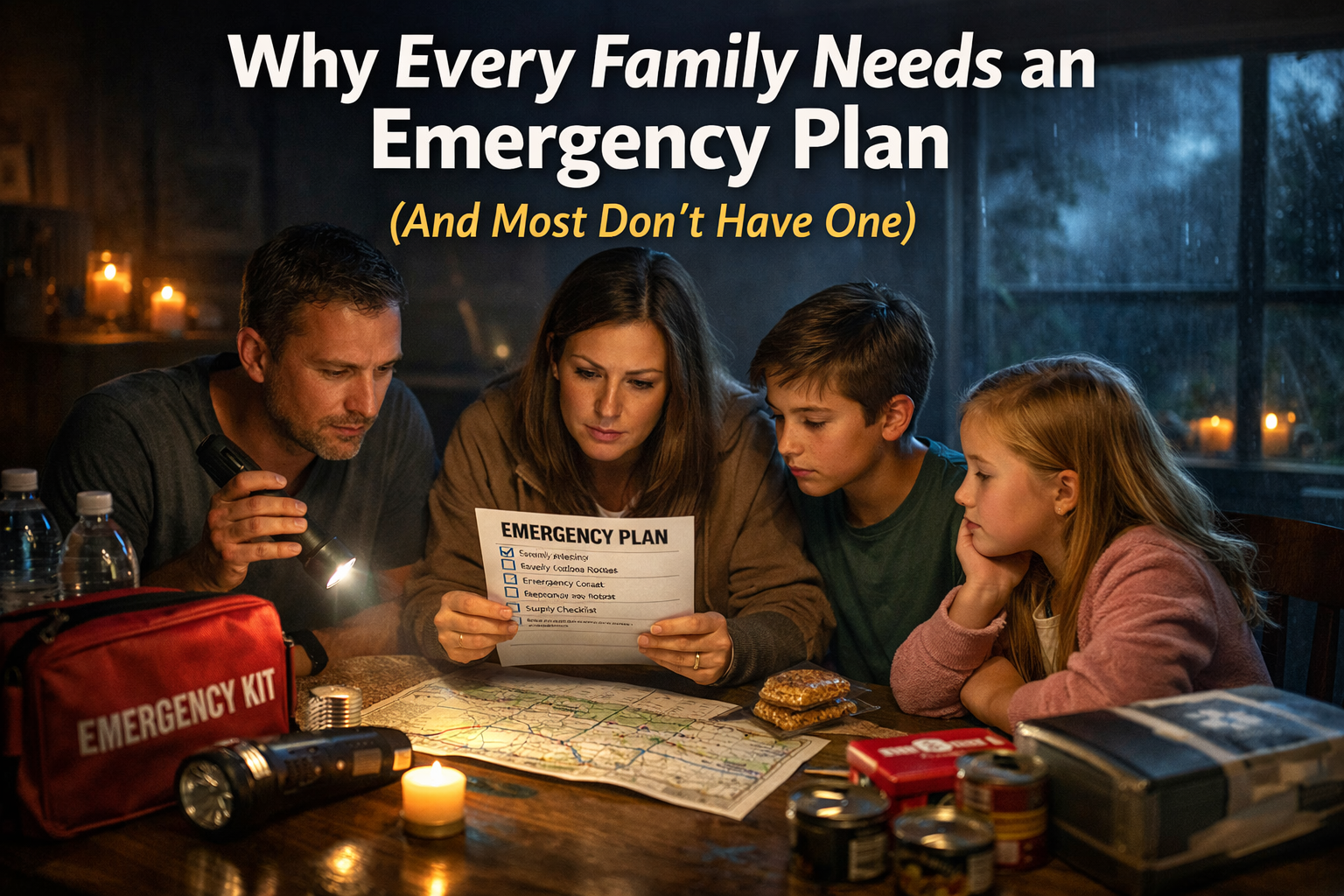
Supplies without a plan are only half the equation. Your family needs to know what to do when an emergency happens — before it happens.
Your emergency plan needs to answer five questions:
• Where do we go if we have to evacuate? • How do we communicate if cell phones are down? • Who picks up the kids if parents are separated? • What are our two evacuation routes? • Who is our out-of-state emergency contact?

For the complete emergency planning guide see — Why Every Family Needs an Emergency Plan
Step 7 — Learn Basic Survival Skills
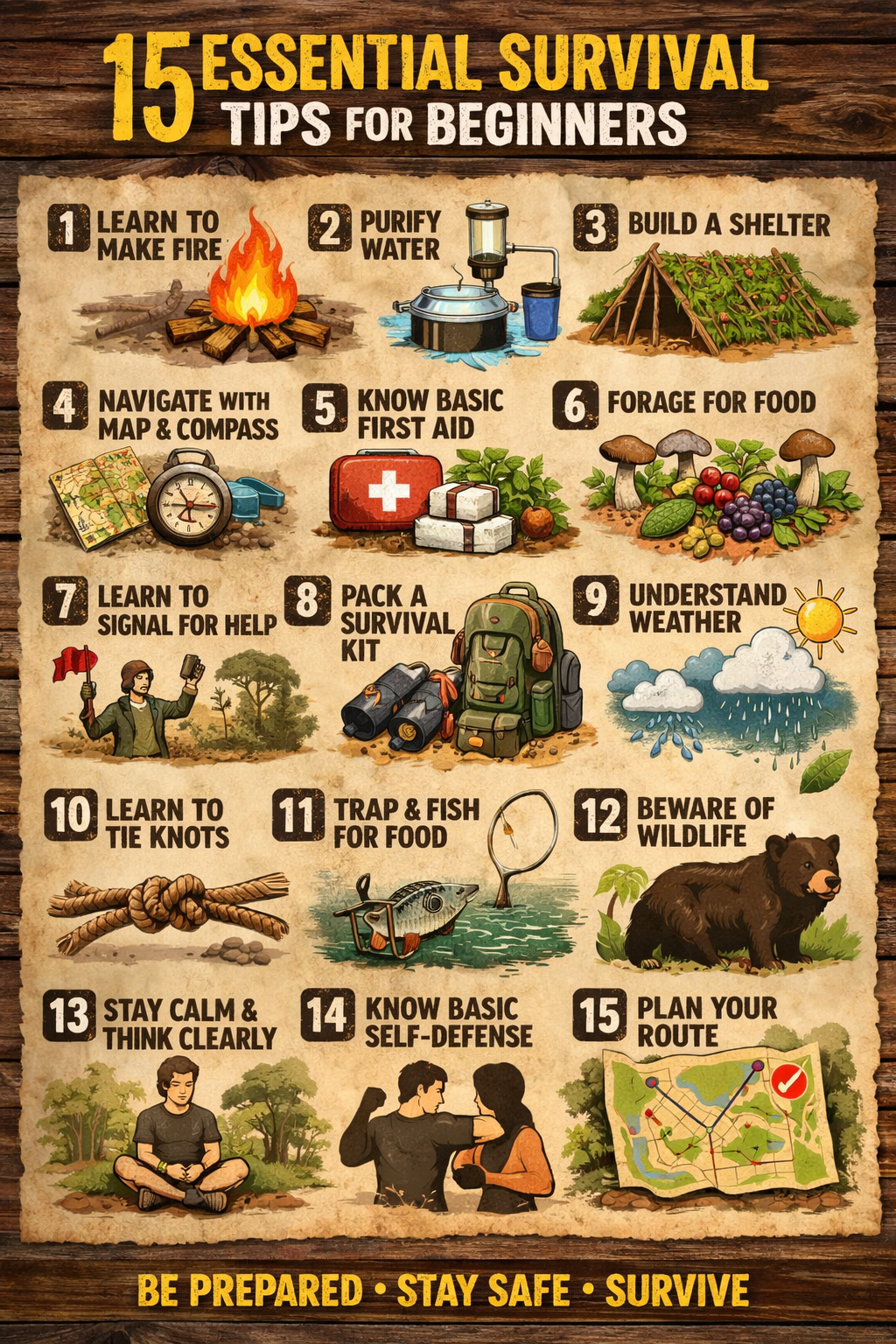
Gear and supplies are only as useful as the skills behind them. You do not need to become an expert — focus on the basics that apply to real world emergencies.
The five skills every beginner prepper should learn:
• First aid and CPR — take a basic Red Cross course • Fire starting — with a lighter, matches, and a ferro rod • Water purification — beyond filters, know how to boil and chemically treat water • Navigation — basic map reading and compass use • Food preservation — how to safely store and rotate food supplies
These skills cost nothing to learn and make your supplies significantly more effective.
How Much Does Prepping Cost?
One of the most common concerns for new preppers is cost. The reality is that basic emergency preparedness is far more affordable than most people assume.
A realistic budget breakdown for a family of four:
• 3-day emergency water supply — $30 to $60 • 2-week food supply — $150 to $300 • Bug out bag with gear — $100 to $250 • First aid kit — $40 to $80 • Flashlights and batteries — $20 to $40 • Emergency radio — $30 to $60
Total for a solid basic setup: $370 to $790 depending on what you already own.
You do not need to spend it all at once. Most experienced preppers recommend buying a few items per paycheck and building your kit over 4 to 8 weeks. The Subscribe & Save option on Amazon makes this even easier by automating regular deliveries of consumables like water purification tablets and food bars.
Common Beginner Prepping Mistakes to Avoid
Avoid these common pitfalls that trip up new preppers:
Buying gear before making a plan — Know what you are preparing for before buying anything. Your threat assessment drives your purchases.
Focusing only on worst-case scenarios — Most emergencies are mundane. A 2-week power outage is far more likely than a total societal collapse. Prep for what is realistic first.
Neglecting water — Most beginners focus on food and forget that water is the critical resource. Build your water supply first.
Buying cheap gear that fails when you need it — A $5 flashlight that fails in a real emergency is worse than no flashlight. Invest in reliable gear for critical items.
Not rotating supplies — Food and water have expiration dates. Build a rotation system from the start.
Going it alone — Emergency preparedness is stronger as a community. Talk to neighbors, coordinate with family members, and consider local CERT (Community Emergency Response Team) training.
Your First 30 Days of Prepping — Simple Action Plan
Here is a simple 30-day plan to go from zero to prepared:
Week 1 — Water Buy 28 gallons of water storage for a family of four. Add a quality water filter.
Week 2 — Food Build a 2-week shelf-stable food supply. Focus on foods your family already eats.
Week 3 — Bug Out Bag Assemble one complete bug out bag per adult. Use our complete checklist.
Week 4 — Plan and Power Create your family emergency plan. Add flashlights, batteries, and a hand crank radio. Start researching backup power options.
Start Here — Your Complete Prepping Resource Guide
Use these guides to go deeper on each topic:
Water and Hydration Best Water Filtration Systems for Survival 2026
Emergency Food Best Emergency Food Kits for Survival 2026
Bug Out Bags Best Bug Out Bag Essentials Checklist 2026 Best Tactical Backpacks and Bug Out Bags 2026
Emergency Power Best Solar Generators and Power Stations for Emergencies 2026
Family Planning Why Every Family Needs an Emergency Plan
Shop by Category Emergency Kits & Bundles Bug Out Bags & Emergency Kits Water & Hydration Food & Nutrition Power & Energy
The most important thing you can do today is start. Pick one item from the list above and do it. Preparedness is built one step at a time — and every step matters.