A major power outage is no longer a “what if” scenario.
It has already happened — in Texas, after major Gulf Coast hurricanes, during Northeast ice storms, and throughout wildfire seasons in the West. Each time, the pattern repeats: households with the right supplies stay in control, while others are forced to react under pressure.
A true grid-down event goes far beyond a temporary inconvenience. Water pressure drops. Refrigeration stops. Fuel becomes limited. Payment systems fail. Communication breaks down. The effects compound quickly — and last longer than most people expect.
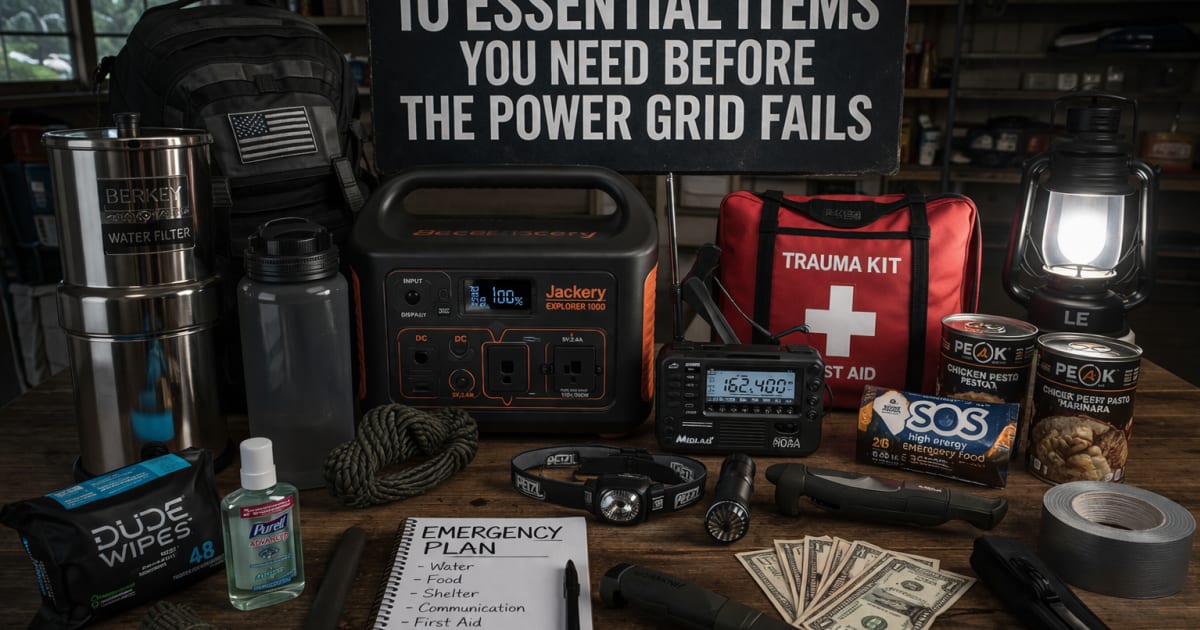
The items below aren’t extreme or specialized gear. They’re practical essentials that directly solve the real problems a power outage creates — in the exact order those problems tend to appear.
See how a real grid-down scenario unfolds hour by hour
1. A High-Capacity Water Filtration System
Water becomes critical almost immediately during an extended outage.
Municipal systems depend on electric pumps. Once electricity is lost, pressure begins to drop within hours. Within a couple of days, access can stop entirely in many areas.
Stored water is essential, but storage alone has limits. A high-capacity gravity filter or a reliable pump filter allows you to safely use water from rivers, lakes, or other local sources — turning unsafe water into a usable supply.
Focus on systems that remove bacteria, parasites, and heavy metals while maintaining a strong flow rate. Filters rated for tens of thousands of gallons provide long-term reliability. Personal straw filters are useful backups, but households need volume capacity, not just individual use options.
Pair filtration with proper storage containers — sealed, BPA-free, and kept out of direct sunlight.
Best Water Filtration Systems for Survival 2026
2. A Portable Power Station with Solar Charging
Portable power stations operate very differently from gas generators.
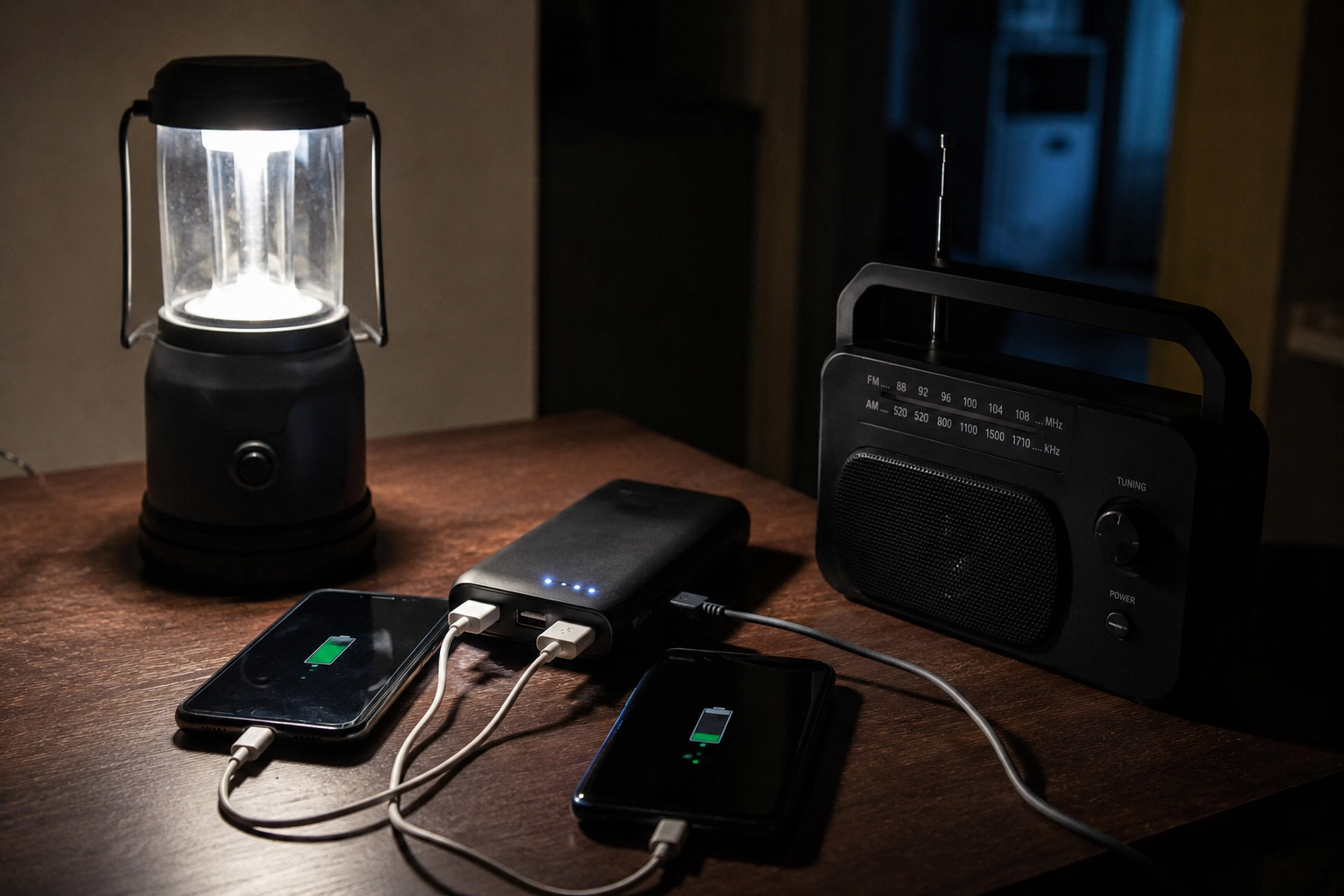
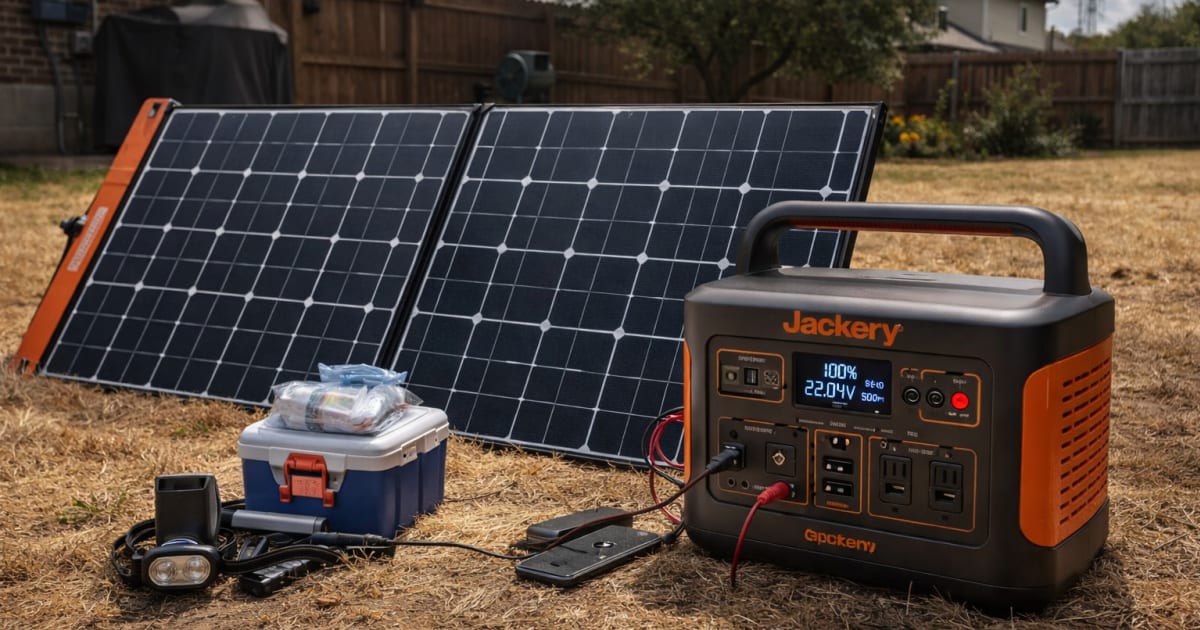
They run silently, require no fuel, and produce no carbon monoxide. When paired with solar panels, they can recharge continuously, which becomes critical during longer outages.
A 1,000Wh unit can power a refrigerator for several hours, recharge phones multiple times, support medical devices overnight, and maintain essential lighting. A 100-watt solar panel can often restore a full charge within a day of good sunlight.
This is not just a convenience — it supports essential functions. Households with backup electricity maintain communication, preserve temperature-sensitive supplies, and keep critical devices running even when everything else is offline.
Best Solar Generators & Power Stations for Emergencies 2026
3. Emergency Food Supply with a Long Shelf Life
The average household only has a few days of usable food once electricity is lost, and that number drops quickly when refrigeration stops working.
Perishable items spoil within 24 to 48 hours. Meals that require cooking become more difficult without electricity.
A reliable food reserve focuses on shelf-stable items that require minimal preparation while providing sufficient calories. Freeze-dried meals with long shelf lives, emergency food bars designed for extreme conditions, and sealed supply kits form a solid foundation.
A two-week supply is a practical target. This is not because every outage lasts that long, but because shorter preparations often leave households scrambling once initial supplies run out.
Best Emergency Food Kits for Survival 2026
4. A Hand Crank or Solar Emergency Radio
Communication gaps create uncertainty.
Cell towers rely on backup power that often lasts only 48 to 72 hours. After that, service becomes unreliable. Digital updates slow down, and information becomes harder to verify.
A hand crank or solar-powered NOAA radio provides direct access to official broadcasts, weather alerts, and emergency updates without relying on batteries or the grid.
It is one of the most affordable items on this list, yet one of the most valuable. Accurate information helps guide decisions — whether to stay in place, conserve resources, or prepare for further disruption.
You can also monitor real-time disaster alerts for your area:
View Live Disaster Alerts for Your Area

5. A Trauma-Grade First Aid Kit
Standard kits are built for minor injuries.
In an extended outage, emergency services may be delayed or unavailable. Situations that would normally be handled quickly can become serious without immediate care.
A trauma-grade kit includes tourniquets, hemostatic gauze, pressure dressings, and supplies designed to manage severe injuries.
Every household member should understand how to use each item. A well-stocked kit only provides value if it can be used effectively under pressure.
6. Backup Lighting — Headlamps, Lanterns, and Candles
Darkness slows everything down and increases risk.
Simple tasks take longer. Moving through unfamiliar spaces becomes more dangerous. Visibility affects both safety and efficiency.
Headlamps provide focused, hands-free lighting. Lanterns illuminate larger areas for shared spaces. Candles offer extended backup when battery-powered options need to be conserved.
Rechargeable devices should be fully charged ahead of time. Keeping spare batteries on hand ensures continued use when recharging is not possible.
7. A Multi-Tool and Basic Hand Tools
Without electricity, everyday systems stop working.
Garage doors remain closed. Pipes may burst. Minor structural issues need immediate attention.
A high-quality multi-tool handles a wide range of repairs — cutting, tightening, prying, and more. A fixed-blade knife adds versatility for food preparation and general tasks. A folding saw, duct tape, and paracord round out a simple but effective repair kit.
These tools are practical in both everyday situations and emergencies.

8. Cash in Small Bills
Electronic payment systems depend on energy.
When they go offline, card readers stop working, ATMs shut down, and digital wallets become unusable.
Cash becomes the only reliable form of payment. Smaller bills are especially important, as making change may not be possible during high-demand situations.
A secure reserve of small denominations ensures access to goods and services when digital systems fail.
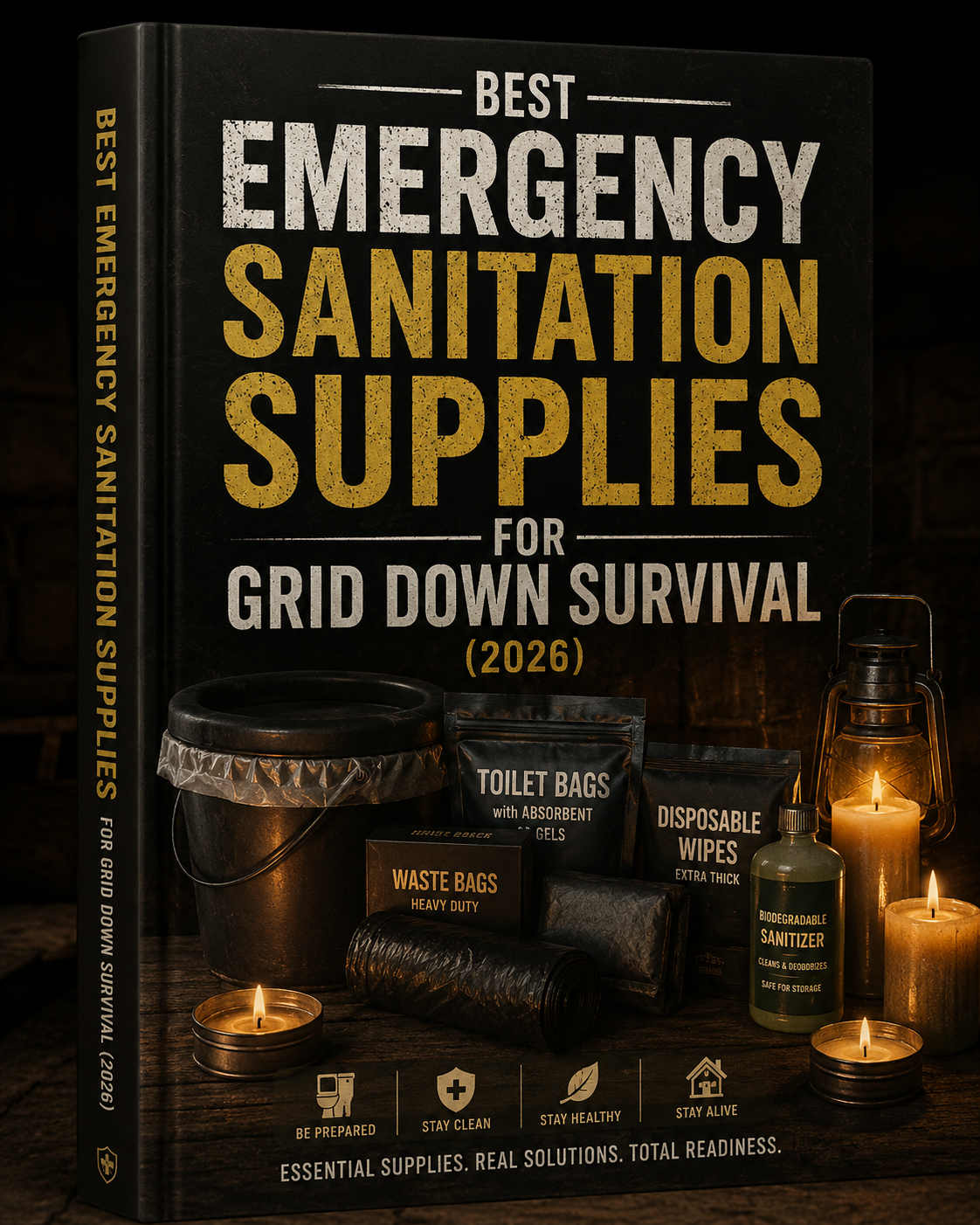
9. Hygiene and Sanitation Supplies
Sanitation is often overlooked but becomes critical quickly.
Without running water, toilets stop functioning, and maintaining basic hygiene becomes more difficult. These conditions can lead to increased health risks within a short period.
A portable toilet with waste bags addresses immediate needs. Wet wipes support hygiene without requiring water. Hand sanitizer, soap, and proper waste disposal help maintain a cleaner environment.
Planning for sanitation helps preserve health and reduces additional complications during an already difficult situation.
10. A Written Emergency Plan
Supplies are only part of the equation.
During an outage, stress increases, and decisions need to be made quickly. A written plan removes uncertainty and provides clear direction.
It should include meeting points, urgent contacts, evacuation routes, supply locations, and individual responsibilities.
Practicing the plan once ensures that everyone understands their role. Familiarity improves coordination when it matters most.
Why Every Family Needs an Emergency Plan
The Window Before It Closes
Recognizing the possibility of a grid failure is straightforward. Taking action ahead of time is what sets prepared households apart.
These items are available now and address challenges in the typical order they arise: water first, then food, communication, sanitation, and so on.
Households that build this foundation ahead of time are better positioned to manage disruptions when they occur.
Want to know exactly what would happen to YOUR home and location in a real grid-down event?
Run your free Grid Down Simulator now