The moment a power outage begins, your phone becomes the most important device in your household. It is your connection to family, your source of emergency alerts, your flashlight, your map, and your window into what is happening outside your front door.
The problem is that phones were not designed to survive extended blackouts. The average smartphone battery lasts 6 to 12 hours under normal use — and during an emergency, usage spikes dramatically as you check news, send messages, use your flashlight, and try to reach family members. Without a plan for keeping your phone charged, that critical communication lifeline goes dark precisely when you need it most.
The good news is that keeping your phone alive during a power outage does not require expensive equipment or complicated setup. A small power bank, a solar charger, or even your car can extend your phone's life significantly — as long as those options exist before the outage begins.
This guide covers the best ways to charge your phone during a blackout, how to make your battery last as long as possible, and the backup communication tools that keep your household informed even when your phone battery finally runs out.
Why Phones Matter During a Power Outage

During normal life, a dead phone is an inconvenience. During a power outage, it is a genuine safety risk.
Phones serve functions during emergencies that no other single device replicates. Emergency alerts from FEMA, local government, and weather services are pushed directly to phones — giving you real time information about evacuation orders, shelter locations, and developing hazards. Without a working phone, that information stream cuts off entirely.
Texting family members to confirm safety and coordinate plans depends on a working phone. GPS and mapping apps — including offline maps downloaded in advance — let you navigate when road conditions, detours, and evacuation routes make familiar paths unreliable. The phone flashlight, while not a substitute for a dedicated emergency light, provides immediate illumination in the critical first minutes of any sudden outage.
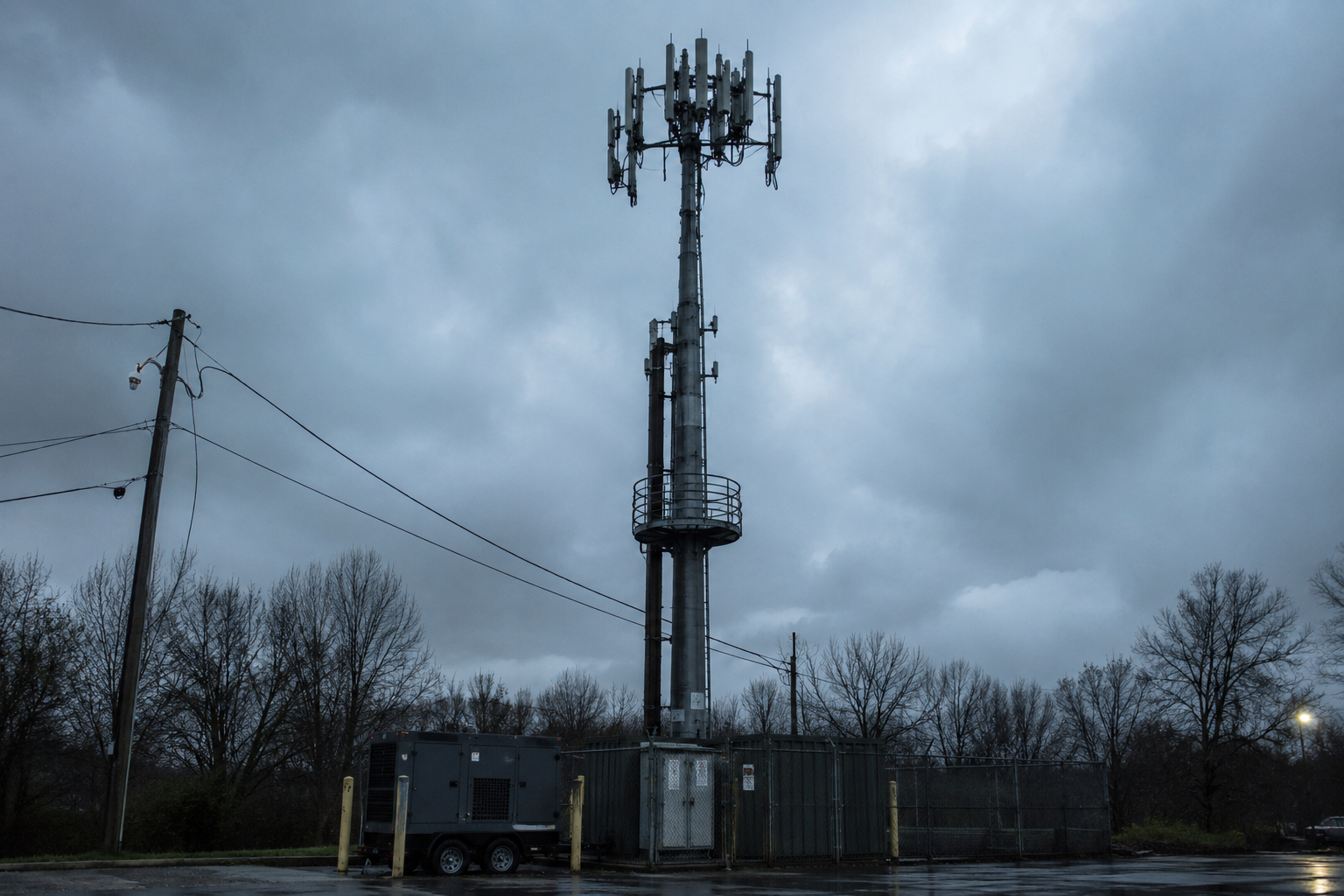
Understanding how cell networks behave during emergencies helps you use your phone strategically when battery life is limited. The post on what happens to cell towers during a power outage explains exactly how long towers stay online and why service degrades during major events. For a complete picture of how infrastructure failure affects every system your household depends on, the complete grid down survival guide covers every layer of preparation.
Best Ways to Charge Phones Without Electricity

Keeping your phone charged during a blackout requires having at least one backup charging option ready before the outage begins. Here are the most practical solutions ranked by reliability and ease of use.
A high-capacity power bank is the single most practical emergency phone charging solution available. A quality 20,000 to 30,000 mAh power bank can fully charge a modern smartphone four to six times — enough to carry most households through a 48 to 72 hour outage with careful use. Power banks are compact, require no setup, and work immediately the moment you need them. The key is keeping them fully charged between uses — treat topping off your power bank the same way you treat topping off your vehicle's gas tank.
Check Price on Amazon – High Capacity Power Bank 20000mAh for Emergency Phone Charging
A portable solar charger extends your charging capability beyond what any fixed battery supply can provide. Solar chargers convert sunlight directly into power — meaning as long as there is daylight, you have a renewable charging source that does not deplete. Quality foldable solar chargers designed for emergency use can charge a smartphone in two to four hours of direct sunlight and fold down to a size that fits in any emergency kit or bug out bag.
Your vehicle is another reliable charging source that is often overlooked during home-based outages. A car USB charger or 12V adapter lets you charge your phone directly from your vehicle's battery — giving you access to whatever charge your car battery holds without needing to run the engine continuously. Run the engine for 20 to 30 minutes every few hours to maintain the vehicle battery while charging devices.
A hand crank phone charger provides charging capability that requires zero stored energy and zero sunlight — just physical effort. Hand crank chargers are slow and require sustained effort to produce meaningful charge, but they represent a true last-resort option when every other source has been depleted.
Check Price on Amazon – Hand Crank Emergency Phone Charger for Grid Down Survival
For households with generators or solar power stations, phone charging becomes a much simpler proposition. A quality solar generator keeps all your devices charged indefinitely during daylight hours. The guide on best solar generators and power stations covers the top options for home emergency power. The guide on best portable generators for power outages covers gas-powered options for households that need higher output capacity.
How Long Power Banks and Solar Chargers Last
Understanding the real-world performance of your charging devices helps you plan your power budget during an extended outage — and avoid the mistake of assuming your backup charging will last longer than it actually will.
Power bank capacity is measured in milliamp hours — mAh. A modern smartphone battery holds approximately 3,000 to 5,000 mAh. A 20,000 mAh power bank theoretically provides four to six full charges — but real-world efficiency losses from heat, conversion, and cable quality typically reduce that to three to four full charges in practice. A 10,000 mAh power bank provides two to three full charges under real conditions.
Solar charger output depends heavily on sunlight quality and panel size. A quality 20-watt foldable solar panel in direct, unobstructed sunlight can charge a smartphone in two to three hours. Partial cloud cover reduces output by 50 to 70 percent. Heavy overcast can reduce output by 80 to 90 percent, making solar charging slow but still functional even on overcast days. Positioning your panel to maximize direct sunlight throughout the day significantly improves performance.
Charging priorities matter when your supply is limited. Charge your primary communication phone first. If your household has multiple phones, establish a rotation that keeps the most critical device at the highest charge level. Avoid charging tablets, laptops, or other non-essential devices until phones and emergency communication tools are fully charged.
For households building a complete off-grid communication setup, the guide on best off-grid communication devices for emergencies covers every device worth having — including options that do not depend on phone charging at all.
How to Save Phone Battery During an Emergency

Extending your phone's battery life during an outage is just as important as having a way to recharge it. A phone that lasts 18 hours instead of 8 hours on a single charge can make a significant difference during an extended blackout.
Enable airplane mode when you do not need to send or receive messages. Airplane mode cuts cellular radio, WiFi, and Bluetooth — the three biggest battery drains on any smartphone. You lose the ability to receive calls and texts while in airplane mode, but you retain access to offline features like downloaded maps, the flashlight, and camera. Switch in and out of airplane mode in batches rather than leaving it on continuously.
Low power mode — available on both iOS and Android — automatically reduces background activity, email fetch, visual effects, and display performance to extend battery life significantly. Enable it the moment an outage begins rather than waiting until your battery is already critically low.
Reduce screen brightness to its lowest usable level. The display is typically the single largest battery consumer on any smartphone. Dropping brightness from 100 percent to 20 percent can extend battery life by 30 to 50 percent with no loss of functionality.
Close all background apps and disable push notifications for non-essential applications. Each app running in the background consumes battery — even apps you are not actively using. A clean background keeps more power available for the functions that matter.
Text instead of calling whenever possible. Voice calls consume significantly more battery than text messages and also have a better chance of getting through during periods of network congestion. For a complete family communication framework that incorporates these strategies, the guide on why every family needs an emergency plan covers the full planning process. For context on the infrastructure threats that can make communication planning critical, the post on EMP attack vs cyber attack explains the two most discussed scenarios that could take communication systems offline entirely.
Best Backup Communication Tools Beyond Phones
A complete emergency communication plan does not rely entirely on your phone — because your phone can run out of battery, lose signal, or be lost or damaged at exactly the wrong moment. These backup tools keep your household informed and coordinated even when your phone is unavailable.
A hand crank NOAA weather radio is the most important single backup communication device for any household. It gives you one-way access to official emergency broadcasts, evacuation updates, and situation reports completely independent of your phone, cell service, internet, or grid power. It requires no battery and no charging — just a few turns of the hand crank to power the radio directly. Look for a unit with solar charging capability and a USB output for phone charging as a secondary function. The complete guide on best hand crank emergency radios covers the top rated options.
Check Price on Amazon – Hand Crank NOAA Emergency Weather Radio with Solar Charging and USB Output
Two-way walkie talkies give your household local communication capability that requires no cell towers, no internet, and no infrastructure of any kind. For families spread across different locations during an emergency — parents at work, children at school, family members at different sites — a matched set of walkie talkies provides reliable local communication that works regardless of network status.
Check Price on Amazon – Rechargeable Long Range Walkie Talkies for Emergency Family Communication
Printed emergency contacts and a written family communication plan are the final layer of backup that requires zero power and zero technology. When every electronic device is dead, a laminated card in every household member's wallet with key phone numbers, meeting locations, and out-of-state family contacts keeps your family coordinated. The complete guide on best off-grid communication devices covers the full range of backup options from walkie talkies to satellite communicators. For households building a complete 72-hour emergency kit that includes communication gear, the bug out bag essentials guide covers exactly where communication tools fit within a complete preparedness kit.
Emergency Phone Charging Checklist
Use this checklist to assess your household phone charging readiness right now. Every item checked is one less vulnerability when the power goes out.
Charging Devices:
- High capacity power bank — fully charged and stored in emergency kit
- Portable solar charger — tested and ready for outdoor use
- Car USB charger or 12V adapter in every vehicle
- Hand crank charger as last-resort backup option
- Charging cables for every device stored with your kit
Phone Preparation:
- Offline maps downloaded for your local area and evacuation routes
- Emergency contacts saved and printed as backup
- Low power mode enabled at the start of any outage
- Critical apps updated and functioning before any emergency
Backup Communication:
- Hand crank NOAA weather radio charged and accessible
- Two-way walkie talkies charged and tested
- Written family communication plan laminated and distributed
- Out-of-state family contact designated and known by all members
Keep Your Phone Alive Before the Grid Goes Down
Phones become lifelines during emergencies — and charging options disappear faster than anyone expects when the grid fails. The power bank sitting uncharged in a drawer is useless. The solar charger still in its original packaging provides nothing. The car charger that was never purchased cannot help.
Every backup charging option on this list costs a fraction of what a communication failure costs during a real emergency. A high-capacity power bank and a portable solar charger give your household days of phone charging capability for less than the cost of a single tank of gas. A hand crank radio provides emergency broadcast access for years without a single battery replacement.
Small preparations made now pay back in full the moment the grid goes dark and your household needs to stay connected, stay informed, and stay safe.
For a complete preparedness framework covering blackout survival, emergency food, backup power, water storage, communication systems, and long-term grid failure preparation, read our full Complete Grid Down Survival Guide (2026).
Charge your devices before the outage. Prepare before the grid goes down.