Water is the one resource you cannot improvise when disaster strikes. Food can wait days. Shelter can be improvised. But without clean, accessible water, a 72-hour emergency becomes life-threatening within the first 24 hours. With infrastructure vulnerabilities increasing in 2026 — from hurricane seasons breaking records to grid-down events and supply-chain disruptions — securing your water supply is no longer optional preparedness. It is foundational survival.
This guide covers the best emergency water storage solutions 2026 has to offer, from portable options for bug-out bags to large-scale home setups built to sustain a family through weeks of crisis.
Stored water gives you immediate access during an emergency, but it’s only part of a complete plan.
Food is just as critical for survival. To make sure you’re fully prepared, see our complete guide on the best emergency food kits.

How Much Water Do You Actually Need?
Before choosing any storage solution, you need to know your target. The American Red Cross recommends one gallon of water per person per day — covering drinking and basic sanitation. That baseline covers the minimum. Real-world emergencies demand more.
Here is a practical breakdown:
- 3-day supply (72-hour kit): 3 gallons per person
- 2-week supply (recommended for extended disasters): 14 gallons per person
- Family of 4 for 2 weeks: 56 gallons minimum
- Add 1 gallon per day per pet
- Double your estimate if someone in your household is pregnant, ill, or in a hot climate
A family of four in a summer hurricane zone should realistically target 100+ gallons of stored water. That number sounds large until you realize a single 55-gallon barrel gets you more than halfway there.
Water needs can increase quickly depending on conditions.
- Hot weather increases daily water usage
- Physical activity requires more hydration
- Stress and illness can raise demand
Planning beyond the minimum ensures your supply lasts through extended disruptions.
Types of Emergency Water Storage Solutions
Not every container works for every situation. Understanding the pros and cons of each type helps you build a layered system rather than relying on one solution.
Small Portable Containers (1–7 gallons)
Best for: Bug-out bags, vehicle kits, short-term supply
- Lightweight and easy to carry
- Simple to rotate and refill
- Limited capacity — not practical as your only solution
- Look for BPA-free, food grade water storage options with secure lids
Large Jugs & Stackable Containers (5–15 gallons)
Best for: Home storage, apartment prep, moderate supply
- Stackable designs save floor space
- Easier to manage than barrels
- Ideal for renters or those without garage space
55-Gallon Water Barrels
Best for: Home preparedness, long-term family supply
- The 55 gallon water barrel for home preparedness is the gold standard for stationary storage
- Holds enough for a family of four for nearly two weeks
- Requires a hand pump or siphon to access water
- Heavy when full — position before filling
Water Bricks & Modular Containers
Best for: Compact spaces, organized storage
- Interlock like bricks for efficient stacking
- 3.5-gallon capacity per brick
- Easy to transport individually
- Higher cost per gallon than barrels
Collapsible Water Containers
Best for: Emergency overflow, camping, portability
- Store flat when empty — great for earthquake kits
- Not ideal for long-term storage due to material durability
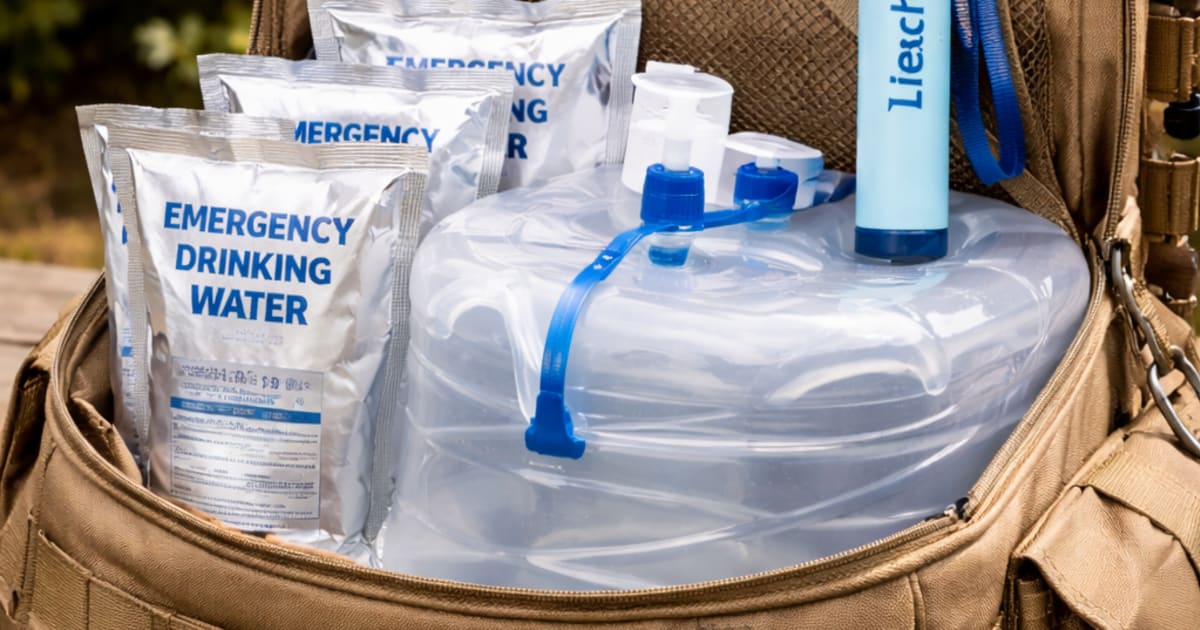
- Excellent as secondary portable water storage solutions for disasters
Emergency Water Pouches
Best for: Go-bags, car kits, 72-hour kits
- Individual serving pouches with 5-year shelf life
- Coast Guard approved
- Not practical as a primary supply

Best Water Storage Containers for 2026
1. Reliance Aqua-Tainer 7-Gallon
The Reliance Aqua-Tainer remains one of the most trusted best water storage containers for emergencies. It is BPA-free, stackable, and features a fold-out spigot for easy dispensing. At 7 gallons, it hits the sweet spot between capacity and manageability. A family can maintain a two-week supply with just eight of these stored in a garage or closet.
2. 55-Gallon Stackable Water Barrel
For serious home preparedness, nothing beats a dedicated 55-gallon barrel. Best emergency water storage tanks 2026 options include barrels made from food-grade blue polyethylene that block light to prevent algae growth. Pair with a bung wrench, hand pump, and water preserver concentrate for a complete long-term system.
3. WaterBOB Bathtub Bladder
An often-overlooked gem for last-minute situations. When a storm warning hits, the WaterBOB fills your bathtub with up to 100 gallons of clean water in minutes. It keeps water fresh for up to 16 weeks and costs very little. Every household should have at least one stored.
4. Scepter Military-Grade 5-Gallon Water Can
Trusted by military and serious preppers alike, Scepter containers are virtually indestructible. Their food-grade plastic, tight-seal cap, and stackable design make them a reliable portable water storage solution for disasters, vehicle kits, and bug-out scenarios.
5. Water Brick Standard 3.5-Gallon
For those with limited space, Water Bricks offer modular, interlocking storage that fits under beds, in closets, or along walls. They are made from high-density polyethylene and are both food grade and long-term safe.
What Happens If You Run Out of Water?
During an emergency, water runs out faster than expected. Stores empty quickly and resupply can take days or longer.
Without a backup supply:
- dehydration can begin within 24 hours
- energy and focus drop fast
- basic hygiene becomes difficult
Having stored water keeps you in control instead of reacting under pressure.
Smart Storage Tips & Common Mistakes
Even the best containers fail if stored incorrectly. Here is what separates prepared households from those who discover their water supply has gone bad during an actual emergency.
Do:
- Store in a cool, dark location away from direct sunlight
- Keep containers off concrete floors — use pallets or shelving
- Label every container with the fill date
- Treat tap water with unscented liquid chlorine bleach (8 drops per gallon) before sealing for long-term storage
- Rotate your supply every 6–12 months
Avoid:
- Storing near gasoline, pesticides, or cleaning products — plastic absorbs fumes
- Using non-food-grade containers — they leach chemicals over time
- Forgetting to account for cooking, hygiene, and pet water needs
- Assuming tap water stored in factory-sealed bottles lasts forever — it doesn't

Long-Term Water Preservation Techniques
How to store water long term for crisis situations requires more than just filling a container and forgetting about it. These techniques ensure your supply stays safe and drinkable for months or years.
- Use food grade water storage for long term survival — look for containers marked HDPE with the recycling symbol #2
- Add water preserver concentrate — extends safe storage life up to 5 years
- Avoid BPA plastics — choose BPA-free options, especially for water stored in warm environments
- Keep a rotation schedule — mark your calendar every 6 months to refresh your supply
- Store commercially sealed water — factory-sealed bottles have a 2-year shelf life and require no treatment
For a complete long-term food and water strategy, read: How to Build a Long-Term Emergency Food Storage Pantry in 2026
Portable vs. Stationary Solutions
Your water strategy needs two layers — one for staying home and one for leaving fast.
Stationary Home Setup
- 55-gallon barrel as the primary supply
- Stackable 7-gallon jugs as secondary supply
- WaterBOB as a last-minute overflow option
- Total target: 100+ gallons for a family of four
Portable Bug-Out Setup
- 2–4 Scepter 5-gallon cans in your vehicle
- LifeStraw or gravity filter for sourcing water on the move
- Emergency water pouches in every go-bag
- Collapsible containers for overflow capacity
The key is never relying on a single solution. A grid-down event, earthquake, or extended hurricane can make your home inaccessible — your portable supply needs to sustain you independently.
For a complete portable preparedness kit, read: Bug-Out Bag Essentials: What to Pack in Your 72-Hour Emergency Kit
Conclusion
The best emergency water storage solutions 2026 offers are accessible, affordable, and straightforward to implement — but only if you act before a crisis arrives. Start small if you need to. A single 7-gallon container and a WaterBOB is a better foundation than nothing.
Build toward a two-week supply for your household. Layer portable options into your bug-out plan. Rotate regularly. Treat your water properly. And never assume your tap will keep running when you need it most.
Your family's safety starts with water. Everything else comes after.
Stay prepared. Stay ahead.
— EssentialItems Editorial Team