Adults over 65 account for nearly half of all disaster-related fatalities in the United States — not because emergencies are more likely to find them, but because the standard preparedness advice was never designed with their specific needs in mind.
Power-dependent medical equipment stops working during outages. Mobility limitations make rapid evacuation dangerous. Heat and cold extremes become life-threatening faster than they do for younger adults. Prescription medications run out when pharmacies close. And the social isolation that many seniors experience in normal life becomes acute when communication networks fail during a disaster.
Emergency preparedness for seniors requires a tailored approach — one that addresses medical dependency, mobility, communication, and the reality that help may not arrive quickly when it is needed most. This guide covers exactly how seniors and their families build a preparedness plan that accounts for every one of those factors.
If you are building a preparedness plan for your household, start with our Why Every Family Needs an Emergency Plan guide before reading further.
Why Seniors Face Greater Emergency Risk
Medical equipment dependency — Millions of seniors depend on electrically powered devices for daily survival. CPAP machines, home oxygen concentrators, electric wheelchairs, and refrigerated insulin all stop functioning without power. A standard outage that inconveniences a healthy adult becomes a medical emergency within hours for someone dependent on these devices.
Thermoregulation decline — The body's ability to regulate core temperature deteriorates with age. Seniors are disproportionately represented in both heat wave and hypothermia fatality statistics. What feels uncomfortable to a younger adult can become clinically dangerous to a senior in a shorter time frame.
Mobility limitations — Evacuation instructions that assume a healthy adult's ability to move quickly and navigate stairs create dangerous situations for seniors with mobility impairments.
Medication dependency — Chronic conditions common among older adults — hypertension, diabetes, heart disease — require daily medications that become unavailable when pharmacies close or supply chains fail during extended emergencies.
Social isolation — Seniors living alone are among the most vulnerable disaster populations because no one may know they need help. The 1995 Chicago heat wave killed over 700 people — the majority elderly individuals living alone without air conditioning or social contact.
Cognitive considerations — Seniors living with dementia face unique challenges during emergencies. Unfamiliar environments and disrupted routines cause significant distress that complicates both shelter-in-place and evacuation scenarios.

The Senior Emergency Preparedness Checklist
💊 Medical — The Highest Priority Category
Medical preparedness for seniors takes absolute priority over every other emergency supply category. Without medications and functional medical equipment, every other preparation becomes secondary.
Medications:
- Maintain a minimum 30-day supply of all prescription medications at all times — refill at 50% remaining, never wait until the last week
- Store a complete medication list — drug name, dosage, prescribing physician, and pharmacy contact — in your emergency documents folder and share a copy with a trusted family member or neighbor
- Keep medications in their original labeled containers for identification by emergency responders
- Note refrigeration requirements — insulin and certain other medications require cold storage. A small medical-grade cooler with ice packs provides 24 to 48 hours of protection during outages
Medical equipment:
- Contact your power company's medical baseline or life support program — most utilities maintain priority restoration lists for customers dependent on life-sustaining equipment
- Register with your local emergency management office as a medical-needs resident — this places you on priority evacuation and welfare check lists during declared disasters
- Maintain backup power for critical devices — a portable power station sized to your equipment's wattage requirements provides hours of runtime during outages
👉 Check Price on Amazon — Jackery Explorer 500 Portable Power Station
📋 Documents — Protect What Cannot Be Replaced
Emergency responders, hospital staff, and evacuation shelter personnel need rapid access to critical information about a senior's medical history, medications, and emergency contacts. A waterproof document organizer containing these records eliminates dangerous delays in care.
What to include:
- Complete medication list with dosages and prescribing physicians
- Medical history summary — diagnoses, allergies, previous surgeries
- Insurance cards — Medicare, Medicaid, supplemental coverage
- Emergency contact list — family, neighbors, primary care physician
- Copies of legal documents — power of attorney, advance directive, Do Not Resuscitate orders if applicable
- Government ID and Social Security card copies
👉 Check Price on Amazon — Waterproof Document Organizer Bag
💧 Water and Food — Accessible, Familiar, Appropriate
Standard emergency food recommendations do not always translate to senior-appropriate nutrition. Freeze-dried meals requiring vigorous rehydration, high-sodium survival rations, and foods requiring significant preparation create barriers for seniors managing dietary restrictions or reduced physical capability.
Senior-appropriate food storage:
- Ready-to-eat canned foods in pull-tab containers — no can opener required
- Soft foods appropriate for dental considerations
- Low-sodium options for seniors managing hypertension or heart disease
- Diabetic-appropriate foods with known carbohydrate content for blood sugar management
- Familiar comfort foods — unfamiliar foods cause stress during already difficult situations
Water: One gallon per person per day minimum. For seniors with limited mobility, store water in small manageable containers rather than large barrels that require lifting and pouring. Individual water pouches or 1-gallon containers are easier to handle independently.
See our Best Emergency Water Storage Solutions (2026) guide for storage container recommendations.
⚡ Power — Prioritize Medical First, Comfort Second
For seniors dependent on medical devices, backup power is not a comfort item — it is a survival requirement. Size your power station to your most critical device's wattage requirements and calculate runtime accordingly.
Common medical device power requirements:
- CPAP machine — 30 to 60 watts
- Home oxygen concentrator — 150 to 300 watts
- Electric wheelchair charger — 100 to 200 watts
- Nebulizer — 60 to 100 watts
A 500Wh power station runs a standard CPAP machine for 8 to 16 hours on a single charge — enough for one or two nights during an outage. Pair with a compatible solar panel for indefinite daytime recharging capability.
📻 Communication — Stay Connected and Stay Informed
Seniors living alone need both incoming emergency information and outgoing communication capability during disasters.
NOAA weather radio — Receives official emergency alerts without cell network dependency. Programs to alert only for your specific county. Wakes from standby when a local alert is issued — critical for nighttime tornado and severe weather warnings.
Personal Emergency Response System (PERS) — Wearable devices that allow a senior to summon help with a single button press. Many modern PERS devices include GPS tracking, fall detection, and two-way communication independent of landline phones.
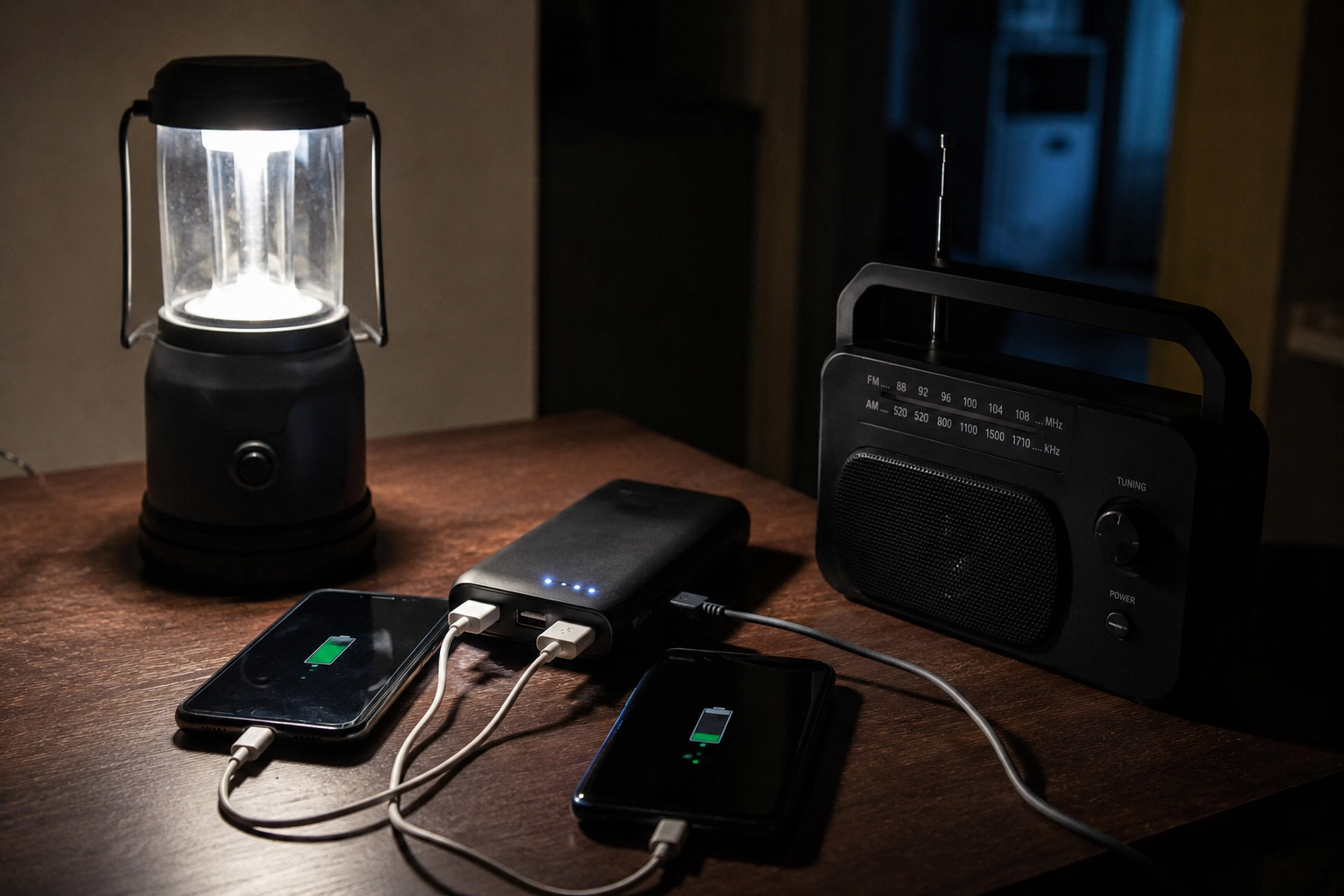
Backup phone charging — A fully charged power bank ensures phone communication remains available through extended outages. A senior's phone is often their primary connection to family, emergency services, and medical providers.
👉 Check Price on Amazon — Kaito KA500 Hand Crank Emergency Weather Radio
👉 Check Price on Amazon — Medical Guardian Mobile 2.0 Personal Emergency Response System
🌡️ Temperature Management
Seniors are the most vulnerable population during both heat waves and cold weather emergencies. Temperature management supplies deserve dedicated attention in any senior preparedness kit.
Heat preparedness:
- Rechargeable personal fan — battery powered for outage scenarios
- Cooling towels — provide immediate evaporative cooling when applied to neck and wrists
- Electrolyte packets — seniors are prone to dehydration without recognizing thirst signals
- Identify your nearest cooling center before heat season begins
Cold preparedness:
- Emergency Mylar blankets — retain 90% of body heat, store flat in any drawer
- Wool or fleece blanket — warmer than standard blankets for sustained cold exposure
- Hand warmers — chemical activated, no power required, immediate warmth
- Layered clothing strategy — multiple thin layers retain heat more effectively than single thick garments
👉 Check Price on Amazon — Emergency Mylar Thermal Blankets 10-Pack
See our Heat Wave Survival Guide for complete senior heat safety strategies during summer emergencies.
🚶 Mobility and Evacuation Planning
An evacuation plan that does not account for mobility limitations is not a complete plan. Every senior household needs explicit answers to these questions before a disaster — not during one.
Key mobility considerations:
Transportation — Does the senior drive? If not, who provides transportation during an evacuation? Is that person reliably available at any hour? Identify a primary and backup evacuation transportation source.
Assistive devices — Walkers, canes, wheelchairs, and hearing aids must be included in every evacuation. Create a dedicated grab list that includes all assistive devices. A manual wheelchair as backup for an electric model covers power failure scenarios.
Evacuation route accessibility — Walk your planned evacuation route with the senior. Identify any stairs, uneven surfaces, or distances that create barriers. Identify accessible alternatives before they are needed.
Shelter accessibility — Confirm that your designated emergency shelter is ADA accessible and equipped to handle medical-needs residents. Not all emergency shelters accommodate power-dependent equipment — identify medical-needs shelters in your area in advance.
Go-bag weight — A standard 72-hour bug-out bag weighing 20 to 30 pounds is not manageable for most seniors. Build a senior-specific go-bag targeting 10 pounds or less, prioritizing medications, documents, and communication over survival gear.
The Family Role in Senior Emergency Preparedness
Family members and caregivers play a critical role in senior emergency preparedness that no amount of gear can replace.
Create a check-in protocol — Establish a specific communication plan for disaster scenarios. Who calls whom? How frequently? What is the trigger for a welfare check in person?
Share the plan — Every family member who might be involved in a senior's emergency response should know the medication list, the evacuation plan, the shelter location, and the location of critical documents.
Practice the plan — Walk through the evacuation scenario with the senior before it is needed. Identify the barriers — stairs, distances, transportation — and solve them during a calm practice run rather than a real emergency.
Know the neighbors — Introduce yourself to the senior's immediate neighbors and ask them to check in during emergencies. Neighbor welfare checks during the first hours of a disaster have saved countless lives.
Final Thoughts
Seniors deserve a preparedness plan built around their actual needs — not a modified version of advice designed for healthy adults in their thirties.
Medical equipment backup power, a 30-day medication supply, accessible evacuation transportation, temperature management supplies, and a practiced family communication plan address the specific vulnerabilities that make older adults disproportionately vulnerable during emergencies.
The investment of time and planning required to build a senior-specific preparedness system is modest. The protection it provides during a real emergency is immeasurable.
Start with the medication supply. Build the document folder. Confirm the evacuation plan. Do it this week — before the next weather alert, power outage, or natural disaster makes urgency unavoidable.
Explore our complete Emergency Kits & Bundles and Shop All Survival Gear to build a complete senior preparedness system today.
⚠️ Don't wait for an emergency to discover the gaps in your plan. Build your senior preparedness kit today — before it is needed.