Most households are somewhat prepared for the first 72 hours of a power outage. Flashlights come out, phones get charged, and the fridge stays closed. But day 3 is where real preparedness separates from wishful thinking.
After 72 hours without electricity, the situation changes fast. Food begins to spoil, water becomes a concern, temperatures inside the home shift dangerously, and stress levels climb. Most people never planned past day 3 — and that is exactly where things go wrong.
This guide covers what actually happens after the 72-hour mark and the specific steps you can take right now to stay ahead of it.

Why Day 3 Is the Breaking Point
The first two days of a blackout feel manageable. By day 3, the reality sets in:
- Refrigerated food has entered the danger zone and must be eaten, cooked, or discarded
- Ice in coolers has melted
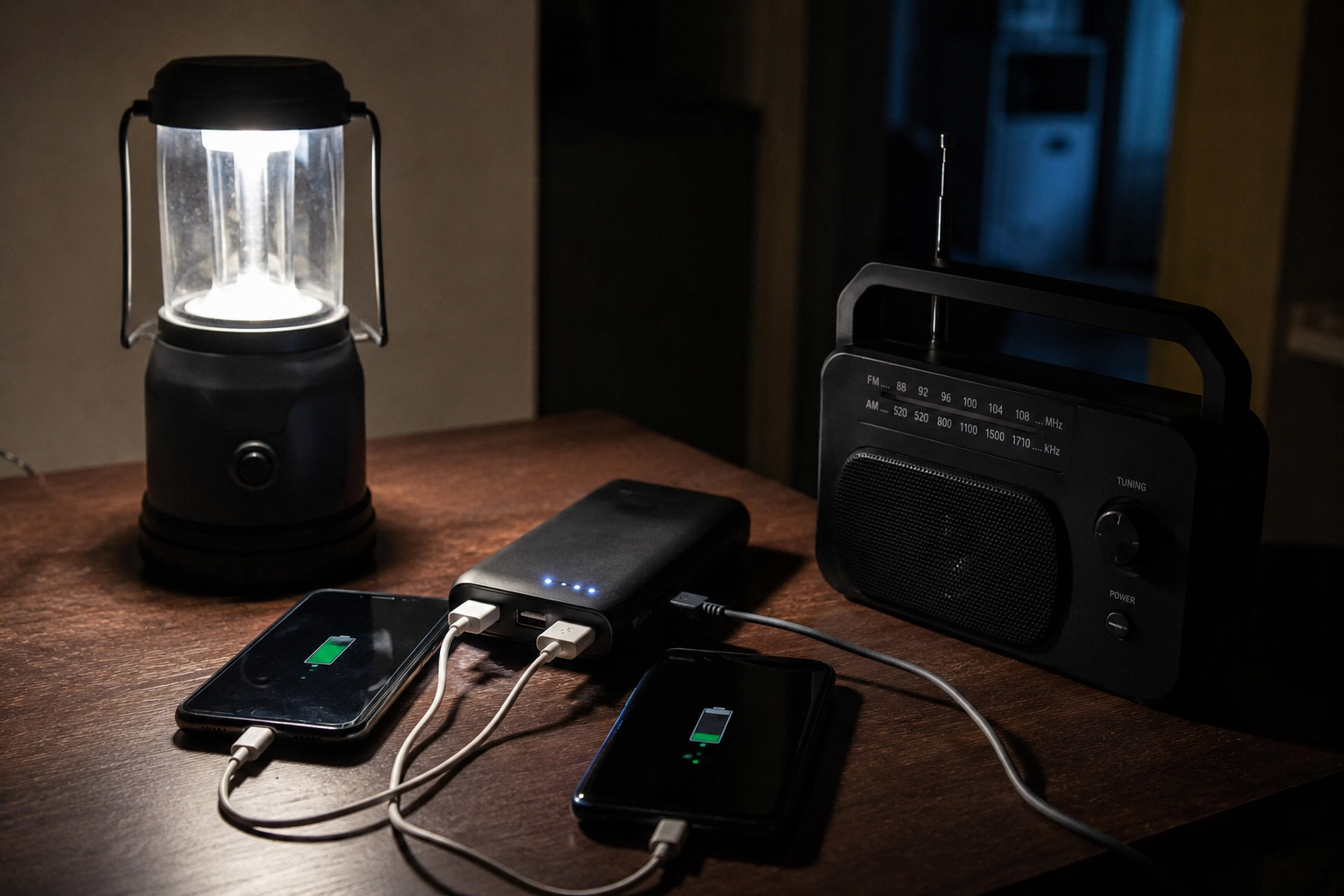
- Phone and device batteries are dying
- Indoor temperatures are dropping in winter or climbing in summer
- Tap water may still work but pressure can drop if municipal pumps lose power
- Stress, poor sleep, and uncertainty begin affecting decision-making
According to the American Red Cross perishable food left above 40°F for more than two hours should be discarded — meaning by day 3, most unprepared households have already lost hundreds of dollars in groceries and have no backup plan.
If you haven't already read 10 Essential Items You Need Before the Power Grid Fails, that is the foundation. This guide picks up where day 3 begins.
Food: What to Eat, What to Toss, and What Saves You
The 40°F Rule
Once your refrigerator loses power, you have roughly 4 hours before the internal temperature climbs above 40°F. After that, meat, dairy, eggs, and leftovers become unsafe.
By day 3, your freezer — if kept closed — may still be holding temperature. A full freezer stays frozen for approximately 48 hours. A half-full freezer, around 24 hours.
What to do:
- Prioritize eating freezer items first on day 1 and 2
- Move to shelf-stable foods by day 3
- Never taste food to determine safety — if in doubt, throw it out
Your Day 3 Food Survival Stack
This is where pre-stocked emergency food pays off immediately. Freeze-dried meals, canned proteins, and food bars require zero refrigeration and minimal or no cooking.
Mountain House Emergency Food Supply — 72-Hour Kit
ReadyWise Long-Term Food Supply
For a full breakdown of the best options, read our Best Emergency Food Kits for Survival 2026.

Water: When Tap Pressure Drops
Most people assume tap water stays available during a power outage. Often it does — but not always. Municipal water systems rely on electric pumps. In a widespread or extended grid failure, water pressure can drop or stop entirely by day 3 or 4.
What to do before day 3 hits:
- Fill bathtubs, large pots, and any available containers immediately when an outage begins
- Have a gravity-fed water filter ready so any water source becomes drinkable
- Store at least one gallon per person per day for a minimum of two weeks
LifeStraw Gravity-Fed Water Filter
Temperature: The Silent Danger Nobody Talks About
By day 3, your home's thermal mass — the ability of walls, floors, and furniture to hold heat or cool air — starts to give out. In winter, indoor temperatures can drop to match outdoor temps within 24 to 48 hours in a poorly insulated home. In summer, without airflow or cooling, heat inside can climb dangerously high.
Winter Outages
- Layer clothing immediately — do not wait until you feel cold
- Designate one room as the "warm room" and seal it off to concentrate body heat
- Use a propane heater rated for indoor use with an automatic low-oxygen shutoff
Portable Indoor-Safe Propane Heater
Summer Outages
- Keep blinds and curtains closed during daylight hours to block solar heat gain
- Use battery-powered fans to move air
- Wet towels on windows can drop room temperature several degrees
- Identify the coolest room in the house and concentrate family activity there

Our How to Prepare Your Home for a Power Outage in 7 Days — Room by Room guide covers temperature control in detail for every room in the house.
Power: What You Actually Need After Day 3
By day 3, small battery banks are depleted. This is when a solar generator or portable power station becomes critical — not a luxury.
Priority devices to keep powered:
- Cell phones and communication devices
- CPAP machines or medical equipment
- Emergency radio for alerts and updates
- A small fan or heating pad depending on season
A 500W to 1,000W solar generator handles all of these simultaneously and recharges daily through solar panels even in partial cloud cover.
For the best options tested and ranked, read: What Is an Energy Lockdown — And Is Your Home Ready for One?
Communication and Mental Clarity After 72 Hours
Stress compounds fast after day 3. Sleep disruption, uncertainty, and physical discomfort affect decision-making in ways most people underestimate. Having a clear written family plan — roles, meeting points, priorities — removes the mental load of figuring it out under pressure.
Practical steps:
- Designate one person as the daily "situation lead" who assesses food, water, and temperature each morning
- Use a hand-crank NOAA emergency radio to stay updated without draining phone batteries
- Check on elderly neighbors — heat and cold affect them faster
The Real Lesson After Day 3
The households that stay calm after day 3 are not the ones with the most gear. They are the ones who made decisions before the outage started.
A 72-hour kit gets you through the first wave. But a two-week supply of food, water, power, and a clear plan is what actually carries a family through an extended blackout without panic, waste, or danger.
Start building that foundation now at Essential Items Emergency Kits & Bundles — before day 3 becomes your reality.

Stay prepared. Stay ahead.
— EssentialItems Editorial Team