If you just finished reading What Is an Energy Lockdown — And Is Your Home Ready?, you're probably feeling the same sense of urgency many people are experiencing right now:
"How do I actually prepare my home before the next major outage hits?"
You already understand the risks. You've seen how quickly systems can fail and how fast everyday life changes when power is lost.
You may have tested your own address in the Grid Down Simulator and realized your home isn't as ready as you thought. Or you followed along with I Tested My Home in a Grid-Down Scenario and saw firsthand how quickly small problems turn into major challenges.
This guide turns that awareness into action.
This isn't another vague prepper article. It is a practical, day-by-day, room-by-room checklist that transforms your house into a genuinely prepared home in just seven days.
Each day focuses on one critical system so you never feel overwhelmed. By the end of the week you will have real preparedness that works for short-term outages or longer disruptions.

Day 1: Kitchen — Build Your No-Power Cooking Command Center
The kitchen is almost always the first place families feel the real impact when power goes out. Once hot meals disappear, morale drops fast.
Detailed action steps:
- Start with a complete inventory of every pot, pan, skillet, and fuel source already in your house. Write it down so you know exactly what gaps exist.
- Clear and organize a dedicated blackout cooking station on a stable countertop or outdoor table away from flammable materials.
- Stock at least 30 days of shelf-stable, no-cook and quick-cook meals that require zero refrigeration or electricity. Focus on high-calorie, nutrient-dense options your family already likes.
- Tonight, cook one full family meal using only off-grid methods so you can identify problems before a real emergency.
Gear you need today:
- Portable dual-fuel camp stove (propane + gasoline compatible)
- Extra propane cylinders
- High-quality cast-iron skillet and Dutch oven set
For longer-term food storage planning, read: Best Emergency Food Kits for Survival
This single day alone addresses one of the biggest pain points people experience in the first 72 hours of a blackout.
Day 2: Water & Sanitation — Lock in Clean Water for Weeks
Clean water becomes one of the biggest risks during any prolonged outage. Municipal systems can fail for weeks, which is why preparation here matters more than almost anything else.
Detailed action steps:
- Calculate your exact needs: one gallon per person per day for a minimum of 30 days.
- Purchase and fill heavy-duty stackable 5-gallon water jugs and store them in a cool, dark location.
- Install a reliable gravity-fed water filtration system as your primary backup.
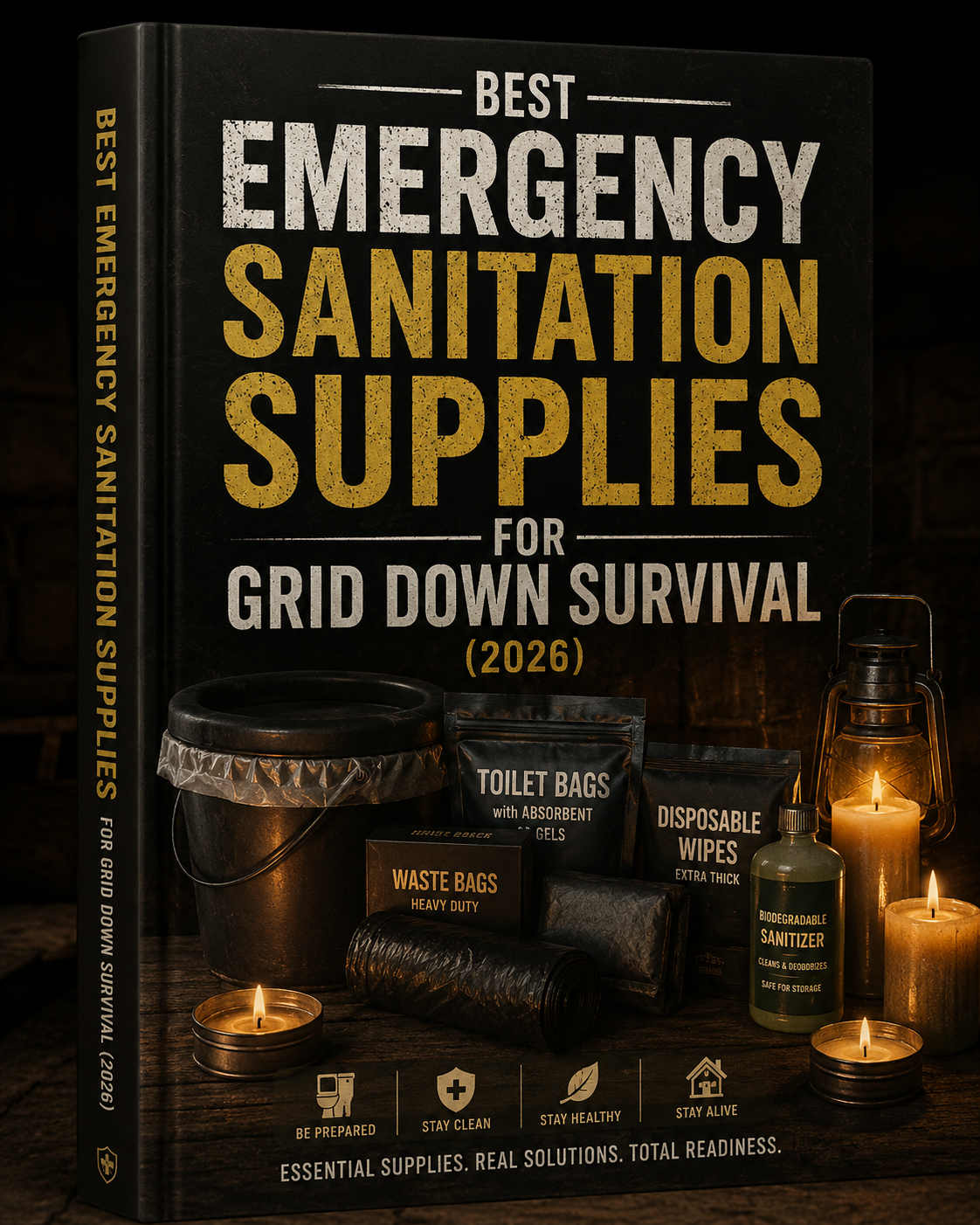
- Set up a simple sanitation station with a portable toilet, waste bags, and sanitation chemicals.
- Keep water purification tablets or drops as a lightweight emergency option.

Gear recommendations:
For a deeper look at the best water filtration options, read: Best Water Filtration Systems for Survival
Completing this step removes one of the biggest causes of panic during extended outages.
Day 3: Heating & Cooling — Keep Your Home Livable in Any Weather
Temperature extremes can turn a simple outage into a dangerous situation faster than most people expect.
Detailed action steps:
- Go room by room and seal every window and exterior door with high-quality weather stripping and thermal curtains.
- Set up a safe indoor heating source designed specifically for indoor use with automatic low-oxygen shutoff.
- Prepare passive cooling methods for summer outages, including evaporative cooling techniques and battery-powered fans.
- Test your chosen heating or cooling system for at least two hours under realistic conditions.

Gear you need:
- Portable propane heater with automatic low-oxygen shutoff
- High-quality wool blankets and 0°F-rated sleeping bags
During a real home test, this single change kept the main living area at 68°F while the rest of the house dropped to 48°F.
Day 4: Lighting & Power — Build Reliable Layered Backup Electricity
When power stays out longer than a day or two, having layered lighting and backup electricity becomes essential.
Detailed action steps:
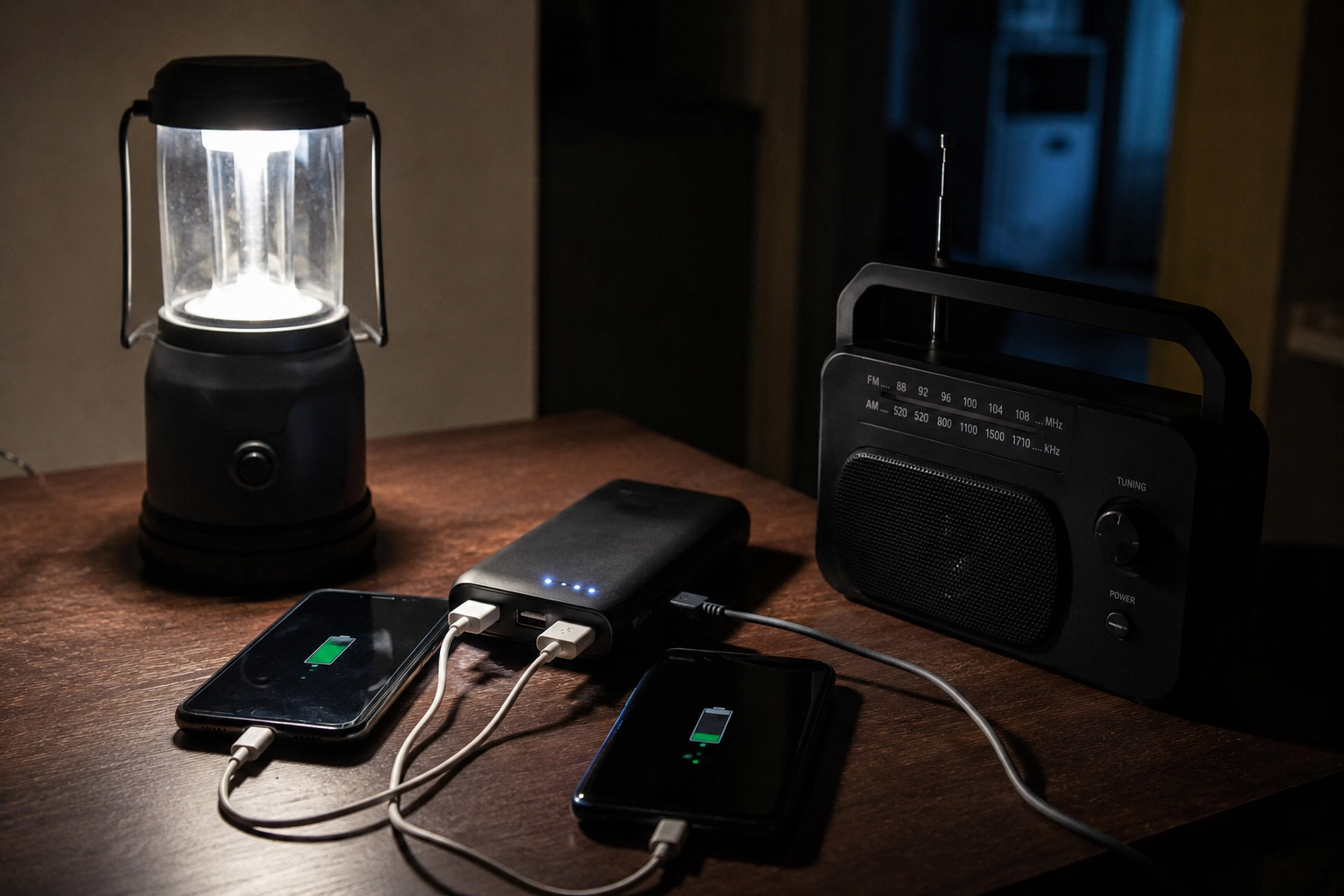
- Design a three-layer lighting system: headlamps for hands-free tasks, room lanterns for general use, and candles only as a last resort.
- Install a portable solar generator or power station capable of running essential devices.
- Run a full load test of your setup to make sure it can handle real-world use.
- Add extra foldable solar panels for ongoing recharging capability.

Recommended products:
For the best options tested and ranked, read: Best Solar Generators & Power Stations for Emergencies
Day 5: Security & Communications — Stay Safe When Everything Goes Dark
When systems go down, staying informed and secure becomes critical.
Detailed action steps:
- Reinforce all exterior doors with manual deadbolts and reinforcement plates.
- Create and practice a family communication plan that works without cell service or internet.
- Install solar-powered motion-activated lights around the perimeter.
- Keep multiple hand-crank NOAA weather radios and backup communication devices ready.

Gear to grab:
For a complete family preparedness framework, read: Why Every Family Needs an Emergency Plan
Day 6: Medical & First Aid — Be Ready When Help Is Delayed
Medical access can become limited very quickly during a prolonged outage.
Detailed action steps:
- Build or upgrade a full 90-day comprehensive first-aid and trauma kit.
- Stock extra prescription medications plus at least a 30-day buffer supply.
- Learn and practice basic stop-the-bleed and trauma care techniques.
- Create a family medical information sheet listing allergies, medications, and dosages.
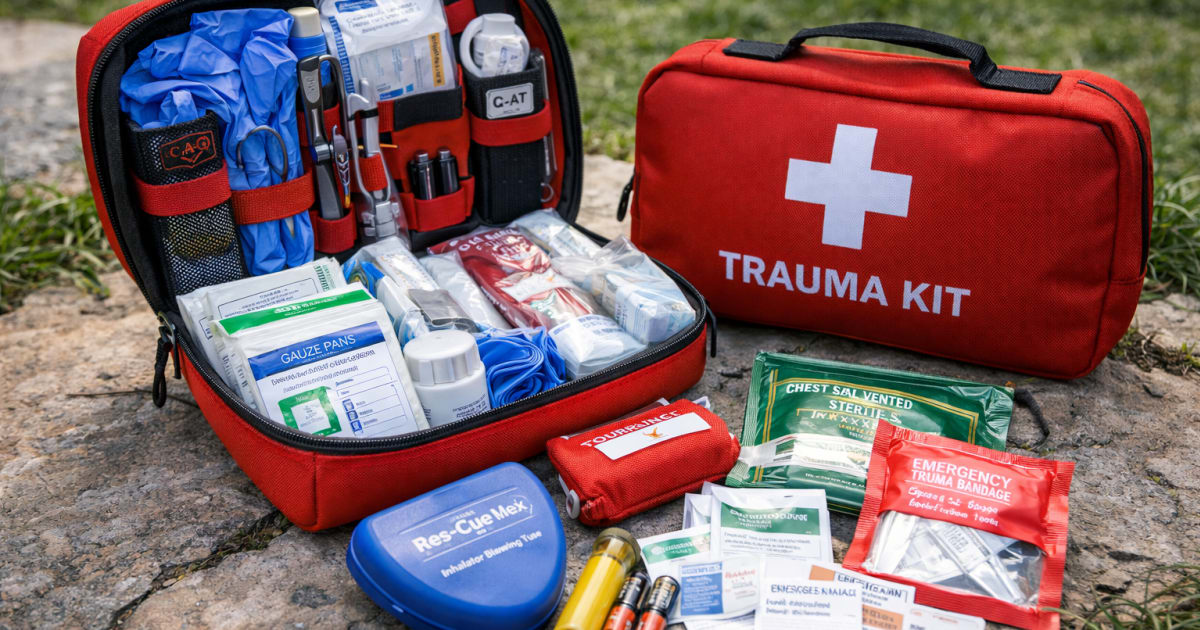
Essentials:
For essential survival basics, read: 15 Essential Survival Tips for Beginners
Day 7: Mental Prep & Family Drill — Turn Knowledge into Real Muscle Memory
All the gear in the world won't help if panic sets in. This is the most overlooked but most important step.
Detailed action steps:
- Run a full-family grid-down drill under real conditions (no power, no phones, limited lighting).
- Write and post a clear "When the Lights Go Out" family plan.
- Discuss roles and expectations for every family member.
- Re-run the Grid Down Simulator and evaluate improvements.
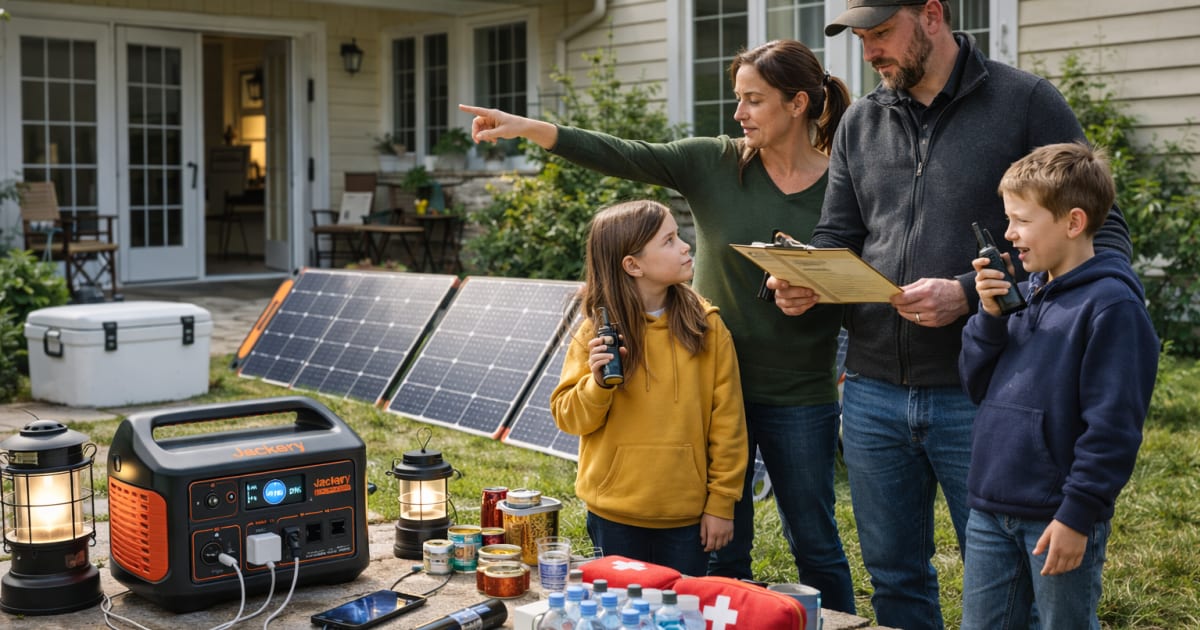
Quick-Win Gear Shopping List
For the fastest way to make real progress, start with the Best Bug Out Bag Essentials Checklist to make sure you're not missing anything critical.
If you want the fastest way to make real progress this week, start with these core items:
- Portable dual-fuel camp stove
- Extra propane cylinders
- Cast-iron skillet or Dutch oven
- Heavy-duty water storage jugs
- Gravity-fed water filter
- Portable toilet and sanitation supplies
- Portable propane heater with safety shutoff
- Wool blankets or cold-weather sleeping bags
- Solar generator or portable power station
- Rechargeable lanterns and headlamps
- Hand-crank emergency radio
- Two-way radios or backup communication device
- Comprehensive trauma first-aid kit
- Bulk over-the-counter medications
These items cover the systems that fail first when power is out: cooking, water, sanitation, temperature control, lighting, communication, and medical care.
You don't need everything at once. Start with your biggest gap and build from there.
Final Thoughts
Seven days. That is all it takes to move from hoping nothing happens to being ready if it does.
You have already done the hard work by understanding the risks. Now you have a clear, practical blueprint to prepare your home.
Start with Day 1 today. Even completing just the first two or three days will put you far ahead of most families.
The momentum you build this week will carry you through any future outage with confidence.
For a complete emergency preparedness strategy beyond home blackout preparation, read our full Complete Grid Down Survival Guide (2026), which covers food storage, backup power, water filtration, emergency communication, bug out bags, and long-term blackout survival.
Stay ready, Essential Items Team
P.S. After you finish Day 7, run the Grid Down Simulator one more time. Seeing that improvement is one of the best motivations to keep strengthening your setup.