Food and water get all the attention in emergency preparedness planning. Sanitation almost never does — until the water stops running and the toilets stop flushing, and a manageable emergency becomes a genuine health crisis.
Poor sanitation during a long-term power outage or grid down event is not just uncomfortable. It is dangerous. The same conditions that produce sanitation failures — contaminated water, sewage backups, lack of handwashing capability — are the conditions that historically produce disease outbreaks in disaster-affected communities. The households that treat sanitation as seriously as food and water storage are the ones that stay healthy when infrastructure fails.
This guide covers the best emergency sanitation supplies for blackout and grid down preparedness — the portable toilet solutions, hygiene supplies, waste management gear, and bug out sanitation kits that every household should have ready before any emergency strikes.
You do not need a large budget or a lot of storage space to build a complete sanitation kit. You need the right supplies, stored in the right place, before the situation demands them.
Why Sanitation Matters During a Grid Down Event

Sanitation is one of the most underestimated risks in any extended power outage — and one of the fastest to create serious health consequences when it is not planned for.
Municipal water systems depend on electricity to maintain pressure. When the grid fails, water service can begin degrading within hours and fail entirely within 24 to 48 hours in the hardest hit areas. Without running water, the basic sanitation activities that prevent disease — handwashing, toilet flushing, wound cleaning, food preparation hygiene — all become difficult or impossible.
Sewage systems face the same infrastructure dependency. Lift stations and sewage treatment plants run on electricity. When those systems lose power, sewage stops moving through the pipes and begins backing up. In extended outages affecting large areas, raw sewage overflow becomes a real public health hazard — contaminating local water sources and creating disease vectors that spread far beyond the immediate area of failure.
The health risks from poor sanitation escalate quickly. Gastrointestinal illness from contaminated hands, surfaces, and water sources can spread through a household within 24 to 48 hours. Wound infections from injuries sustained during a disaster can become serious within days without proper cleaning and hygiene. For households with young children, elderly members, or immunocompromised individuals, these risks are significantly amplified.
The post on what happens to water systems during a power outage covers exactly how municipal water infrastructure fails during extended blackouts and what that means for household hygiene. For a complete picture of how grid failure affects every system your household depends on simultaneously, the complete grid down survival guide covers every layer of preparation.
Best Emergency Toilet Solutions for Blackouts
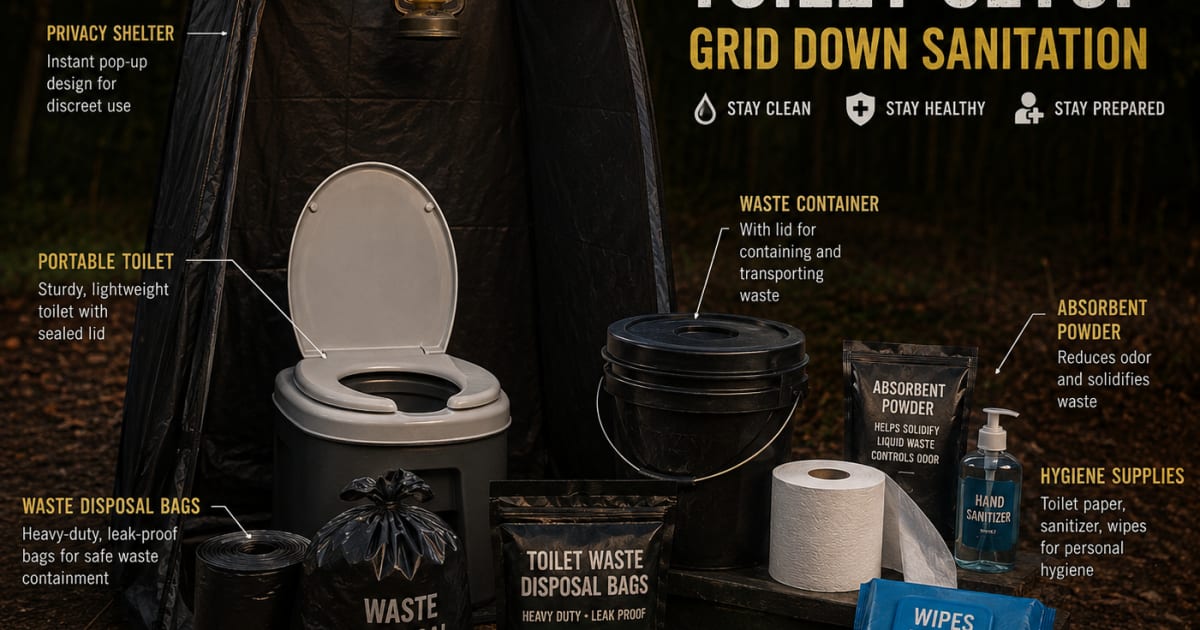
When municipal water pressure fails and toilets stop flushing, your household needs an alternative sanitation solution immediately. A portable emergency toilet is not a luxury item in this scenario — it is essential equipment that prevents serious health hazards from developing inside your home.
The most practical emergency toilet solution for most households is a dedicated portable camping toilet. Quality units designed for emergency use include a sturdy frame that supports adult weight, a seat and lid for hygiene and odor control, and a waste containment system that accepts standard disposal bags. They set up in seconds, require no plumbing, and work completely independently of water pressure or sewer access.
Check Price on Amazon – Portable Emergency Toilet for Blackout and Grid Down Sanitation
Waste disposal bags are the critical consumable that makes any emergency toilet system work. Look for bags specifically rated for human waste disposal — they include odor-neutralizing treatment and are constructed from materials that prevent leakage and contain odor effectively. Keep a minimum of 30 to 60 bags per household member for a two-week supply, stored in a sealed container alongside your portable toilet.
Check Price on Amazon – Emergency Waste Disposal Bags for Portable Toilet and Grid Down Sanitation
For households that want to maintain privacy — particularly in a backyard, campsite, or temporary shelter scenario — a portable privacy shelter provides a dedicated enclosed space for toilet use that maintains dignity and helps control odor away from living areas. Quality privacy tents are lightweight, set up in under a minute, and fold down to a compact size that stores easily with your sanitation kit.
A simpler bucket toilet system — a five-gallon bucket with a fitted toilet seat lid and waste bags — provides nearly the same functionality at a lower cost and in a more compact form factor. Many experienced preppers keep both a dedicated portable toilet for home use and a bucket system in their vehicle emergency kit and bug out bag. The bug out bag essentials guide covers how sanitation gear fits within a complete 72-hour emergency kit. For a room by room home preparedness approach that includes sanitation planning, the guide on how to prepare your home for a power outage in 7 days gives you a practical week long action plan.
Essential Hygiene Supplies Every Household Needs

A complete emergency sanitation kit goes well beyond toilet solutions. The hygiene supplies that prevent disease transmission — hand cleaning, surface disinfection, and personal care — are equally critical and equally easy to overlook until you need them.
Wet wipes are one of the highest-value items in any emergency sanitation kit. They serve as a substitute for handwashing when running water is unavailable, provide basic personal hygiene for every member of your household, and can clean surfaces, wounds, and equipment in situations where water is too scarce to use for anything but drinking. Buy in bulk — a household of four in a two-week outage will go through significantly more wet wipes than most people anticipate.
Check Price on Amazon – Bulk Wet Wipes for Emergency Hygiene and Grid Down Sanitation
Hand sanitizer with at least 60 percent alcohol concentration is your primary disease prevention tool when handwashing is not possible. Keep large pump bottles in your home sanitation kit and smaller travel bottles in every bug out bag, vehicle kit, and personal emergency supply. Alcohol-based sanitizer is effective against most of the bacterial and viral pathogens most likely to spread in a disaster sanitation scenario.
Bar soap stored in a waterproof container extends your hygiene capability to situations where limited water is available — a sponge bath, a water ration for handwashing, or water collected from precipitation. Bar soap lasts indefinitely in storage and takes up almost no space.
Disposable gloves are essential for waste handling, wound care, and any task that involves contact with potentially contaminated surfaces or materials. Keep a minimum of 50 pairs per household in your sanitation kit — they are inexpensive, lightweight, and irreplaceable in situations where cross-contamination is a real risk.
Heavy duty trash bags in both standard and contractor sizes handle waste containment, general cleanup, emergency water collection, and dozens of other tasks that arise during extended outages. Treat them as a multi-purpose tool rather than just waste management.
Feminine hygiene products in sufficient quantity for every applicable household member for a minimum of two weeks round out the essential hygiene supply list — a category that is consistently overlooked in generic emergency preparedness guides and consistently critical in real-world emergency situations.
How to Handle Waste Safely During a Long-Term Outage
Proper waste management during an extended power outage is not just about comfort — it is about preventing the spread of disease that can turn a manageable emergency into a medical crisis.
For households using a portable toilet with waste bags, seal each bag individually immediately after use using the built-in closure or a zip tie. Store sealed bags in a designated outdoor container — a large trash can with a secure lid works well — kept away from your living area, water sources, and food storage. Do not open sealed bags once closed.
In scenarios where waste bag disposal is delayed — if trash collection is unavailable for extended periods — double bag all waste and keep sealed bags in a cool, shaded location away from your household. Sunlight and heat accelerate decomposition and odor development. Maintain distance from any water source to prevent contamination.
For households with access to outdoor space, shallow burial of waste — a minimum of six inches deep and at least 200 feet from any water source — is an acceptable long-term waste management solution when bag disposal is not feasible. This is the same cat-hole method used in wilderness camping and is effective for single-use sites when done correctly.
Odor control inside your living space matters significantly for both comfort and household morale during extended emergencies. Baking soda, activated charcoal odor absorbers, and commercially available waste treatment products designed for portable toilets all provide meaningful odor reduction.
The guide on what happens after day 3 of a power outage covers how sanitation conditions deteriorate as a blackout extends and what to expect if infrastructure remains offline for extended periods. For context on the infrastructure threats most likely to produce long-term sanitation challenges, the post on EMP attack vs cyber attack explains the scenarios most likely to create extended grid down conditions.
Best Bug Out Sanitation Supplies to Keep Ready
A home sanitation kit covers your household when you are sheltering in place. A bug out sanitation kit covers your household when you need to move — during an evacuation, a vehicle breakdown in a remote area, or any scenario where you are away from home infrastructure for an extended period.
Bug out sanitation gear needs to be compact, lightweight, and self-contained. A travel hygiene kit — including travel-size soap, hand sanitizer, wet wipes, a small pack of waste bags, disposable gloves, and a compact toothbrush and toothpaste — covers the basic hygiene needs of one person for 72 hours in a package that fits in a quart-size zip lock bag.
A portable camping shower provides the ability to rinse off, clean wounds, and maintain basic hygiene with a minimal water supply. Quality solar camp showers hold two to four gallons of water and warm it using sunlight — providing a functional shower capability from collected or stored water without any grid power requirement. For a multi-day bug out scenario, the ability to maintain basic cleanliness is a significant comfort and health advantage.
Compact sanitation planning also includes knowing where public restroom facilities are along your evacuation routes — rest stops, gas stations, and community emergency shelters — and having the supplies to supplement those facilities when they are unavailable or overwhelmed.
The guide on best off-grid communication devices covers how to stay informed about shelter and facility availability during evacuations. The guide on why every family needs an emergency plan covers evacuation planning including sanitation considerations as part of a complete family emergency framework.
Emergency Sanitation Checklist
Use this checklist to assess your household sanitation readiness right now. Every item checked is one less health risk when infrastructure fails.
Toilet Solutions:
- Portable emergency toilet or bucket toilet system
- Minimum 30 to 60 waste disposal bags per household member
- Privacy shelter for outdoor use if needed
- Odor control treatment for portable toilet waste
Hygiene Supplies:
- Bulk wet wipes — minimum two-week supply
- Hand sanitizer — large bottle for home, travel size for every kit
- Bar soap stored in waterproof container
- Disposable gloves — minimum 50 pairs
- Feminine hygiene products — two-week supply
- Toothbrushes and toothpaste — two-week supply
Waste Management:
- Heavy duty contractor trash bags
- Designated outdoor waste storage container with secure lid
- Baking soda or odor absorbers for indoor odor control
- Zip ties or bag closures for sealed waste bags
Bug Out Sanitation:
- Compact travel hygiene kit in every bug out bag
- Portable solar camping shower
- Travel-size soap, sanitizer, and wet wipes per person
- Waste bags and gloves in vehicle emergency kit
Sanitation Problems Become Dangerous Fast During Blackouts
Sanitation issues escalate quickly during extended outages — faster than most households ever anticipate when they are planning their emergency preparedness supplies. A household without toilet solutions, hygiene supplies, or waste management gear on day one of a major blackout faces health risks that compound with every passing day.
Disease prevention in a grid down scenario depends entirely on the supplies you have stored before the emergency begins. Wet wipes, hand sanitizer, and waste bags cost almost nothing and take up almost no space — but they represent the difference between a household that stays healthy and one that faces gastrointestinal illness on top of an already difficult situation.
Building a complete sanitation kit takes less time and less money than almost any other element of emergency preparedness. Start with a portable toilet and waste bags this week. Add hygiene supplies and gloves next. Build your bug out sanitation kit within the month.
For a complete preparedness framework covering blackout survival, emergency food, backup power, water storage, communication systems, and long-term grid failure preparation, read our full Complete Grid Down Survival Guide (2026).
Prepare your sanitation kit now — before infrastructure fails and the supplies you need are no longer on store shelves.