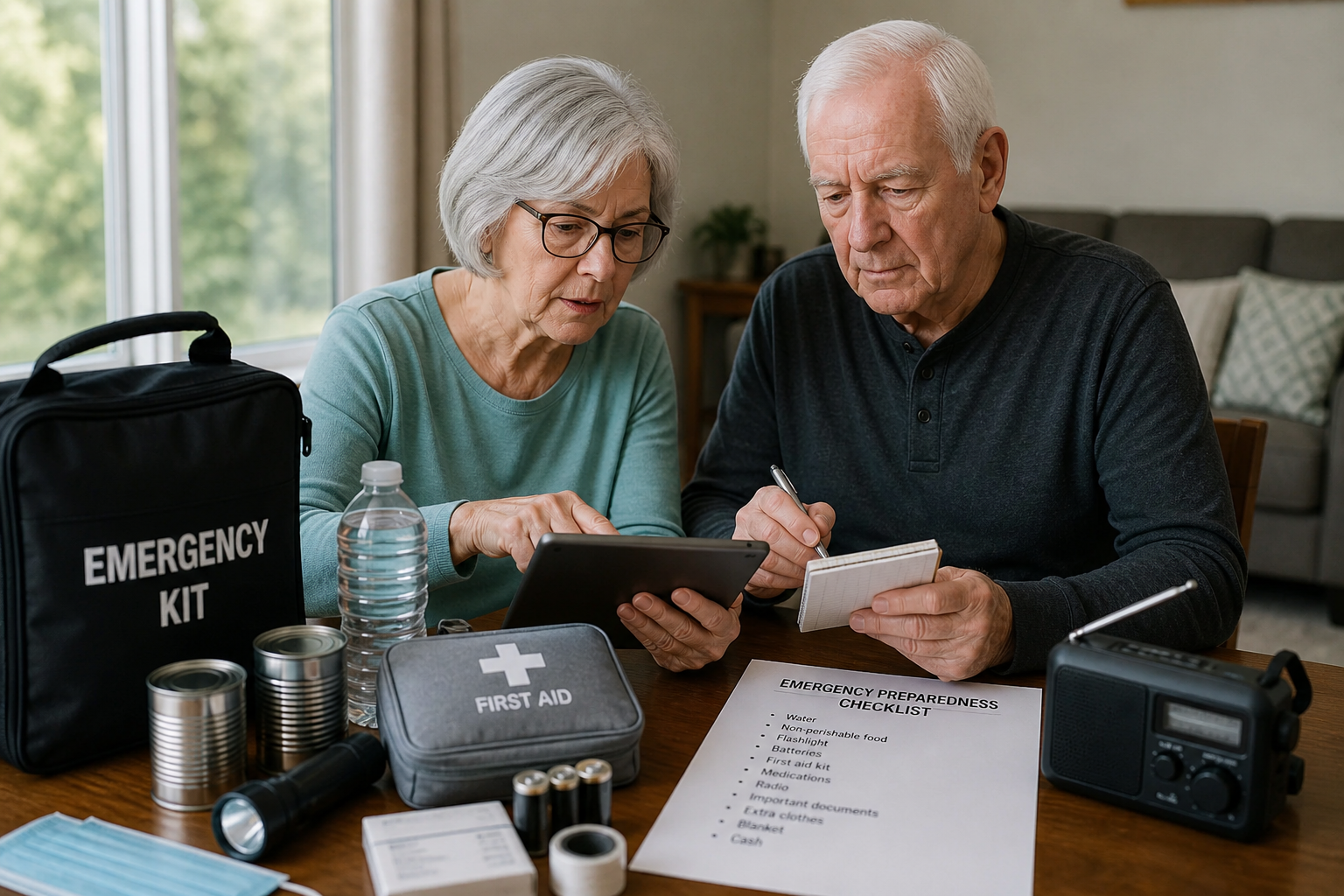
Earthquakes do not send warnings. No forecast, no countdown, no time to run to the store. In the seconds it takes for the shaking to stop, your access to clean water, power, and emergency services can disappear entirely — sometimes for days.
That is exactly why your earthquake emergency kit needs to exist before disaster strikes, not after.
Whether you live in a high-risk zone like California or the Pacific Northwest, or somewhere earthquakes are less expected like the Midwest or the South, the gear in this guide could be the difference between your family getting through it safely and scrambling in the dark.
This is not a generic checklist. This is a complete breakdown of what actually belongs in an earthquake kit, why each item matters, and the best products to build yours right now.
Why a Standard Emergency Kit Is Not Enough for Earthquakes
Most general emergency kits are designed around short-term power outages — a flashlight, some bottled water, maybe a radio. Earthquakes create a different kind of problem.
When a significant quake hits, you may be dealing with structural damage to your home, broken gas lines, contaminated water supplies, impassable roads, and overwhelmed emergency services all at the same time. A basic kit built for a two-day blackout will not carry you through that scenario.
Your earthquake emergency kit needs to be built around three realities:
You may not be able to leave. Debris, damaged roads, and aftershocks can trap you in or near your home for 72 hours or longer.
Infrastructure fails fast. Water mains crack. Power grids collapse. Cell towers go down. Everything you rely on daily stops working simultaneously.
Help takes time. First responders are stretched thin after a major earthquake. FEMA and the Red Cross recommend every household be able to sustain itself for a minimum of 72 hours — and ideally up to two weeks.
Your kit needs to reflect that.
Water: The First Thing You Will Run Out Of

The standard recommendation is one gallon of water per person per day. For a family of four over 72 hours, that is 12 gallons minimum — and that does not account for sanitation, cooking, or pets.
Earthquakes are uniquely dangerous for water supplies because they crack municipal pipes and can contaminate your tap water with no visible sign that anything is wrong. You need stored water you can trust, plus a backup filtration system in case your storage runs out.
Start with sealed water storage containers rated for long-term use. Avoid repurposing old milk jugs — they degrade and harbor bacteria. Look for BPA-free containers with a siphon pump for easy access.
Check Price on Amazon – Emergency Water Storage Container 5-Gallon BPA-Free
For filtration backup, a gravity-fed water filter or a quality squeeze filter will let you safely process water from bathtubs, outdoor sources, or emergency water supplies if your stored supply runs low.
Check Price on Amazon – Gravity Water Filter Emergency Filtration System
Store a supply of water purification tablets as a third layer. They are lightweight, cheap, and could save your life if both your stored water and filtration options are unavailable.
Food: 72 Hours Minimum, Two Weeks Is Better
The food portion of your earthquake kit needs to check three boxes: long shelf life, no cooking required, and enough calories to actually sustain your household.
Freeze-dried meals are the gold standard. They are lightweight, calorie-dense, and most have shelf lives of 25 years or more. The best brands require only water — hot or cold — to prepare, which matters a lot when you may not have a stove.
Check Price on Amazon – Freeze-Dried Emergency Food Supply 72-Hour Kit
Round out your food supply with high-calorie emergency food bars, canned goods with a manual can opener, and ready-to-eat options that require zero preparation. Peanut butter, nuts, dried fruit, and granola bars are practical additions that store well and provide quick energy.
Do not forget a manual can opener. It sounds obvious until you need one and do not have it.
For a deeper look at building out your food supply beyond 72 hours, the guide on how to build a long-term emergency food storage pantry covers everything you need to know.
First Aid: Treating Injuries When Help Is Not Coming

Earthquakes cause injuries — cuts from broken glass, crush injuries from falling debris, fractures, and head trauma. After a major quake, emergency rooms are overwhelmed and ambulance response times can stretch to hours.
Your first aid kit needs to go beyond the standard box of bandages. Look for a trauma-rated kit that includes tourniquets, hemostatic gauze, pressure bandages, and splinting material. The ability to control serious bleeding and immobilize a fracture is more valuable after an earthquake than a box of adhesive strips.
Check Price on Amazon – Trauma First Aid Kit with Tourniquet and Hemostatic Gauze
Add to that a supply of any prescription medications your household depends on — at least a seven-day supply stored in a waterproof container — along with over-the-counter pain relief, antidiarrheal medication, and any medical equipment like blood pressure monitors or glucose meters that your family relies on.
For a complete breakdown of treating injuries when emergency services are delayed, the post on emergency first aid when help is hours away goes deep on exactly what to do.
Light and Power: Staying Functional After Dark
Power outages following earthquakes can last anywhere from hours to weeks depending on the severity of the damage to local infrastructure. Your kit needs layered lighting and power solutions.
A quality headlamp is more practical than a flashlight after an earthquake because it keeps your hands free while you assess damage, move debris, or treat injuries. Get one with a red light mode to preserve night vision and a runtime of at least 12 hours on a single charge.
For area lighting, a collapsible LED lantern gives you enough light to move around safely inside a damaged structure without open flame risk — important when gas leaks are a possibility.
Check Price on Amazon – LED Headlamp with Red Light Mode 12+ Hour Runtime
A portable power station or solar generator lets you keep phones charged, power a CPAP machine, and run small devices. Pair it with a foldable solar panel for recharging capability when grid power is gone indefinitely.
For a full breakdown of the best options, the guide covering best solar generators and power stations for emergencies walks through the top picks at every price point.
Communication: Staying Informed When Cell Towers Go Down

Cell networks collapse fast after a major earthquake. Towers get damaged, and the ones that survive get overwhelmed within minutes by everyone trying to call at once. Text messages sometimes get through when calls cannot, but you cannot count on your phone for information.
A hand crank NOAA weather radio is essential. It gives you access to emergency broadcasts, official instructions, and situation updates completely independent of cell service or the power grid. Look for one that also includes USB charging output so your radio can double as a backup phone charger.
Check Price on Amazon – Hand Crank NOAA Emergency Weather Radio with USB Charging
Keep a written list of emergency contacts, insurance policy numbers, and out-of-state family contacts in a waterproof document pouch inside your kit. When your phone is dead and the cloud is inaccessible, paper is the most reliable technology you have.
Tools and Safety Gear: What You Need to Survive the Aftermath
The immediate aftermath of an earthquake often involves navigating debris, shutting off gas lines, and potentially breaking out of a damaged structure. Your kit needs the tools to handle all three.
A gas shutoff wrench should be stored near your gas meter and included in your kit. Knowing how and when to shut off your gas is one of the highest-impact actions you can take after a quake — and a standard tool kit will not have the right wrench for it.
Heavy work gloves protect your hands when moving debris or broken glass. A pry bar or crowbar lets you open jammed doors and move structural debris. A dust mask or N95 respirator protects against the concrete dust and particulate matter that fills the air after a collapse — a serious respiratory hazard that most people do not plan for.
Check Price on Amazon – N95 Respirators Multipack 10 Count
A whistle is one of the most underrated items in any earthquake kit. If you are trapped under debris, a whistle carries far farther than your voice and requires almost no energy to use.
Documents and Cash: The Items People Always Forget
Waterproof document storage is not optional. After an earthquake, you may need to access insurance policies, medical records, identification, and financial documents — and your home may not be safe to re-enter.
Keep copies of the following in a waterproof pouch inside your kit: photo ID for every household member, insurance cards and policy numbers, medical records and prescription information, bank account information, and a household inventory with photos for insurance claims.
Cash in small bills matters more than most people realize. Card readers go down when power fails. ATMs run dry. Having two to three hundred dollars in small bills gives you options when digital payment systems are offline.
Storing and Maintaining Your Earthquake Kit

Where you store your kit matters as much as what is in it. Keep it in an accessible location that is not likely to be blocked by fallen furniture or structural damage — a garage, a hallway closet near an exit, or a vehicle are all solid choices. Avoid storing it in a basement if you live in an earthquake-prone area, as basement access can be compromised by structural shifts.
Use a durable, waterproof container with a secure lid. Label it clearly so every member of your household knows exactly what it is and where to find it.
Review and rotate your kit every six months. Replace expired food and water, check battery levels, update medications, and make sure everything still fits your household's current needs. A kit that was right for your family two years ago may not reflect a new medication, a new pet, or a new family member.
For a room-by-room approach to overall home preparedness, the guide on how to prepare your home for a power outage in 7 days gives you a practical framework you can apply to earthquake readiness as well.
Build It Before You Need It
The only earthquake kit that does not work is the one you never built. Every item on this list is available right now, ships to your door, and costs far less than what a single day without water, power, or medical supplies will cost your family in a real emergency.
You do not need to build it all at once. Start with water, a flashlight, and a first aid kit this week. Add food and communication gear next. Within a month you can have a complete earthquake emergency kit that will carry your household through whatever comes.
The ground does not wait for you to be ready. Build your kit now.