Most emergency plans focus on getting out. Grab your bag, load the car, and go. But there is an entire category of disasters where leaving is the worst thing you can do — and staying put, prepared, is what keeps your family alive.
Shelter in place is not a last resort. For hurricanes, wildfires with blocked evacuation routes, chemical spills, severe storms, and grid down scenarios, sheltering in place is often the safest and most practical option available. The problem is that most households are not prepared to do it effectively for more than a few hours.
Sheltering in place means staying inside your home during emergencies like hurricanes, wildfires, chemical spills, or power outages. This guide covers the essential supplies, preparation steps, and safety strategies needed to keep your household secure for at least 72 hours or longer without outside help.
This guide covers everything you need to shelter in place safely — the supplies, the room preparation, the communication plan, and the mindset — so that when the order comes or the situation demands it, your home is already ready.
Shelter in Place Essentials Checklist
- Water (1 gallon per person/day)
- Food (3–7 days)
- Power source
- Emergency radio
- First aid kit
- Sanitation supplies
- Home sealing materials
What Shelter in Place Actually Means
Shelter in place means staying inside your home or the nearest safe building and taking specific protective actions rather than evacuating. It is issued by emergency authorities during situations where going outside poses a greater risk than staying indoors.
The scenarios that trigger a shelter in place order are more common than most people realize. Hurricanes with dangerous wind and debris. Wildfires with smoke so thick that outdoor air is toxic. Chemical or industrial accidents that release hazardous material into the air. Severe tornado warnings where there is no time to evacuate. Civil unrest or active threat situations where moving through public areas is dangerous.
Each scenario has different requirements — but the core principle is the same. Your home needs to be stocked, sealed when necessary, and capable of sustaining your household independently for a minimum of 72 hours. Ideally longer.
Water: The Non Negotiable Starting Point

Municipal water systems are vulnerable during disasters. Flooding contaminates pipes. Earthquakes crack water mains. Extended power outages shut down pumping stations. In any of these scenarios your tap water can become unsafe without warning — and during a shelter in place situation you cannot simply drive to the store.
The minimum standard is one gallon per person per day. For a family of four sheltering for 72 hours that is 12 gallons of stored water before you account for cooking, sanitation, or pets. For a week long shelter scenario that number climbs to 28 gallons.
Store water in BPA-free containers specifically rated for long term water storage. Avoid repurposing milk jugs or thin plastic containers — they degrade quickly and can harbor bacteria that make stored water unsafe. A dedicated water storage tank or a set of stackable five gallon containers gives you reliable, organized water storage that holds for months.
Check Price on Amazon – Emergency Water Storage Container BPA Free 5 Gallon
Back your stored water with a gravity fed filtration system. If your storage runs low or becomes contaminated, a quality gravity filter lets you safely process water from bathtubs, outdoor collection, or emergency water distribution points — keeping your household hydrated even when the situation extends beyond your initial supply.
Food: Stocking for Days Not Hours
Shelter in place food storage is different from a bug out bag. You are not packing light for mobility — you are building a home pantry that can sustain your household without resupply for days or weeks.
Freeze dried meals are the anchor of any serious shelter in place food supply. They are calorie dense, have shelf lives of 25 years or more, require only water to prepare, and take up minimal storage space. A quality 72 hour or two week freeze dried food kit gives you a reliable baseline that requires zero daily management.
Check Price on Amazon – Freeze Dried Emergency Food Supply 2 Week Kit
Layer your freeze dried supply with canned goods, peanut butter, nuts, dried fruit, crackers, and other shelf stable foods your family actually eats. Comfort matters more than people expect during an extended shelter in place situation — familiar food reduces stress and keeps morale up when conditions are difficult.
A manual can opener is non negotiable. Keep one in your shelter in place kit and a backup in your kitchen drawer. It costs almost nothing and becomes invaluable the moment your power goes out.
For a complete approach to building a food supply that goes beyond 72 hours, the guide on how to build a long term emergency food storage pantry covers exactly how to stock and rotate a serious home supply.
Power and Light: Keeping Your Household Functional

Power outages are one of the most common and disruptive elements of any shelter in place scenario. Whether it is a hurricane knocking out the grid or a severe storm taking down power lines, losing electricity during an emergency creates a cascade of problems — no lights, no phone charging, no medical equipment, no information.
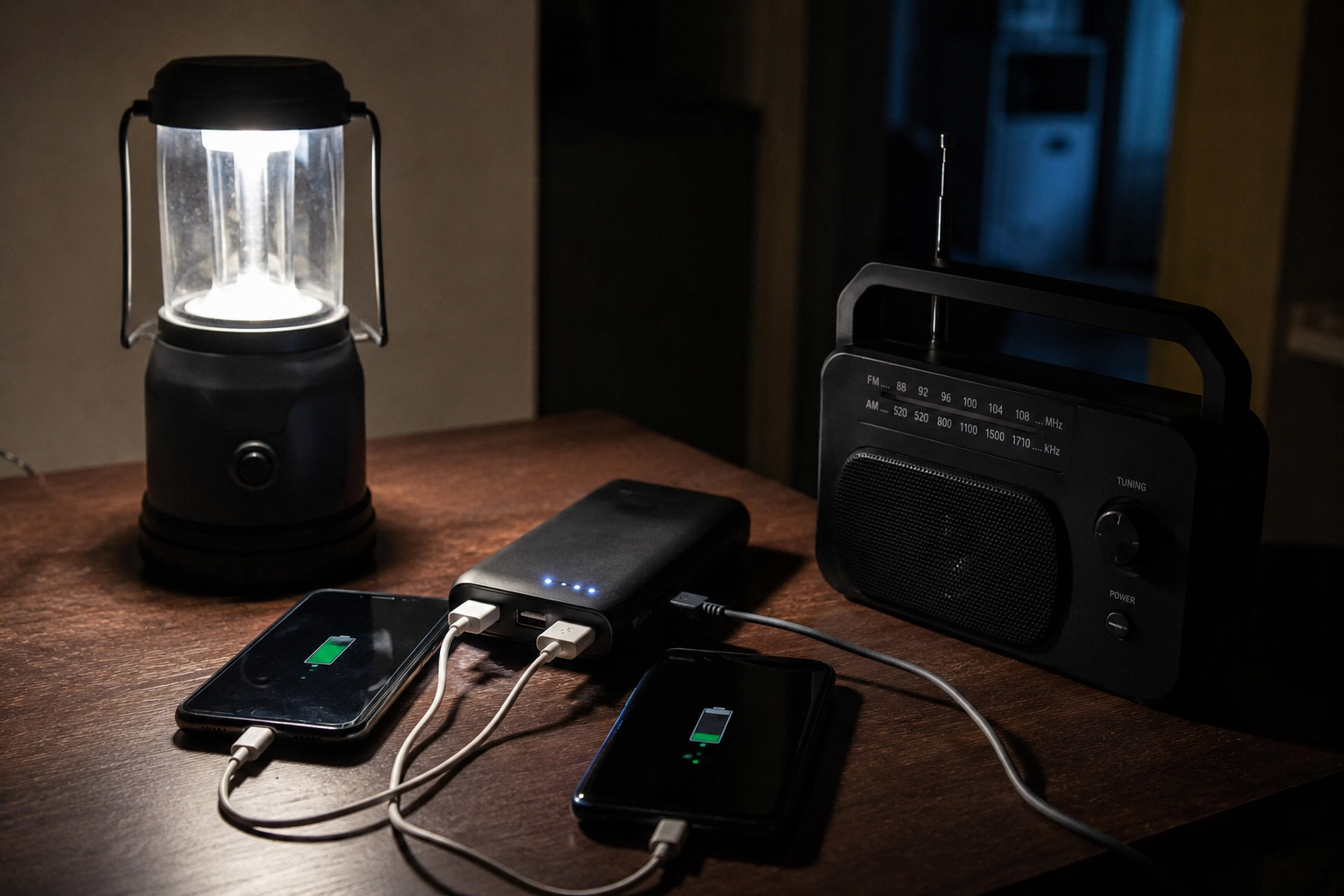
A portable power station is the most practical solution for shelter in place power needs. Unlike a gas generator it runs silently, produces no carbon monoxide, and can be used safely indoors. A quality unit with 500 to 1000 watt hours of capacity keeps phones charged, runs a CPAP machine, powers LED lighting, and handles small appliances for days on a single charge.
Check Price on Amazon – Portable Power Station 500Wh Solar Generator for Home Emergency
Pair your power station with a foldable solar panel so you can recharge it during the day even when the grid is down for an extended period. A 100 watt solar panel in a sunny window or on a porch can fully recharge most mid size power stations in six to eight hours — giving you an indefinite power supply as long as the sun comes out.
For lighting, layer a high output LED lantern for room lighting with a headlamp for hands free task work. Keep both fully charged and stored in an accessible location so any member of your household can find them in the dark.
For a full breakdown of the best solar powered options for home emergencies, the guide on best solar generators and power stations covers the top picks at every budget.
Communication: Staying Informed When the Grid Goes Down
During a shelter in place situation your ability to receive accurate, real time information can be the difference between making the right call and making a dangerous one. Cell networks get overwhelmed within minutes of a major disaster. Social media is flooded with misinformation. Television and internet go down with the power.
A hand crank NOAA weather radio gives you direct access to official emergency broadcasts, evacuation updates, and situation reports completely independent of cell service, internet, or grid power. It is one of the most important and most overlooked items in any shelter in place kit.
Check Price on Amazon – Hand Crank NOAA Emergency Weather Radio with USB Charging
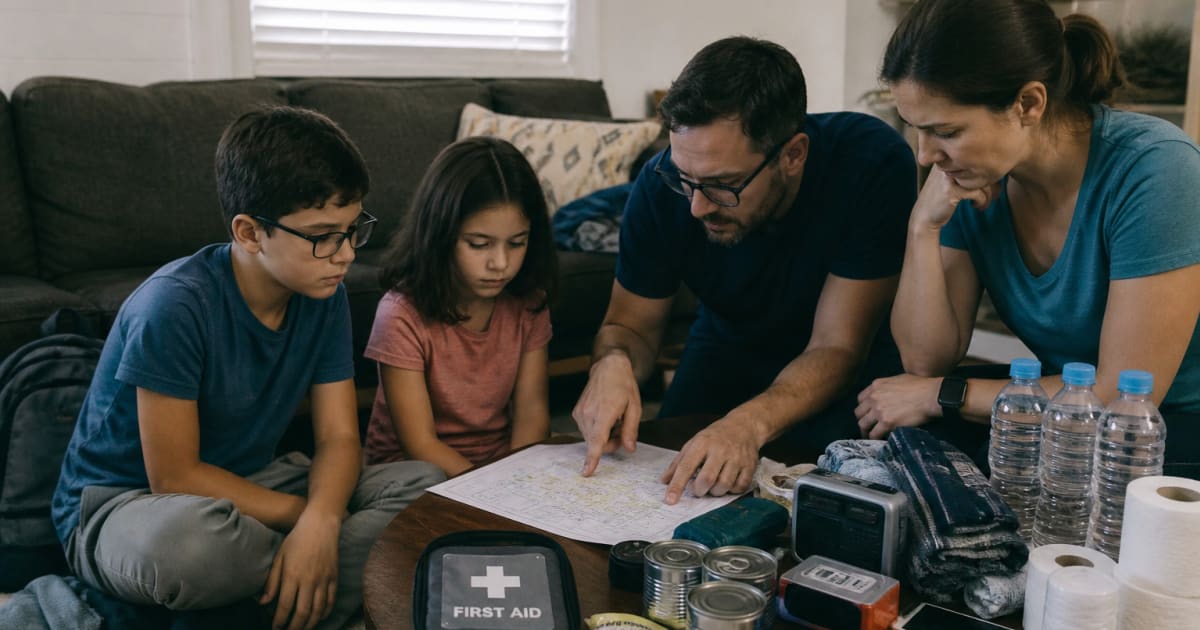
Beyond the radio, establish a written household communication plan before you need it. Designate an out of state contact that all family members can reach to confirm their status — local lines get jammed while out of state calls often go through. Write down emergency contacts, insurance information, and meeting points on paper and keep it in your shelter in place kit. When your phone is dead and the cloud is unreachable, paper is the most reliable technology you own.
Sealing Your Home: When the Air Outside Is the Threat
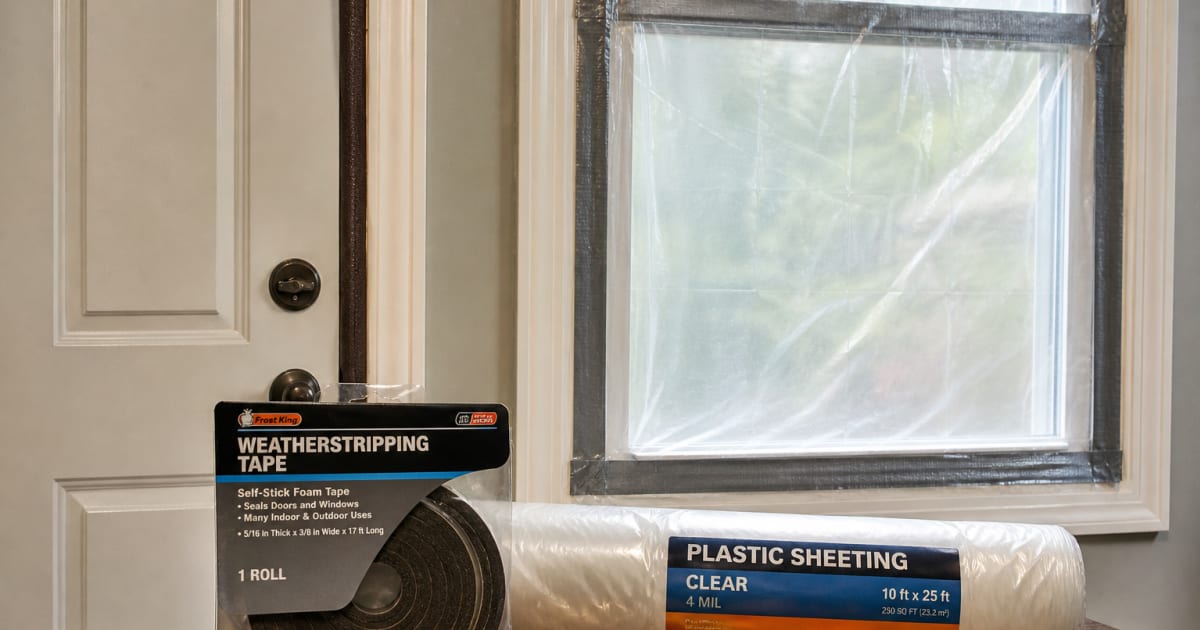
Chemical spills, wildfire smoke, and hazardous air quality events require a specific type of shelter in place preparation — sealing your home against outdoor air. This is the most overlooked aspect of shelter in place readiness and one of the most critical in the right scenario.
Every shelter in place kit should include heavy duty plastic sheeting and duct tape rated for emergency use. In a chemical or smoke event you can seal windows, doors, vents, and any other gaps in your home's envelope to dramatically reduce the infiltration of hazardous air. A room with sealed gaps and a door rolled up with a damp towel buys you significantly more time than an unsealed space.
Check Price on Amazon – Emergency Plastic Sheeting and Duct Tape Kit for Home Sealing
N95 respirators are the second layer of protection for air quality events. If you need to open a door or briefly go outside during a chemical or heavy smoke event, an N95 filters out the particulate matter that makes wildfire smoke and many chemical dispersions dangerous. Keep a multi pack in your shelter in place kit and replace them annually.
Choose one interior room in your home as your designated shelter room before an emergency. Select a room with the fewest windows and exterior walls, ideally on an upper floor for chemical events where heavier than air gases settle low. Know which room it is, make sure your family knows, and keep your sealing supplies accessible to that room.
First Aid and Medical: Preparing for Injuries Without Outside Help
Extended shelter in place situations put your household on its own for medical needs. Hospitals get overwhelmed. Ambulance response times stretch. Pharmacies close. Your first aid supplies need to reflect that reality.
A trauma rated first aid kit goes beyond standard bandages — it includes tourniquets, hemostatic gauze for serious bleeding, pressure bandages, splinting material, and wound closure strips. These are the tools that handle the injuries most likely to occur during a disaster when professional help is not immediately available.
Prescription medications deserve special attention. Keep at minimum a seven day supply of every medication your household depends on stored in a waterproof container inside your shelter in place kit. Rotate it regularly to keep it current. In an extended shelter scenario running out of a critical medication is a genuine emergency on top of an emergency.
For a complete guide to handling medical situations when professional help is delayed, the post on what to do if someone gets hurt and help is hours away covers exactly what to do and what to have ready.
Sanitation: The Problem Nobody Plans For
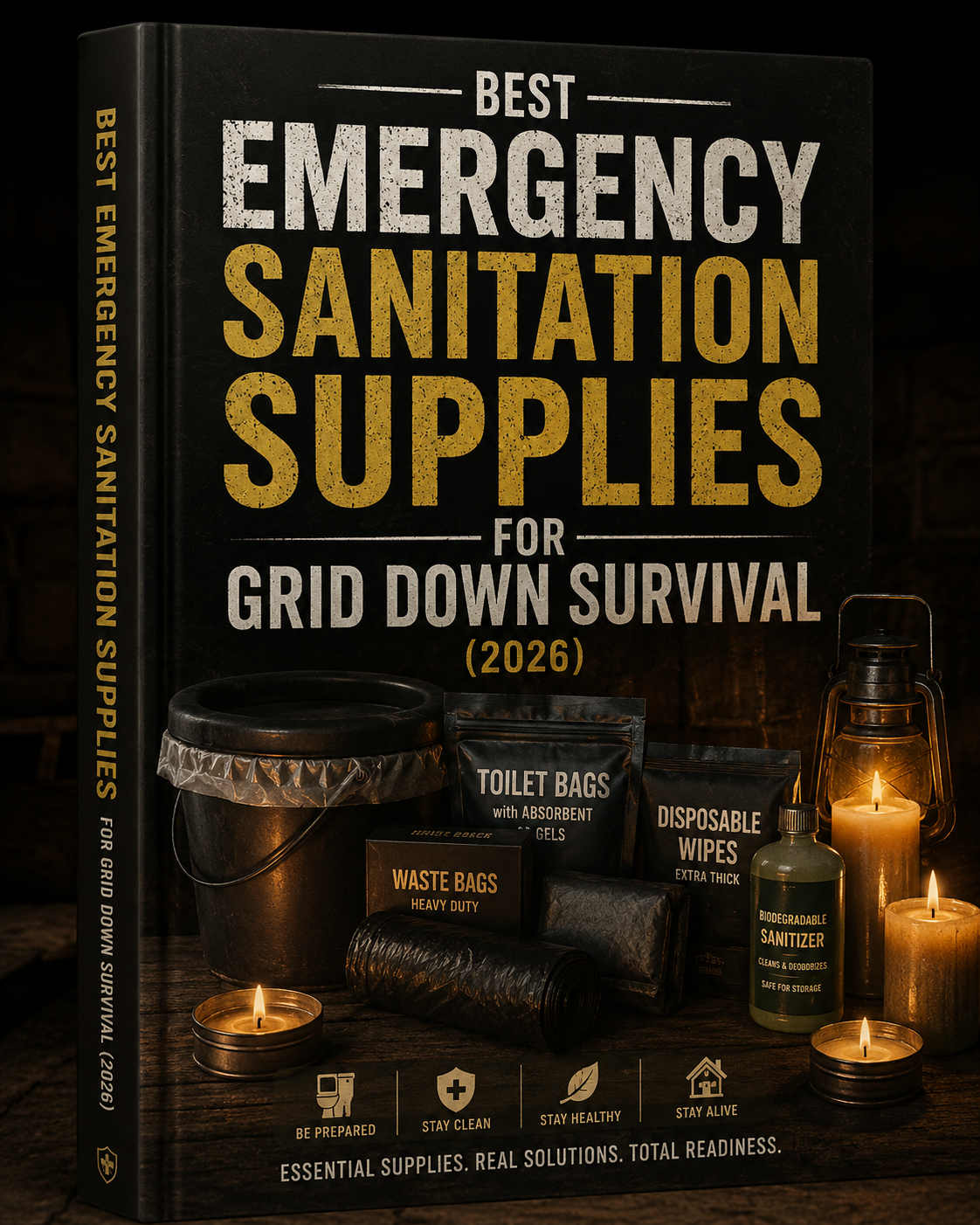
When water service is disrupted and you cannot flush toilets or run taps, sanitation becomes a serious health issue quickly. A portable camping toilet with waste disposal bags gives your household a functional sanitation solution that does not depend on municipal water service. Add a supply of hand sanitizer, biodegradable soap, and wet wipes to maintain basic hygiene when running water is unavailable.
Garbage bags in multiple sizes handle waste containment, emergency water collection, and dozens of other tasks that come up during an extended shelter scenario. Keep a box in your kit and treat them as a multi purpose tool rather than just trash bags.
Build Your Shelter in Place Kit Before You Need It
A shelter in place order gives you minutes — not hours — to get your household ready. The supplies you have on hand when the order comes are the supplies you have for the duration.
Start with the fundamentals this week — water, food, and a power source. Add communication gear and first aid next. Complete your kit with sealing supplies and sanitation within the month. Within thirty days you can have a shelter in place setup that carries your household safely through whatever scenario demands you stay put.
For a room by room approach to getting your entire home ready before an emergency, the guide on how to prepare your home for a power outage in 7 days gives you a practical framework that applies directly to shelter in place readiness.
The disasters that require sheltering in place do not announce themselves in advance. Build your kit now — while the stores are open, the power is on, and you still have time to do it right.