Most people assume a power outage will last a few hours at most.
That assumption is one of the most dangerous mistakes in emergency preparedness.
Outage duration varies dramatically depending on where you live — your state, your region, your local infrastructure, and the type of event that knocked the power out. A household in Louisiana faces a completely different risk profile than one in Oregon. A family in Florida needs a different preparedness timeline than one in Montana.
This guide breaks down exactly how long power outages last in every U.S. state, what causes the longest outages in each region, and precisely how long your preparedness supplies need to last based on where you live.
Make sure you have the basics covered first. Read our guides on What Happens If the Power Grid Goes Down?, Best Portable Generators for Power Outages (2026), and What Happens After Day 3 of a Power Outage.
Why Outage Duration Varies So Much by State
Four factors determine how long your outage will last.
Grid Infrastructure Age — States with aging electrical infrastructure experience longer outages because damaged components are harder to repair and replacement parts are less standardized.
Natural Disaster Frequency — States in hurricane corridors, tornado alleys, and ice storm belts experience more frequent and more severe outages year after year.
Population Density and Crew Access — Urban areas see faster restoration because crews service more customers per repair. Rural and remote areas wait significantly longer.
Mutual Aid Agreements — States with strong regional agreements bring in out-of-state crews faster after major events. Weaker networks mean slower restoration.
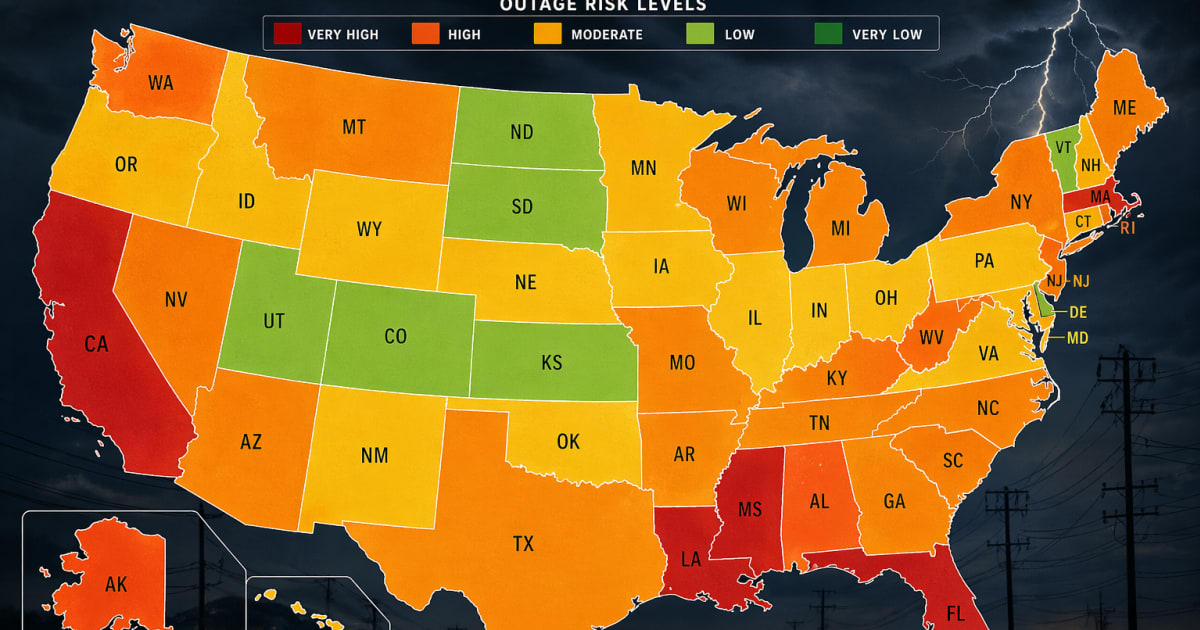
Average Power Outage Duration by U.S. State
The following data reflects average annual outage duration per customer based on utility reporting, federal energy data, and historical storm records through 2026.
| State | Avg Annual Outage | Primary Cause | Risk Level | |---|---|---|---| | Alabama | 8–14 hours | Hurricanes, severe storms | 🔴 High | | Alaska | 4–8 hours | Winter storms, remote grid | 🟡 Medium | | Arizona | 2–4 hours | Monsoons, dust storms | 🟢 Low | | Arkansas | 6–12 hours | Tornadoes, ice storms | 🔴 High | | California | 4–10 hours | Wildfires, PSPS events | 🟡 Medium | | Colorado | 3–6 hours | Blizzards, wind storms | 🟡 Medium | | Connecticut | 5–10 hours | Nor'easters, hurricanes | 🟡 Medium | | Delaware | 4–8 hours | Hurricanes, coastal storms | 🟡 Medium | | Florida | 10–20 hours | Hurricanes, lightning storms | 🔴 High | | Georgia | 6–14 hours | Hurricanes, ice storms | 🔴 High | | Hawaii | 2–5 hours | Tropical storms, volcanic activity | 🟢 Low | | Idaho | 3–6 hours | Winter storms, wildfires | 🟡 Medium | | Illinois | 4–8 hours | Tornadoes, severe thunderstorms | 🟡 Medium | | Indiana | 4–9 hours | Ice storms, tornadoes | 🟡 Medium | | Iowa | 5–10 hours | Derechos, tornadoes | 🟡 Medium | | Kansas | 5–11 hours | Tornadoes, ice storms | 🔴 High | | Kentucky | 6–14 hours | Ice storms, tornadoes | 🔴 High | | Louisiana | 12–24 hours | Hurricanes, flooding | 🔴 High | | Maine | 6–12 hours | Nor'easters, ice storms | 🔴 High | | Maryland | 5–10 hours | Hurricanes, derechos | 🟡 Medium | | Massachusetts | 5–10 hours | Nor'easters, hurricanes | 🟡 Medium | | Michigan | 6–14 hours | Ice storms, wind events | 🔴 High | | Minnesota | 4–8 hours | Blizzards, severe storms | 🟡 Medium | | Mississippi | 10–20 hours | Hurricanes, tornadoes | 🔴 High | | Missouri | 5–12 hours | Tornadoes, ice storms | 🔴 High | | Montana | 3–7 hours | Winter storms, wind events | 🟡 Medium | | Nebraska | 4–9 hours | Tornadoes, blizzards | 🟡 Medium | | Nevada | 2–4 hours | Wind storms, extreme heat | 🟢 Low | | New Hampshire | 6–12 hours | Nor'easters, ice storms | 🔴 High | | New Jersey | 5–10 hours | Hurricanes, nor'easters | 🟡 Medium | | New Mexico | 3–6 hours | Wind storms, monsoons | 🟡 Medium | | New York | 5–10 hours | Hurricanes, nor'easters | 🟡 Medium | | North Carolina | 8–16 hours | Hurricanes, ice storms | 🔴 High | | North Dakota | 4–8 hours | Blizzards, severe storms | 🟡 Medium | | Ohio | 5–11 hours | Ice storms, tornadoes | 🟡 Medium | | Oklahoma | 6–14 hours | Tornadoes, ice storms | 🔴 High | | Oregon | 4–8 hours | Wind storms, ice storms | 🟡 Medium | | Pennsylvania | 5–10 hours | Nor'easters, hurricanes | 🟡 Medium | | Rhode Island | 5–9 hours | Nor'easters, hurricanes | 🟡 Medium | | South Carolina | 8–16 hours | Hurricanes, ice storms | 🔴 High | | South Dakota | 4–9 hours | Blizzards, tornadoes | 🟡 Medium | | Tennessee | 6–14 hours | Ice storms, tornadoes | 🔴 High | | Texas | 10–30 hours | Hurricanes, winter storms, heat | 🔴 High | | Utah | 2–5 hours | Wind storms, winter storms | 🟢 Low | | Vermont | 6–12 hours | Nor'easters, ice storms | 🔴 High | | Virginia | 6–14 hours | Hurricanes, derechos | 🔴 High | | Washington | 4–9 hours | Wind storms, ice storms | 🟡 Medium | | West Virginia | 8–18 hours | Derechos, ice storms | 🔴 High | | Wisconsin | 5–10 hours | Ice storms, severe storms | 🟡 Medium | | Wyoming | 3–7 hours | Blizzards, wind events | 🟡 Medium |
The 5 Worst States for Power Outages
1. Texas — Up to 30 Hours Average Annually
Texas holds the record for the most dramatic outage events in recent U.S. history. The February 2021 winter storm left over 4.5 million households without electricity for days, with some rural customers going without power for more than two weeks in freezing temperatures. Texas operates its own independent ERCOT grid, limiting its ability to draw power from neighboring states — dramatically extending restoration times during major events.
Minimum preparedness target: 2 weeks. Both summer heat protection and winter cold weather gear are essential.
2. Louisiana — Up to 24 Hours Average Annually
Louisiana sits directly in the Gulf of Mexico hurricane corridor. Hurricane Ida in 2021 left over one million customers without power, with some parishes waiting more than six weeks for full restoration. Flooding compounds every outage — when crews cannot physically reach damaged areas, timelines extend far beyond what storm damage alone would suggest.
Minimum preparedness target: 2 weeks with serious flood evacuation planning. See our Bug-Out Bag Essentials guide.
3. West Virginia — Up to 18 Hours Average Annually
West Virginia's mountainous terrain creates serious restoration challenges. The 2012 derecho left customers without power for up to three weeks during summer heat. Aerial line repair is difficult and ground access to remote customers is extremely time-consuming.
What residents need: Wood-burning backup, extended food and water storage, and off-grid cooking. See our Best Emergency Cooking Solutions guide.
4. Florida — Up to 20 Hours Average Annually
Florida's hurricane exposure is the highest of any continental U.S. state. The heat factor makes outages particularly dangerous — without air conditioning, indoor temperatures reach life-threatening levels within hours of power loss.
What residents need: Generator capacity is non-negotiable. See our Best Solar Generators & Power Stations guide.
5. Michigan — Up to 14 Hours Average Annually
Michigan's outage profile is dominated by ice storms and high-wind events. The state's heavily wooded areas make power line damage extremely common, and the volume of clearing required after major storms extends restoration significantly.
What residents need: Cold weather survival gear is critical. A January outage without heat becomes life-threatening within 24 hours.
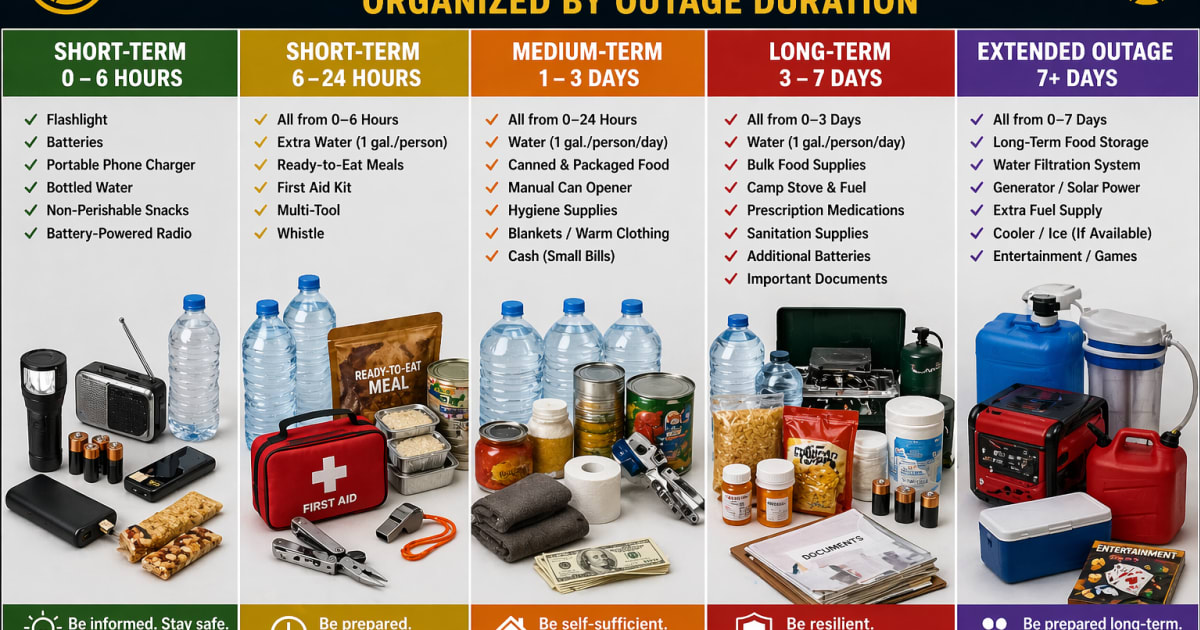
How Your State's Risk Level Shapes Your Preparedness Plan
🟢 Low-Risk States — Target: 72 Hours to 1 Week
Arizona, Nevada, Utah, Hawaii, Idaho. Outages are typically brief and resolved within hours.
Essential supplies:
- 72-hour emergency food supply
- 7 gallons of water per person
- Basic first aid kit
- Flashlights and backup power bank
- Hand-crank emergency radio
👉 Check Price on Amazon — 72-Hour Emergency Food Supply
🟡 Medium-Risk States — Target: 1 to 2 Weeks
Most northeastern, midwestern, and western states. Nor'easters, derechos, and severe thunderstorm systems can produce outages lasting three to seven days.
Additional supplies needed:
- Two-week food storage
- 14 gallons of water per person
- Portable generator or solar power station
- Water filtration system
👉 Check Price on Amazon — Portable Solar Power Station
See our Best Emergency Water Storage Solutions (2026) for water storage recommendations.
🔴 High-Risk States — Target: 2 Weeks to 30 Days
Gulf Coast, Southeast, tornado alley, and Appalachian states. Outages lasting two to four weeks after major events are realistic — not extreme.
Critical supplies needed:
- 30-day long-term food storage
- Large-capacity water storage plus filtration
- Standby generator with significant fuel reserve
- Complete bug-out bag for evacuation
- Off-grid cooking capability
👉 Check Price on Amazon — 30-Day Emergency Food Supply
For a complete long-term food strategy, see our How to Build a Long-Term Emergency Food Storage Pantry guide.
What Causes the Longest Outages by Threat Type
- Hurricanes: 1 to 4 weeks for directly impacted areas. Flooding compounds every timeline.
- Ice Storms: 1 to 3 weeks in severely affected areas. Lines and towers require full replacement.
- Derechos: 3 to 14 days. Fast-moving systems cover enormous areas simultaneously.
- Tornadoes: Hours to days. Intense but geographically narrow — faster restoration than hurricanes.
- Winter Storms: 1 to 7 days depending on severity and location.
- Wildfires / PSPS: Hours to days for planned California shutoffs.
- Extreme Heat: Hours to 1 to 2 days for grid stress events.
Final Thoughts
Where you live determines how long you need to be prepared to survive without grid power.
A household in Nevada with a 72-hour kit is genuinely well-prepared for their risk profile. That exact same kit in Louisiana or Texas is dangerously inadequate for the outages those states regularly experience.
Use the data in this guide to set your real preparedness target — then build toward it one step at a time. One week of supplies today is better than a perfect 30-day plan that never gets built.
Start with your state. Build for your actual risk. Stay ahead of the outage before it happens.
For a complete step-by-step preparedness plan see our How to Start Prepping for Beginners in 2026 guide and our Why Every Family Needs an Emergency Plan guide.
Explore our complete Emergency Kits & Bundles and Shop All Survival Gear to build your state-specific preparedness system today.
⚠️ Don't wait until it's too late — get prepared now. Every day without a plan is a risk. Most people wish they had prepared sooner. Start today.